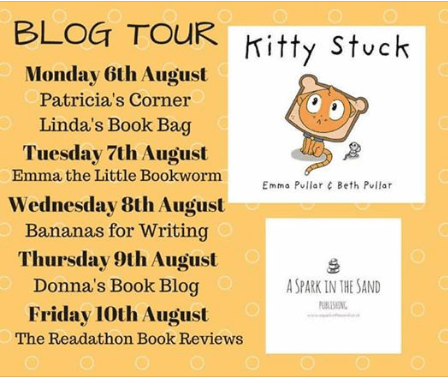
Kitty Stuck by Emma Pullar and Illustrated by Beth Pullar

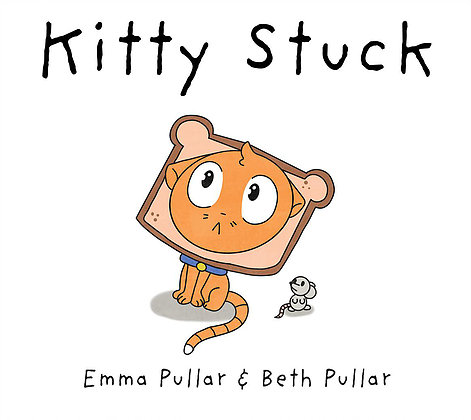
Kitty Stuck Cover

I’m delighted to be part of the launch celebrations for Kitty Stuck by Emma Pullar, illustrated by Beth Pullar as I adore cats so what could be better than a picture book for review. I’d like to thank the author for a copy of Kitty Stuck in return for an honest review.

Kitty banner

Kitty Stuck is published by A Spark in the Sand, a publisher dedicated to encouraging young people to pursue their dreams, both by publishing works created by young people and through books which engage their imagination and inspire them to ‘Dream Big and Work Hard’. Kitty Stuck, being illustrated by 12 year old Beth, was a perfect fit for the publishing company’s ethos. They hope to encourage more young people to pursue their passion in this way.

Published on 2nd August 2018, Kitty Stuck is available for purchase here.

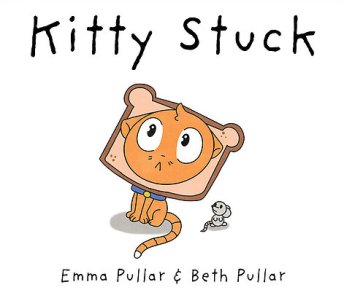
Kitty Stuck

Kitty Stuck Cover

Here kitty kitty…
Kitty is a calamitous cat who keeps finding himself in sticky situations.

Luckily, his loving family help him get unstuck.

My Review of Kitty Stuck

Kitty keeps getting stuck – in all kinds of places.

Oh, I loved this picture book for children and in fact I only have one complaint about it – the marketing says it is for children aged 0-7. Huh! I don’t see why they should have it! Kitty Stuck would make a fantastic present for cat lovers of all ages. I thought it was just wonderful. I especially liked the image of Kitty stuck in a bowl!

However, given that this IS a book for children, I’d better make some comments about it with that in mind.

Firstly, I think the pictures are stunning. They are funny and engaging, bright and vibrant. The expressions on Kitty’s face are so evocative of Kitty’s feelings that they really entertain. I found them joyous and uplifting and they often made me laugh. I loved the added extra of trying to find an image where Mouse is missing so that reading Kitty Stuck is an interactive experience too. There’s just enough extra detail in the pictures (such as the question mark by Mouse when Kitty is hiding) to allow discussion between adult and child too. I appreciated the fact that this seems to be a multi-ethnic family too as encouraging diversity is so important in a child’s formative years.

The balance of text to image is perfect and the cursive style is naive enough to appeal to children whilst still being totally legible so that independent readers can access it. I liked the variety of vocabulary and the rhyme scheme that works so well. Again, words like ‘box’ and ‘socks’ afford an educational opportunity for older children to find out about homophones, homonyms and rhyme.

Kitty Stuck is a really lovely book for children (and adults) that is accessible, educational and totally, totally enjoyable. I cannot recommend it highly enough.

About Emma and Beth Pullar

emma pullar

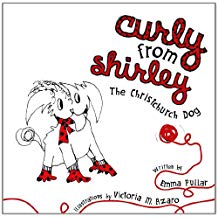
Kitty Stuck is Emma Pullar’s second children’s book. Her first, Curly from Shirley, was a national bestseller and named best opening lines by New Zealand Post. Upon her return to the UK Emma shifted her writing focus to writing dark novels for adults until recently, when inspired by her 12 year old daughter Beth’s drawings of the family cat Rupert, she took up her pen and wrote Kitty Stuck.

curly

Beth, a talented and dedicated young illustrator, hopes to use her royalties to develop her work by investing in art supplies, software and education.

You can follow Emma on Twitter @EmmaStoryteller and Instagram or visit her website for more details. You’ll also find Emma on Facebook.

There’s more with these other bloggers too:

Poster

Staying in with Catherine McNamara

CORRECT thumbnail

I really like the collaborative and supportive philosophy of publishing that Unbound has and I’m delighted to welcome another of their authors, Catherine McNamara to Linda’s Book Bag to stay in with me today.

Staying in with Catherine McNamara

Welcome to Linda’s Book Bag Catherine and thank you for agreeing to stay in with me.

Thank you so much for having me and my book!

Tell me, which of your books have you brought along to share this evening and why have you chosen it?
CORRECT thumbnail

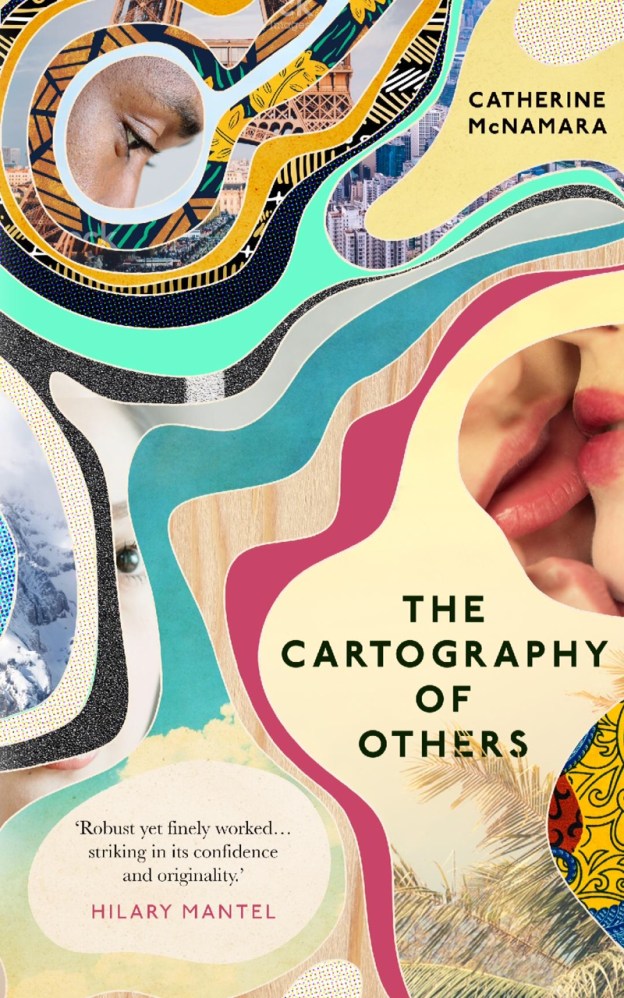
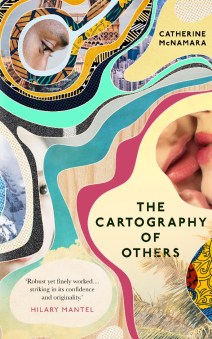
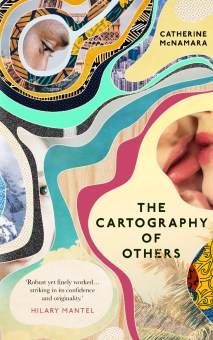
I’ve brought along my new short story collection The Cartography of Others, recently published by Unbound. It’s a collection of twenty stories set from Mali to Sydney, from Paris to Hong Kong, from London to Ghana, and it’s been praised by Hilary Mantel. I’m hoping to share with readers a little of what inspired me to produce this collection.

(Gosh, Hilary Mantel is quite an endorsement. I love travel so I think The Cartography of Others will be just my kind of read.)

What can we expect from an evening in with The Cartography of Others?

The stories in The Cartography of Others explore the boundaries between people and the alluring otherness of place, the migration of the body and the heart. There is a lot of atmospheric story-telling about desire, place, disappointment, redemption, and the characters include musicians, travellers, infertile women, migrants, victims of illness or accidents, old lovers reuniting or new lovers forging tenuous alliances. I lived for many years in West Africa, and the rest of my adult life in Italy, France and Belgium, so the stories reflect my desire to find a place, understand the people around me, absorb unfamiliar environments and make a space there for my dreams.

(This sounds just wonderful to me. I may have well over 900 physical and more e-books than I dare count on my TBR but I can feel another one might be added now!)

Hilary Mantel read the collection and said, “McNamara’s work has a fierce, vital beat, her stories robust yet finely worked,her voice striking in its confidence and originality. She writes with sensuous precision and a craft that is equally precise. This is fiction that can stand up in any company.”

(You must be utterly thrilled by that comment Catherine. Wow!)

What else have you brought along and why?

fertility

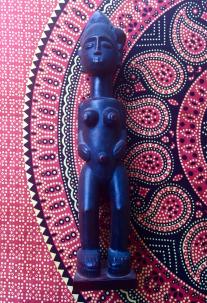
I used to have an art gallery in Ghana so I’ve brought along a sculpture from Ivory Coast that is a favourite piece. A Baule woman who for me firstly represents bold and timeless African art forms in the face of colonialism, and secondly, the beauty of all womanhood. It’s a tribute to the places and people that inspired me, and a symbol of the sensuality at the heart of my stories.

(I love it – so evocative of both womanhood and Africa.)

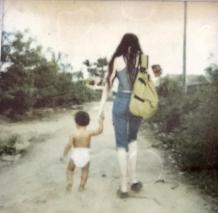
I’ve also brought a photo of myself and my youngest child, born in Ghana.

child walking

Throughout the time I was there I lived hard and travelled a lot, observed everything that happened around me and thus gained material for many of the stories that make up this book. At the time this photo was taken I was doing everything but writing, so it’s also a sign to all of us that there are times when you let your life itself guide and enrich you, and other times when you must get your act together and work. It’s been a long ride from that shot to the publication of this book and I am grateful for it!

(I love that image. It looks to me as if you’re both moving on from your past at the same time as heading for a new adventure.)

Thank you so much for staying in with me Catherine to chat about The Cartography of Others. I think the stories sound fantastic and I’ve so enjoyed hearing your philosophy of life too.

Thank you for having me Linda. It’s been lovely to share some thoughts about The Cartography of Others.

The Cartography of Others

CORRECT thumbnail

A Japanese soprano sets sail for arid, haunted Corsica where she seeks her lost voice. A nude woman at the window of a Hong Kong hotel watches her lover dine in an adjacent building, but is her desire faltering? With a young son and her photographer partner, a journalist traverses Mali to interview an irascible musician. A son relives his mother’s last hours before a hiking accident in the Italian Dolomites, while in London a grieving family takes in an ex-soldier from the Balkan wars, unaware of the man’s demons.

The Cartography of Others takes us from fumy Accra to suburban Sydney, from scruffy Paris to pre-fundamentalist Mali. Each bewitchingly recounted story conveys a location as vital as the fitful, contemplative characters themselves. Lives are mapped, unpicked and crafted, across vivid lingering terrains.

The Cartography of Others is available for purchase here.

About Catherine McNamara

Catherine

Catherine McNamara grew up in Sydney, ran away to Paris, and ended up in West Africa running a bar. She was an embassy secretary in pre-war Mogadishu, and has worked as an au pair, graphic designer, translator and shoe model. Her collection The Cartography of Others came out in May 2018 with Unbound. Her book Pelt and Other Stories was long-listed for the Frank O’Connor Award and semi-finalist in the Hudson Prize. Her work has been Pushcart-nominated and published in the U.K., Europe, U.S.A. and Australia. Catherine lives in Italy.

You can find Catherine on Facebook and follow her on Twitter @catinitaly and Instagram.

@maverickbooks Early Readers

It’s a real delight to review children’s books as they are a far cry from the Enid Blyton ones I loved as a child. I have featured Maverick Books on Linda’s Book Bag before when I reviewed the brilliant Buttercup Sunshine and the Zombies of Dooooom by Colin Mulhern here.

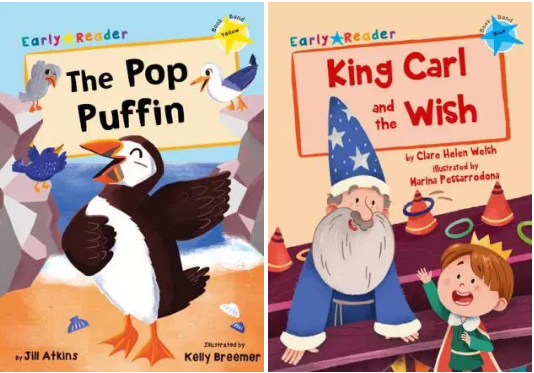
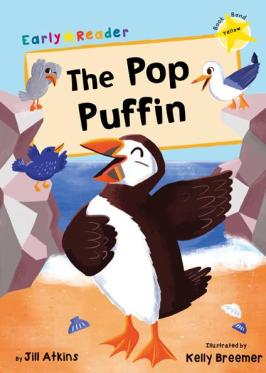
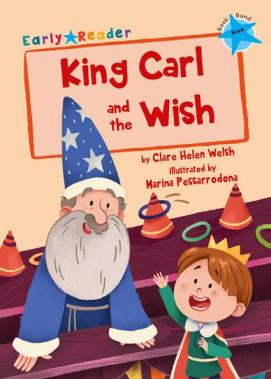
This time I’m reviewing a couple of books for younger readers; The Pop Puffin by Jill Atkins, illustrated by Kelly Breemer and King Carl and the Wish by Clare Helen Welsh and illustrated by Marina Pessarrodona. Both books are part of Maverick’s Early Reader range.

The Pop Puffin

The Pop Puffin

Puffin wants to be a pop singer, but he needs to find a band.

Other birds join in with Puffin’s singing.

Will it be a good show?

The Pop Puffin is available for pre-order here and will be released on 28th August 2018.

King Carl and the Wish

King Carl

King Carl is at the fair. He hurls a hoop and wins one wish from a wizard!

What will King Carl wish for?

King Carl and the Wish is available for pre-order here and will be released on 28th August 2018.

My Review of The Pop Puffin and King Carl and the Wish

These two books form part of Maverick Books‘ Early Reader Series within the Institute of Education book banding system and you’ll find the full selection of books here.

Both books are beautifully produced. They are just the right size for young children to handle and have the perfect length to keep focus and attention without overwhelming. The use of repetition helps reinforce the sounds and spellings in the vocabulary and there is sufficient challenge so that new words can be learnt too. The stories are fun and interesting.

The balance of text to image is just right. The images are really lovely as colours are vibrant and eye-catching with a style children can relate to and will love. As well as promoting literacy, both book have excellent value in other areas of the curriculum. Oracy and memory are helped by the small quiz sections at the end of the books and in King Carl and the Wish in particular, numeracy and counting to five are woven throughout the story. I can envisage The Pop Puffin as a brilliant way in to project work or Forest School activities for example, as children learn about different birds.

I thought The Pop Puffin and King Carl and the Wish were just delightful. They’re fun, vibrant, educational and entertaining. This series is perfect for school or home and children will love the books.

About the Authors and Illustrators

Jill Atkins

Jill-Atkins1

Jill lives with her husband in West Sussex, where she loves being near the sea. She has two grown-up children and five grandchildren. She used to be a teacher and now regularly helps in her local school.

Jill has loved books ever since she can remember and often read by torchlight under the bedclothes long after her mum told her to go to sleep. She has always enjoyed writing stories, and began storytelling when her two younger brothers were small. Her first book was published over 20 years ago and she’s had more than 70 books published so far, and counting!

Kelly Breemer

kelly

Kelly is a freelance illustrator based in the Netherlands. You can find out about her work by following her on Twitter @kellybreemer, finding her on Facebook or visiting her website.

Clare Helen Welsh

Clare-Helen-Welsh-for-website-e1435757253909

Clare lives in Devon with her husband and two children. She has over ten years experience teaching in primary schools – her colleagues say she never thinks small and when Clare says ‘I’ve got a good idea!’…they usually run and hide!

It was in 2013 that Clare began putting her wild imagination to good use writing picture books. In 2013 she won The Margaret Carey Scholarship for Picture Book Writers and in 2014 she was awarded Silver Medal in the Greenhouse Funny Prize for her picture book, Aerodynamics of Biscuits.

You can follow Helen on Twitter @ClareHelenWelsh and visit her website for more information. You’ll also find Clare on Facebook.

Marina Pessarrodona

Marina

Originally from Barcelona, Marina lives in Lyon. You’ll find Marina on Facebook and Instagram and can visit her website here.

Discussing new releases with Joan Moules

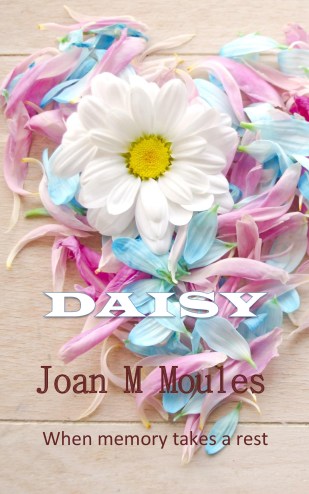
Daisy

It was back in April when Joan Moules first stayed in with me here to discuss Script for Murder. Today Joan is coming back to tell me all about some new releases so let’s see what she’s brought along to share today.

Staying in again with Joan Moules

Welcome back to Linda’s Book Bag, Joan. Thank you for coming back.

Tell me, which of your books have you brought along to share this time and why have you chosen it?

I’ve brought two books along because both were published at the beginning of July by Williams and Whiting.

(Oh – a BOGOF! Great!)

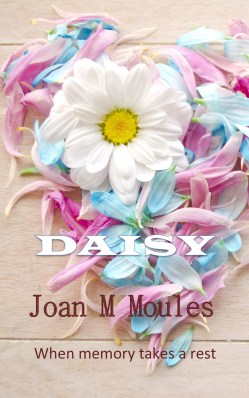
Daisy

Firstly, Daisy is about a woman who  wakes up in hospital with no memory of who she is, what she was doing on a train with no identification on her and with a large sum of money in an obviously new handbag.

(What a totally gorgeous cover Joan.)

Here is a short piece from Daisy.

The following day they brought her an obviously new, stone coloured handbag.  She opened it eagerly but there was nothing in it to identify her.  It contained a Yardley powder compact and lipstick, a brown comb, two plain white handkerchiefs and one other with daisies on. The only old item in the bag was a purse/wallet containing three hundred pounds.  It was brown leather and well worn.  There were no diaries, photographs, driving licence, names or addresses, and the bag itself, shoulder strap style, was the type available at most large stores.

     She looked at Sister with tears in he eyes.  ‘Are you sure it’s mine?’

     ‘No, my dear.  But it is the only one not claimed.  There are also two suitcases.  A blue one and a brown one I think it was, but you can see them later.  Right now the best thing you can do, and I know it won’t be easy, is to rest and wait.  The human mind is a wonderful machine, and rest is a marvellous cure.  What you are experiencing is a temporary condition, believe me.  Meanwhile you suggest a name we can call you for the moment.’

     If Sister had expected her to come out with her own name without thinking she was disappointed.

     ‘I don’t know.  You’ll h-have to do it for me.’ And she  covered her face with her hands and sobbed.  As Sister handed her one of the handkerchiefs from the bag she said, ‘How about Daisy – there are two embroidered on this, and it is a pretty name.  Come now.’ And she put her arm around the heaving shoulders, ‘in a day or two you’ll remember, or someone will enquire about you.  You must have patience my dear.’

(This is wonderful. I really want to read Daisy now! Which other book did you bring?) 

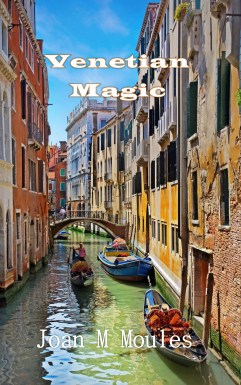
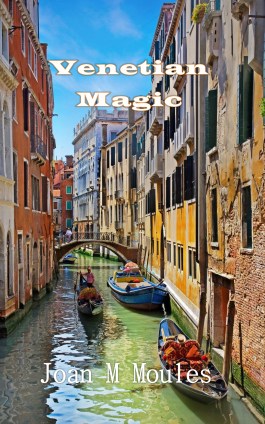
Venetian Magic

The other book is called Venetian Magic, and tells the story of  Cathy who accepts a six month job in Venice when she and her fiancé break up and she loses her job.  Venice is a city she had long wanted to see and she thinks it will give her a spot of alone time and a chance to sort out plans for her changed future.  Two men enter her life while she is there, yet neither could tell her their real reason for being in Venice and the trio become involved in a robbery and a kidnapping before the end of that summer in Venice.

(I love Venice and the though of being transported back there by reading Venetian Magic is so appealing Joan.)

Here’s taster from Venetian Magic Linda.

     Cathy was thrilled with the atmosphere of Venice from the moment she walked down the steps of the station to stand on the banks of the Grand Canal.  The steps and the immediate waterfront were cluttered with pigeons, but there before her was Venice, and for the first time in weeks she felt an excitement stirring in her veins.

     The canal traffic was busy, motorboats and gondolas making a contrast with each other and with the ancient and modern aspects of the city. Everywhere it seemed there were flowers; they tumbled down terraces and balanced on balconies.  As the boat moved through the water she didn’t know which side of the canal to watch.  Some of the buildings were shabby and some were splendid, and she glimpsed tantalising alleyways, shops, art galleries and museums.

     The boats on the canal hooted noisily as Cathy, oblivious to the conversation around her, gazed at the panorama, at the sights and sounds, but especially the colours of Venice, the peach, terra cotta, the soft pinks and browns glowing in the romantic Venetian light.

     It did not seem far to Mary’s place.  Guy pulled in by the landing stage, resplendent with red and white ‘barbers sign’ poles.  He helped them both out, and then once more took Cathy’s cases, carrying them into the dark entrance hall of the flat that was to be her home for the next few months. 

     ‘Thank you, Guy, see you later,’ Mary said when he kissed her and raised his hand in a farewell salute to Cathy.

     ‘Whenever you’re ready, nice to have you back again.’

     They travelled in the lift to the apartment where Ginette the housekeeper was waiting to greet them.

     ‘I heard the launch and knew it must be you, Signora.  Welcome, welcome, it is good to see you.  I have the kettle on,’ she added, beaming at her employer.

     Mary kissed the dark eyed little woman on both cheeks.  ‘Thank you, Ginette.  This is my niece, Cathy Maddoc.  She will be my secretary until Pippa returns.’

(This sounds so good. I’m not sure I should allow you to torment me with two books!)

Last time, you brought very welcome Bailey’s and After Eights Joan. What else have you brought this time and why?

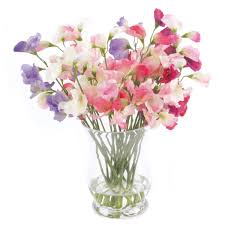
sweet peas

This time Linda I have brought you  a bunch of sweetpeas,  some pictures I took on one of my visits to Venice, and some sugared almonds which the shopkeeper put into a cradle of pink net and tied with a silver ribbon.  I do love the way that every purchase, however humble, is enhanced by such pretty packaging.  I was fortunate each time I visited because I had friends living and working there and they took me to many of the untouristy spots of the city as well as the well-known ones.

almonds

(I’m so jealous of you having friends in Venice. It really is a city I love. Thanks for the flowers and almonds too!)

One true story from my second visit involves an amazing coincidence. This time I was with my husband and daughter and we were boarding a waterbus.  In the rush to get on they were a little ahead of me and by the time I was aboard they had secured seats on the bench at the end.  As I emerged from the melee they waved and indicated the place next to them which they had put our bags on to save for me.  On reaching it the man and woman sitting next to them greeted me with, ‘Hello Joan, how lovely to see you.’   They were two English writers I had met the year before on my first visit.  They were the only people I knew in Venice apart from our friends and I wouldn’t dare to put it in a book because readers’ might not believe it. It is absolutely true however. The only two people I knew who lived in Venice and I had met once the year before were on that crowded waterbus, at the height of the tourist season and sitting next to my husband and daughter who were so surprised when they greeted me by name. I wonder what the odds on that happening are?

(That’s incredible. But I do believe you because a similar thing happened to me. I was on holiday with my parents in Pitlochry in Scotland when I was 13 and we met some people at the B+B we were staying in. Three years later we were in the queue for check in for a flight to Austria and the couple standing right in front of us were the same people. We hadn’t seen or heard from them in between!)

It’s been lovely having you back Joan. Thanks for returning.

Linda it has been great talking to you about favourite places and writing books. Thank you for hosting such a lovely evening Linda.

Daisy

Daisy

Robert’s marriage had been in trouble before he met Clare. Deeply in love, he and Clare decide to leave London for a new life in Devon. But their train crashes and Robert is killed. Injured and suffering from memory loss, Clare is taken to hospital, where the nurses call her ‘Daisy’. All ‘Daisy’ knows of her past is that she is wearing a new-looking wedding ring.

Then she meets Julien – but how can she commit herself to him when she already has ties?

Daisy is available for purchase here.

Venetian Magic

Venetian Magic

Venice was a city Cathy longed to visit, and when the opportunity of a temporary job arose she was thrilled. Two men entered her life that summer, yet neither could tell her their real reason for being there. Grant Taggart and Scott Underwood fell in love with her and she became romantically involved with them both. The trio became mixed up in a robbery and a kidnapping before the end of that summer in Venice.

Venetian Magic is available for purchase in paperback here and e-book here.

About Joan Moules

green jacket publicity

Joan M Moules is the author of over twenty-five fiction and non-fiction books in a variety of genres. She also writes short stories and articles, runs occasional day workshops and is passionate about her writing. Joan is a member of The Society of Women Writers’ and Journalists, Society of Authors, The Crime Writers Association and The Deadly Dames.

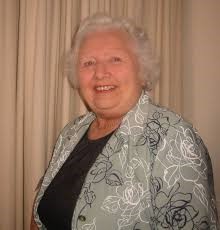
Joan Moules lived in London from 1940 to 1945 before returning to Hastings. From working in various offices she was plunged into the life of a busy shopkeeper when she married. Joan lives by the sea in Selsey, Sussex. She has two daughters, five grandchildren and two cats. Among her many other interests are reading, walking, the theatre, music hall and Victorian jewellery.

You can find out more by visiting Joan’s Jottings.

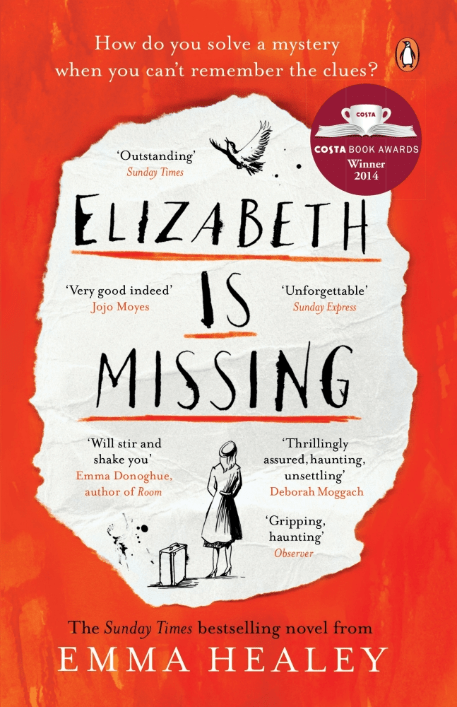
Elizabeth is Missing by Emma Healey

Elizabeth is missing

I’ve had Elizabeth is Missing by Emma Healey on my TBR since it was first released but never got round to reading it so I was delighted when it was chosen as our August book in the U3A reading group to which I belong.

Elizabeth is Missing is published by Penguin and is available for purchase through the links here.

Elizabeth is Missing

Elizabeth is missing

Meet Maud.

Maud is forgetful. She makes a cup of tea and doesn’t remember to drink it. She goes to the shops and forgets why she went. Sometimes her home is unrecognizable – or her daughter Helen seems a total stranger.

But there’s one thing Maud is sure of: her friend Elizabeth is missing. The note in her pocket tells her so. And no matter who tells her to stop going on about it, to leave it alone, to shut up, Maud will get to the bottom of it.

Because somewhere in Maud’s damaged mind lies the answer to an unsolved seventy-year-old mystery. One everyone has forgotten about.

Everyone, except Maud . . .

My Review of Elizabeth is Missing

Maud has one thing on her mind – to find Elizabeth.

A confession. Initially I wasn’t keen on Elizabeth is Missing and I don’t really know why, although I’ll say more about that later. Perhaps it was a book I wasn’t in the mood to read. However, as this was a book for my reading group and the members I spoke to were all raving about it I carried on. Before I knew what had happened I was completely absorbed in the narrative and loving every carefully crafted, poignant and perfectly placed word. I ended up thinking Elizabeth is Missing was just wonderful!

Although there’s plenty in the plot to enjoy and uncover, I genuinely felt that the plot didn’t really matter. For me, the sheer delight in reading Elizabeth is Missing was in meeting Maud, in understanding who she is and why she is!

Maud is such a magnificent creation. Her failing memory, her dementia and her determination make her someone the reader cannot help but care about. Anyone who has encountered a loved one with similar issues will find the resonances so touching and realistic. My heart went out to Helen, Maud’s daughter. I had total empathy with her as her life is affected by her mother’s illness and obsessions. I think Elizabeth is Missing could provide solace for some readers and genuine insight for others. This is such beautifully modulated writing. The fact that this is Maud’s first person account makes it all the more affecting.

The structure of Elizabeth is Missing is brilliant. The sections segue between past memories and present events seamlessly so that Maud’s reasoning is perfectly understandable, even when she is most confused. The kaleidoscopic refractions of her memories are echoed by the items she collects and manipulates, giving the reader a true comprehension of who she is, making her warm, human and genuine. I thought the way the strands of the narrative are drawn together was so skilfully crafted that I ended the book with huge admiration for Emma Healey’s writing.

Having begun reading not entirely sure I was going to appreciate Elizabeth is Missing I ended the process completely convinced that I had read a book of true quality. I even wonder if my hesitancy at the beginning was deliberately created by the author – I had my doubts about Maud in the same way those around her in the story have doubts about her memories and recollections. And she is a somewhat unreliable narrator after all. However, through accomplished and consummate writing I was drawn in to the story until I felt I was almost a part of it too.

Elizabeth is Missing is a moving, emotional book that leaves an almost physical sensation in the heart of the reader. I loved it.

About Emma Healey

emma heley

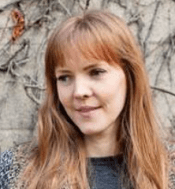
Emma Healey, a former bookseller, grew up in London where she went to art college and completed her first degree in bookbinding. She then worked for two libraries, two bookshops, two art galleries and two universities, and was busily pursuing a career in the art world before writing overtook everything. She moved to Norwich in 2010 to study for the MA in Creative Writing at UEA and never moved back again. Elizabeth is Missing, her first novel, was a Sunday Times Bestseller, won the Costa First Novel Award 2014 and was shortlisted for the National Book Awards Popular Fiction Book of the Year.

You can follow Emma on Twitter @ECHealey and visit her website. You’ll also find her on Facebook, Goodreads and Instagram.

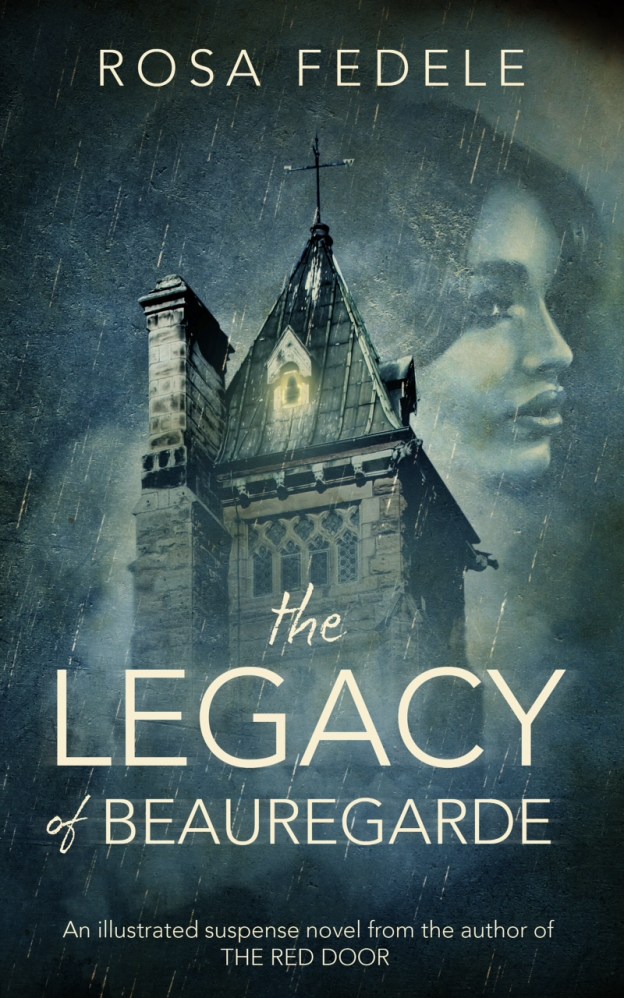
Staying in with Rosa Fedele

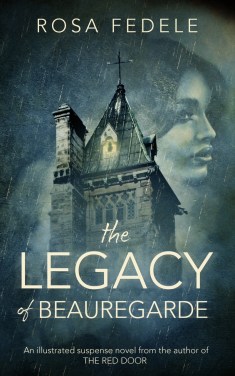
THE LEGACY OF BEAUREGARDE BOOKCOVER

With books dropping through my letterbox and into my inbox daily, it takes one that is a little bit different to catch my attention. When Rosa Fedele contacted me about her latest book, and having featured her here on Linda’s Book Bag before when The Red Door was published, I was intrigued and had to invite her to stay in with me and tell me more!

Staying in with Rosa Fedele

Hi Rosa. Welcome back to Linda’s Book Bag. Thank you for agreeing to stay in with me.

Hi Linda. So excited to join you and your fellow book- and (I hope!) art-lovers!

Tell me, which of your books have you brought along to share this evening and why have you chosen it?

THE LEGACY OF BEAUREGARDE BOOKCOVER

I’ve brought along my new illustrated suspense, The Legacy of Beauregarde, that came out into the world on 10th July!

Oh. That sounds a bit different. Congratulations and belated Happy Publication Day. What can we expect from an evening in with The Legacy of Beauregarde?

This novel is a decadent and eccentric tableau of theatre and treachery, old secrets and betrayals; exploring friendship, guilt and obsession, and slipping between characters to gradually reveal a century-old mystery.

(It sounds fascinating. Tell me a bit more.)
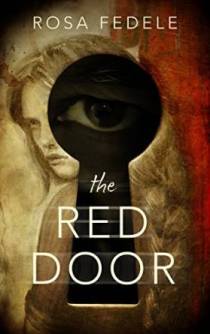
cover

It’s the second in my series of illustrated novels, after The Red Door, again taking place in Australia of the past: this time the year is 1990 and we are in a leafy and delicious part of Sydney named Hunters Hill.

As I wrote the story, the characters emerged in my mind and I’d make a sketch or paint a picture to illustrate exactly what my main protagonista looked like or how I imagined the front door of The Peach Pit to be. I always invite my social media followers along on the journey, to watch the illustrations evolve from inception through to the final image.Some of these paintings were discarded, some filed away … and only sixteen made the final cut.

(What a fascinating process.)

Here’s one that nearly got scrapped but was saved and became one of my secondary characters:
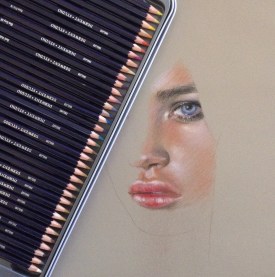
Melinda VI Sketch

Melinda WIP

(Actually, I’m thinking of asking you to leave right now Rosa. No-one should be that talented! You’re making me feel very inadequate.)

Each of my books is built around an iconic Sydney building. The Seminary was inspired by an old Abbey; as in the book it is a majestic estate previously owned by the Catholic Church. Here’s how it looked circa 1880:
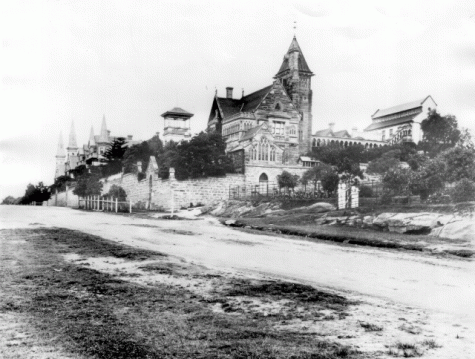
The Abbey circa 1880

And here’s my main lady, Marcela: a beautiful, empowered, tenacious, yet troubled, soul.
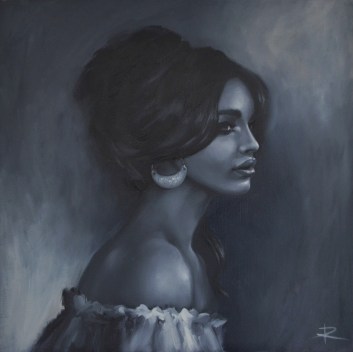
MARCELA 40cm x 40cm

(That’s such a beautiful image Rosa.)

Marcela and her family have lived beside The Seminary for four generations.After twenty years of abandonment, the Gothic Revival manor, steeped in both fanciful legend and rumours of haunting, is in dire need of heavy renovations.

The building is purchased by a wealthy couple with deep personal issues, and the wife is filled with grand ideas of how to remodel it. Not only that, she has arranged to have the renovation followed by a television crew (much like an Australian version of UK’s Grand Designs or America’s HGTV).

And that’s when Marcela’s problems begin.

(I love the sound of The Legacy of Beauregarde.)

Here’s a passage from the book, wherein Marcela tells a story of The Seminary and the great storm of 1899:

“‘1899 was a terrible year for the residents of Hunters Hill: beginning with a two-month drought which hit farmers and fruit-growers hard. Hot winds blew in from the desert, and bushfires struck. For weeks after, the town was shrouded in a layer of ash and red dust; gritty powder on every surface, clouding every window and crusting the sills, the fine cinereal dust coating every jug of fresh morning milk and gritting the corner of every eye.

‘Then, a boatload of patients from the Lunatic Asylum at Tarban Creek escaped, swam to Hunters Hill and terrorised the village. Mayor Joubert advised the frightened townsfolk to barricade their doors and protect their wives and children but, despite the heightened security, the Postmaster’s daughter was found one morning, dead and disfigured, on the steps of the Post Office, right next to the Wharf. The girl’s death sent shockwaves throughout the village, and many of the wealthier residents, including Justice Manning and the Camberwells, fled the peninsula to their country retreats in Bowral and Wentworth Falls. Even the family Jeanneau closed up their home and sailed on the next ship back to Europe. The Postmaster’s daughter had scarcely been buried when fierce storms hit the eastern seaboard and flooded the entire township, torrential rains collecting the ochre dust and forming churning rivers of red, down the cobbled streets and towards the harbour. Massive landslides occurred along the coastline, the ships slipped at Mort’s Dock sustaining great damage and many homes were washed away. The only positive outcome of the inundation was that the escaped lunatics were eventually found, concealed in a coastal cave, rounded up and shot. And it was during these storms the new priest appeared – a Frenchman who they said hailed from the Abbey at Vitreux – and moved into the Tower.

‘Nobody saw him enter; one day the Tower sat empty, the next day he had taken up residence in the topmost room. “He can’t speak English,” one of the brothers hinted. Another one laughed and told him he doesn’t speak at all. “He’s a Trappist, a member of the order who believes speech disturbs a disciple’s quietude and receptivity, strict observers of contemplative silence.” Cloaked in pale grey broadcloth and silent as death, they sometimes saw him staring out at them from the west window. “Why is he here?” asked one. “He seems awfully young,” remarked another. But the Rector refused to divulge any more information about the new tenant, his meals were passed through the door twice a day and, after the initial excitement, the denizens of The Seminary stopped thinking about him altogether … until some months later, when the Grey Friar’s body was found smashed and broken in the courtyard below.’

Claudia sat motionless, her mouth open. ‘Does anyone know why?’ she asked. The apple, unfinished and starting to brown, was cupped in her hand.

‘Beatriz suggested that he got expelled from his people in France and sent out here as punishment, that his shame was so great he flung himself from the window. That was what she told me and what everyone was led to believe …’

A cloud passed over, darkening the room. Marcela frowned. It felt as though the Tower itself was objecting to her tale and had thrown a disapproving shadow across the lane.

‘… but my mother had a different story.’

She stopped talking then and gazed out at the old Red Bloodwood, swishing and swaying with the wind.”

(Brilliant Rosa. You’ve really made me want to read The Legacy of Beauregarde now.)

I’ve loved what you’ve brought so far Rosa. What else have you brought along and why?

I’ve brought a little bit of trivia:

One of my characters, Stu, is a tradie working on the site of The Seminary. He’s also a finalist in a national music competition, similar to Idol or X Factor. The song he sings Gave Up On Me was composed by Aussie musician and actor, Domenica.
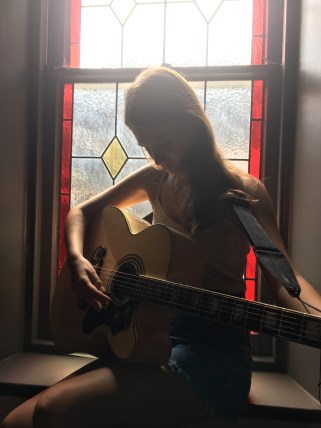
DOMENICA Manor House 2018

And, as they read the book, readers can listen to the tune here! Cool, hey?

(Very!)

It has been wonderful staying in with you to discuss The Legacy of Beauregarde Rosa. I’m so glad you came back to the blog. Thanks for staying in with me.

Thanks so much, Linda, for having me along and allowing me to wantonly inundate your blog with art, architecture and music. I hope you all enjoy reading The Legacy of Beauregarde as much as I loved writing it and, of course, creating the illustrations. Happy reading!

Thanks Rosa!

The Legacy of Beauregarde

THE LEGACY OF BEAUREGARDE BOOKCOVER

‘You could lose someone down there, couldn’t you?

Anyone could get buried under the concrete slab, and no one would even know!’

The Beauregarde women have lived in the shadow of The Seminary for four generations. And there is nothing conventional about Marcela, or her family.

When the decadent and obsessive Gordana acquires the iconic Sydney property and invites a television crew to film the building’s transformation into a magnificent showpiece, strangers suddenly penetrate Marcela’s world, each with a dark secret of their own.

But Marcela conceals a sinister bond which inextricably ties her to the derelict estate, holding the power to not only unravel Gordana’s grand designs, but expose bloodstained treachery, long-buried betrayals and lies.

The Legacy of Beauregarde available for purchase here.

About Rosa Fedele
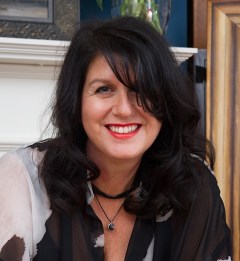
RF Head Shot

Graduate of the prestigious Julian Ashton Art School and finalist in many prizes including the 2017 Portia Geach Memorial Art Award, Rosa has exhibited at NSW Parliament House and Parliament House Canberra, as well as numerous galleries and exhibitions in Australia and worldwide. Rosa has studied at the NSW Writers Centre and is a regular contributor to arts magazines where she prepares articles and comprehensive tutorials.

“I love the dramatic use of light and colour, and often veer off into the world of whimsy, painting whatever takes my fancy – whether urban scenes or vintage cars. My style is constantly changing and evolving, and I’m always looking for fresh stimulation.  I am thankful that I am able to fulfil my passion for painting and writing, and the opportunities to capture a little moment of beauty to be enjoyed by future generations.”

Her debut novel, The Red Door, an illustrated suspense set in Sydney of the past, was a fulfilment of a lifelong dream, to interweave a story with pictures and draw the reader into her own bewitching, and slightly dark-edged, world. Her next illustrated novel The Legacy of Beauregarde is out 10th July 2018.

You can follow Rosa on Twitter @rosafedeleart and if you’d like to order your very own limited edition print or giclée, see Rosa’s web site for more details. Rosa is also on Facebook.
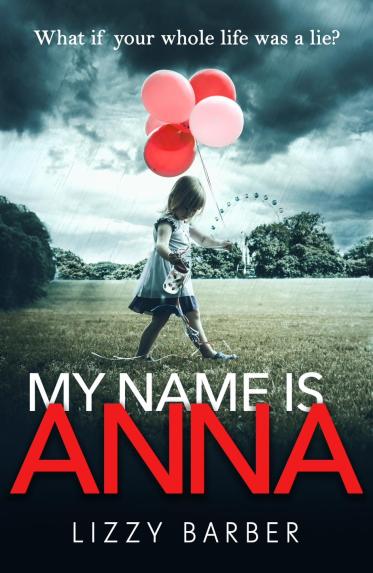
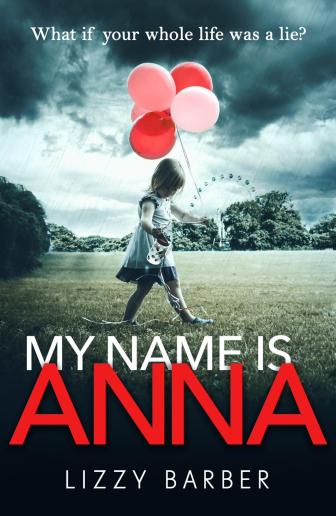
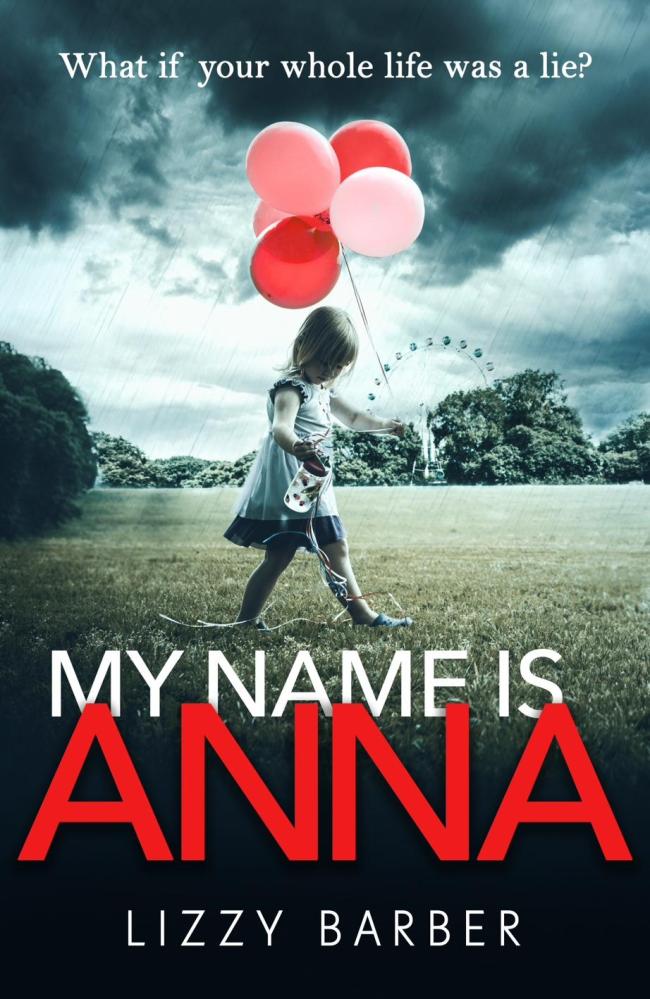
Cover reveal: My Name is Anna by Lizzy Barber

My name is Anna

It’s so exciting being part of the start of a book’s life and I’m thrilled to be helping to reveal My Name is Anna by Lizzie Barber.

This enthralling debut thriller about a young woman’s quest to uncover her identity will be published by Century, Penguin Random House in e-book on 6th November 2018, and in hardback on 10th January 2019.

My Name is Anna

My name is Anna

Two sisters desperate to unlock the truth. But how much will they sacrifice to lay the past to rest?

Anna is eighteen today. She has been taught by her Mamma that cleanliness and purity are the path to God. But Anna is rebelling. She’s waited her whole life to visit Florida’s biggest theme park and now she’s going against her Mamma’s wishes. So why, when Anna arrives, is she so certain she’s been there before?

Rosie has grown up in the shadow of a missing sister she barely remembers. Her parents’ relationship has been fractured by fifteen years of searching for their daughter. Now Rosie is determined to uncover the truth, however painful, before it tears her family apart…

I don’t know about you, but I can’t wait to read My Name is Anna!)

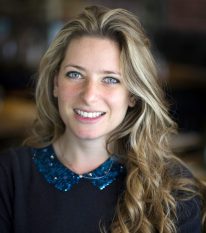
About Lizzie Barber

Lizzie Barber

Lizzy Barber studied English at Cambridge University and works as the head of brand and marketing for a restaurant group. Her debut novel, My Name is Anna, was the winner of the Daily Mail crime writing competition and she is currently hard at work on her next thriller. Lizzy lives in London with her husband.

You can follow Lizzy on Twitter @ByLizzyBarber #MyNameIs. You can also visit Lizzie’s website.

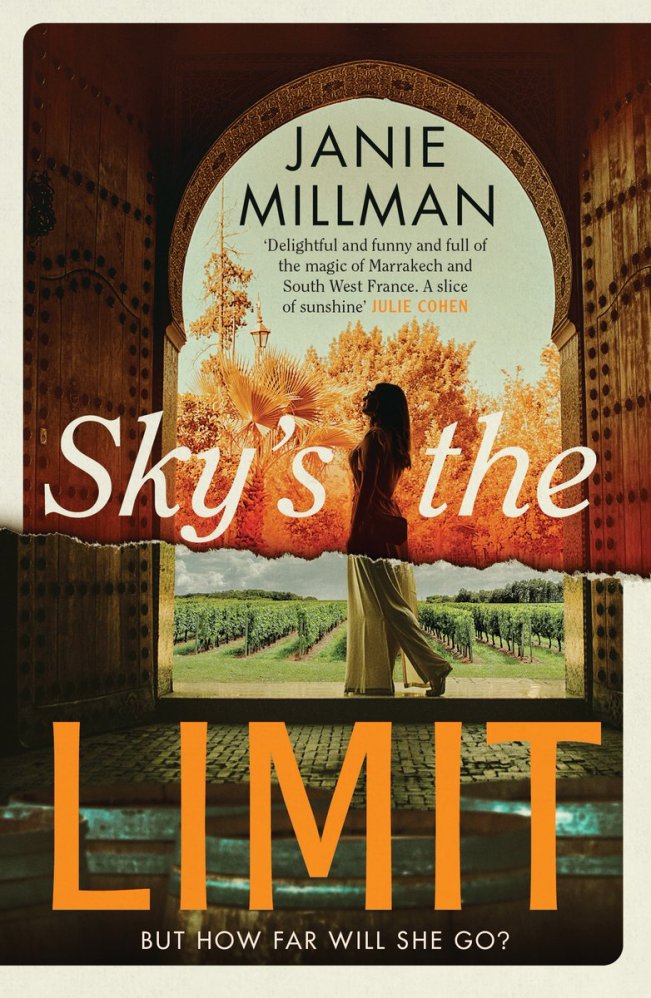
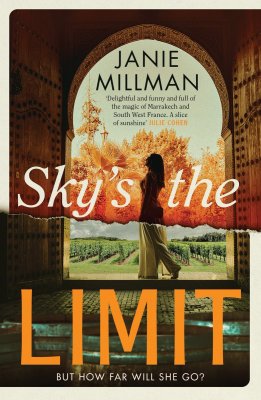
Sky’s the Limit by Janie Millman: Review and Author Interview

Sky's the limit

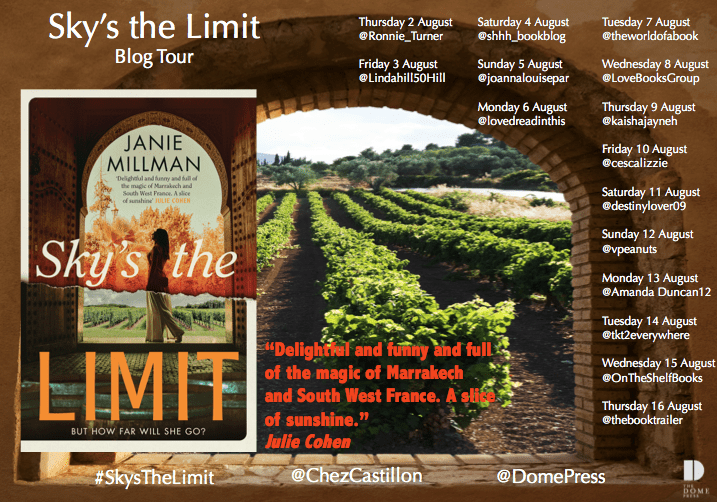
Having read and enjoyed Life’s A Drag by Janie Millman, my review of which you can read here, I was delighted to be asked by Emily Glenister to be part of the launch celebrations for Sky’s the Limit, Janie’s new book. I’m sharing my review of Sky’s the Limit today but even better from my point of view, I get the chance to ask Janie all about the book too.

Published yesterday, 2nd August 2018 by The Dome Press, Sky’s the Limit is available for purchase here.

Sky’s the Limit

Sky's the limit

Sky is devastated when she finds that her husband is in love with someone else, even more that it is her oldest friend Nick. She has lost the two most important men in her life and can’t ever trust either of them again. To escape, she goes alone on a dream trip to Marrakesh and meets Gail, on a mission to meet the father of her child, a man she loved but thought did not want her.

In Marrakesh, Sky and Gail both find unexpected joys – and surprises. For Sky these lead to France, to a beautiful chateau and a family whose relationships seem as complicated as her own.

An Interview With Janie Millman

Thanks so much for agreeing to answer my questions about Sky’s the Limit Janie. Firstly, Sky’s the Limit feels slightly different in style to Life’s A Drag. What would you say to that assessment?

To be honest I hadn’t give much thought to the difference in style before!

I guess the main difference is that Sky’s The Limit is written in the first person whereas Life’s A Drag is in the third. In Sky’s the Limit, it is clear who the main protagonist is whereas there are several in Life’s A Drag.

Most of the action in Life’s A Drag happens simultaneously between Suffolk and San Francisco whereas in Sky’s The Limit the action flows from Marrakech to South West France with Sky leading the way so to speak. Perhaps Life’s a Drag is a bit zanier given the subject matter whilst Sky’s The Limit has more magic and romance.

I think that’s a really good assessment of both books! So, why did you choose to focus on Sky through the first person perspective rather than one of the other characters?

Well the short answer is because my agent told me to!

Oh!

That is true but obviously there is a bit more to it than that. I actually first wrote Sky’s the Limit in the third person. My agent – David Headley – felt that there was something not quite right with it. He suggested that I write it from Sky’s point of view. I have to admit I was skeptical at first – not least because it meant a huge amount of extra work but I decided to give it a go and  – damn him – he was absolutely right.

That’s the thing about agents Janie – they usually know what they are talking about!

The book suddenly came alive in a way that it hadn’t been before. I used to be an actress and I loved “becoming” Sky. I loved getting into her head, getting to know her in a way that I hadn’t the first time of writing.

You create a super sense of place through your use of the senses. When you’re developing setting, how aware are you of appealing to all the readers’ senses?

The location and settings are as important to me as the characters. I adore exploring new places and I am keen that my readers explore with me. I love tasting the local food and drink, wandering around the markets, chatting to the locals – to me this is how you get to know a place. I want to be the eyes, ears and nose of my reader so that they can imagine they are there.

And you do it brilliantly. I was transported along with the characters.

Sky’s the Limit had two very different settings in France and Morocco. Which one would you most like to inhabit and why?

Now this is a really easy question as we do actually live in South West France! In fact Chateau Fontaine from Sky’s The Limit is about ten minutes away although obviously it is not called Chateau Fontaine in real life.

Now you’re just making me jealous…

We moved here nine years ago on a complete whim. We had no more idea of moving to France than moving to the moon.We saw a picture of the back of our house in a discarded newspaper on a train we were not supposed to be on! We phoned up the estate agents, came to view it the following week and three months later we were the owners of a large eighteenth century townhouse which needed a huge amount of renovation. We were actors and our DIY skills consisted of a couple of B&Q commercials – but somehow we got it done and in 2010 Chez Castillon was born.

How romantic and exciting. That’s quite an unconventional way to buy a home. Speaking of which, you always seem to incorporate quite unconventional characters as well as those a reader might expect. Why is this?

I’ve always been drawn to odd, quirky, characters – just look at my husband!

No seriously, those folk that look like they have a real story to tell always appeal to me. I love to hear about people’s lives and the more unconventional the better. I also adore people watching and the Monday morning market here is the ideal place.

Having said that I don’t deliberately set out to include unorthodox characters, they just seem to worm their way in!

I know you run painting as well as writing courses at Chez Castillon, and Sky is a talented painter in the book. How important is art to you as a writer?

I love art and I so wish that I could paint but as I can’t, I do the next best thing, which is to write about someone who can.

Art plays a very important role in my life, our walls are covered with paintings. Some we inherited with the house, some cheap buys from various brocantes, some done by mates, some by our students and some by our tutors. They all mean something to me; they all have a special place, much like the books in our library.

You’ve set two of your books that I have read (and so enjoyed) in Suffolk and San Francisco; Morocco and France. Where are you taking your readers next?

The next book is set in Cambridge and Greece.

Cambridge isn’t a million miles from me…

Greece is one of my all time favourite places. Over the years I have visited over twenty Greek islands and I have loved every single one. We went to Crete last year as research – we stayed in an old film director’s house overlooking the sea. I won’t give anything else away!

I shall look forward to reading all about Greece then Janie!

Is there anything else you’d like to tell us about Sky’s the Limit?

I loved writing it, I loved getting to know my characters, I loved weaving all the different stories together.

I hugely enjoyed revisiting Marrakech and I adored writing about this corner of South West France that I now call home. A place I have come to love and I hope through Sky’s The Limit my readers will too.

Oh they will Janie – and speaking of which, here’s my review of Sky’s the Limit:

My Review of Sky’s the Limit

Sky thinks she has everything with a wonderful husband and brilliant best friend. Appearances may not be what they seem.

I thoroughly enjoyed Sky’s the Limit by Janie Millman. It felt such an assured and confident book that I was able to immerse myself into it immediately and I think Janie Millman’s writing has become so accomplished.

I was instantly transported to Marrakesh and France. I thought the descriptions were wonderful and the settings so vivid it was like looking at a film or photographs of the places described. There’s a real appeal to the senses although if you’re on a diet I’d recommend skipping the parts when Nick is cooking otherwise you’ll be tortured! Seriously, there are colours of the souks and markets and aromas of spices, sounds of water and chatter, tastes of wonderful food and the touch of fabric or sunburn for example that weave a true picture of Morocco and France. I think reading Sky’s the Limit could be the next best thing to travel if you’re not able to go away!

I love the way Janie Millman has an eclectic range of characters, nationalities, sexualities and so-called normalities and blends them together into a lovely escapist read with romance, self-discovery and travel entwined. I really do think Sky’s the Limit is the perfect summer read because each character brings a very important element to the narrative so that the reader wants to go on their journey with them.

What works so well is the underlying principle that we all need love and the ability to trust in whatever form that takes. It may be romantic or family love or an ardent passion for an activity like wine making, or for an area but Janie Millman explores each approach so sensitively that it’s impossible not to get caught up in the different aspects.

I finished reading Sky’s the Limit with a satisfied sigh. I had been wonderfully entertained by the story and relationships. I had been taken on a vivid and realistic journey to France and Morocco where I had fallen in love with the places and people in the story. Sky’s the Limit is perfect for transporting yourself away from ordinary life and I really enjoyed it.

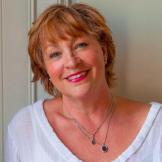
About Janie Millman

Janie

Janie Millman is an actress, writer and co-owner of Chez Castillon.

She met Mickey, her husband, playing romantic leads in a summer season of comedies at The Little Theatre, Sheringham, on the Norfolk coast. Both actors for more than twenty years, their roles have ranged from Ninja turtles to acting in Olivier Award-winning stage productions and working on screen with Hollywood stars.

Although still acting, Janie is now concentrating on writing. Life’s A Drag was her debut novel.

You can follow Janie on Twitter @ChezCastillon, or visit her website. You’ll also find Janie on Facebook.
There’s more with these other bloggers too:

tour poster

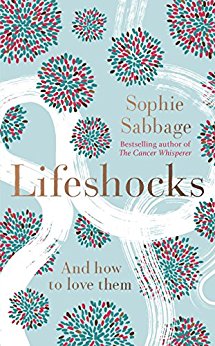
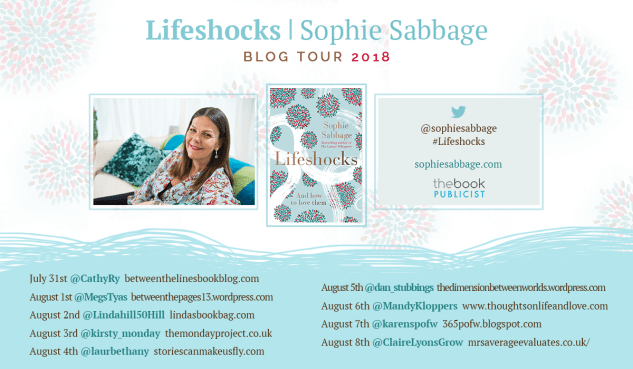
An Extract from Lifeshocks by Sophie Sabbage

cover

It gives me enormous pleasure to be part of Sophie Sabbage’s Lifeshocks blog tour and I’d like to thank Natalie Connors at The Book Publicist for inviting me to take part. In a slightly different, and very personal post, I’m delighted to be able to share a piece from Sophie’s Lifeshocks and an example of a lifeshock of my own.

Published by Coronet on 14th June 2018, Lifeshocks is available for purchase here.

Lifeshocks

cover

HAVE YOU EVER WONDERED IF LIFE IS TRYING TO TELL YOU SOMETHING?

This is a book about all the unwanted and unexpected moments in our lives. They surprise us, they blindside us. They shock us. They command our attention. Some bounce off us, other strike deep into our being. These moments are collision points between how we see life and how life actually is. These are lifeshocks.

In her new book Sophie explains how lifeshocks awaken us. She offers her own deeply personal story as well as other case studies as a vehicle for bringing the theory and teachings to life. She focuses on three kinds of lifeshocks we all receive: limiting lifeshocks which challenge our arrogance and appetite for control; exposing lifeshocks which challenge our affectations and pretences; and evoking lifeshocks which challenge our closed-heartedness.

This groundbreaking new book reveals how these lifeshocks can bring healing, transformation and peace.

An Extract From Lifeshocks

Nowhere to Hide

There are moments in time when our internal percep­tions are confronted by external events, when what is assumed, wished for or imagined collides with what actually is. I would later learn a term for these moments from the man who became my spiritual mentor: lifeshocks.

One of my most memorable was just after I’d finished my studies at university. I read English Literature, which I loved for what it gave me that my life didn’t; my large library overflowed with anti­dotes to my inadequacies. It was hallowed ground.

As I packed up my student flat to go home, I bought a roll of black rubbish sacks, filling them with about five hundred books before storing them in the garage at my parents’ house in London. The books included the beautifully bound collections my godmother had given me as a child, as if she knew in advance how deeply I would fall in love with literature. When I came to pick them up a few weeks later, they were gone. Believing the sacks were full of rubbish, Mrs Yeldham, my mum’s cleaner, had thrown them all away. The following morning, I barely registered the degree results, a first class, that arrived in the post. I was too gutted to take in that information.

Ever since I was a child books had been my sanctuary from the inner voice that made me too ugly, too clever, too weird, too intense, too loud, too privileged, too fat, too emotional, too difficult and too damn much.

At the age of ten I read Harper Lee’s To Kill A Mockingbird in one sitting on a family holiday in New England. We were visiting friends who lived in a white, wooden, ocean-front house at the top of a cliff on the coast of Maine, with a view across the Atlantic Ocean. It was summer. Their garden was in full bloom and the table was laid for a fresh lobster lunch, but I wasn’t there. I was in Maycomb, Alabama, with Jem and Scout, as they found gifts in the tree outside Boo Radley’s place. I begged to be excused from socialising and was permitted to sit under a tree with my book while our hosts cooked lunch.

Lobsters scream when thrown in boiling water and I cried listening to them. My dad tried to reassure me it was just a release of heated vapours whistling out of the shell joints, but I didn’t believe him. Though I wasn’t brave enough to save the lobsters, I refused to eat them, which gave me another excuse to keep reading about the complexities of race, class and injustice in the American Deep South of the 1930s. I finished my book under a tree in the summer sunshine, occasionally distracted by the great black-backed gulls laughing over­head, and listening to more lobsters scream.

From then on, I kept company with novelists and poets. I would bring them home after school or univer­sity and sit with them in the small hours, inviting them to change me. I wanted to be someone else, to be rewritten; to wake up one day cast as Cleopatra or Anna Karenina – beautiful, revolutionary and epically loved.

This lifeshock – hearing the words, ‘I threw them away’ from the distraught, abjectly apologetic woman who had worked for my mum for years – forced me to face the unhealthy aspect of my love affair with books. Granted, it was a very first-world loss, but it led me to admit that no number of books could provide permanent refuge from my deepening insecurities and the interminable noise in my head. They were not a temple. They were books. Brilliant, beautiful, mind-bending narratives that often fed my soul when it was hungry, but could not save me from my loneliness, my longing or my shame. I cried all day. I couldn’t stop. I kept saying sorry to Mrs Yeldham, who was almost as upset as I was, but the dam had broken – the one I had built with the complete works of Austen and Dickens, Shakespeare and the Brontë sisters, Maya Angelou and Mary Oliver. Eventually my mum, who was also there that day, got a bottle of wine from the fridge and poured three glasses. And we sat with Mrs Yeldham, getting drunk.

Sometimes we need to lose what we are hiding behind to see that we are hiding. It took the sudden loss of my library to expose the emotional distress beneath my intellectual poise. Without my books, I felt naked. I had written a first-class dissertation about mad women in literature and women who wrote their way out of madness, while my own madness spiralled out of control. I think that was the day my conscious quest for ‘Something Greater’ began.

My Day of Lifeshocks

Imagine a cold wintry Monday in 1996. You’ve just brought back your father-in-law from South Wales to Lincolnshire as his wife is dying and, because he is disabled as a result of a massive stroke and completely deaf and blind on his left side, it isn’t right to leave him alone 250 miles away. The phone rings at 6.30AM to say your mother-in-law has just passed away. It sounds a pretty sad moment doesn’t it? It’s one of those times Sophie Sabbage might define as a lifeshock.

That’s what happened to me, but just after I rang the school where we both taught to say my husband and I wouldn’t be in, as we had to deal with a family death, my sister rang me. I’ve never forgotten her tone as she said, ‘I don’t want to add to your troubles but Dad has just been rushed into intensive care with a suspected heart attack.’ Lifeshock number two on the same morning.

As we spent the day juggling phone calls, making funeral arrangements, supporting my father-in-law and dealing with our grief, we also had to find time to travel a 60 mile round trip to collect my mother and take her to see Dad in hospital, not knowing if he would survive.

Next to Dad’s bed in the intensive care unit where he was being closely monitored, Mum looked very pale and unwell. As we were leaving it all became too much for her and she simply keeled over, unconscious on the floor.

Lifeshock number three on the same day.

At that point we had my mother-in-law in the morgue, my disabled grieving father-in-law at home, my Dad on the brink between life and death and my Mum incapacitated as we looked on in horror.

That day seems to me to be one of Sophie Sabbage’s lifeshocks days. A day when the individual has to make a choice about their life.

Now, not all of the outcomes were good, but my husband and I see that day as pivotal in our lives. We’d never intended to work until retirement age, but that day cemented our resolve to live our lives to the full.

And we have.

We ‘retired’ very early, taking the risk that we could live on our savings. We’ve travelled the world from Antarctica to Zanzibar. We’ve had fun. We’ve laughed  – a lot! And we’ve had some bad times too which make the good ones all the sweeter in our 35 year marriage. And as we plan ahead with Bali, Indonesia and Hong Kong coming up as our next trip we definitely think our ‘lifeshock’ moments have helped us live our lives to the full.

About Sophie Sabbage

sophie

For sixteen years Sophie Sabbage was mentored by Dr. K. Bradford Brown. He was a clinical psychologist, psychotherapist and Episcopalean minster, but he drew on ancient spiritual traditions from far and wide as well as modern psychological wisdom and practices. His work synthesises Western psychology and Eastern philosophy in a powerful, accessible and modern way that anyone can use for their development. For over twenty years Sophie Sabbage took Dr. Brown’s work into corporate companies through her company Interaction – from British Airways to Unilever and the NHS. She is still a Senior Trainer with the educational charity he co-founded, in which she teaches people from all walks of life how to engage with their lifeshocks.

Since her diagnosis she has been delivering talks and workshops to cancer patients to empower them to listen to the lifeshocks that this brutal disease delivers in ways that empower them mentally and emotionally. She is the author of the bestseller, The Cancer Whisperer.

Sophie lives in Kent with her husband John and daughter Gabriella.

You can follow Sophie on Twitter @sophiesabbage and visit her website. You’ll also find her on Facebook.
There’s more with these other bloggers too.
poster

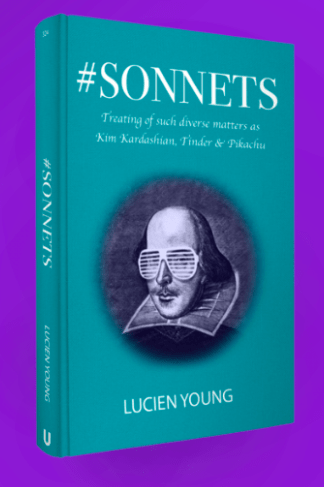
Staying in with Lucien Young

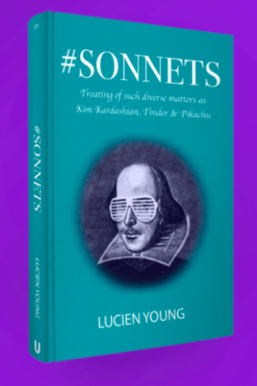
Cover 2

When Lucien Young got in touch recently I was so intrigued by what he told me about his writing I simply had to invite him onto Linda’s Book Bag to stay in with me and tell me about one of his books. When you’ve read what he has to say you’ll see why the ex-English teacher in me was so fascinated!

Staying in with Lucien Young

Welcome to Linda’s Book Bag Lucien. Thank you for agreeing to stay in with me.

My absolute pleasure! Thanks for having me!

Tell me, which of your books have you brought along to share this evening and why have you chosen it?

I’ve had a couple of humour books published by Ebury Press (Alice in Brexitland and Trump’s Christmas Carol), with a third coming out in September.

Cover 2

However, I’d very much like to share an altogether odder and more personal project. Over the last year or so, I’ve written 155 Shakespearean sonnets on subjects like Kim Kardashian, Tinder and Pikachu.

(Oh! That sounds a bit different. I love the idea of using the sonnet form for popular culture – seems apt somehow!)

As the subject is rather niche, I’m trying to crowdfund this book through the online publisher Unbound, under the title #Sonnets. If your readers are interested, they can find the funding page at unbound.com/books/sonnets. It features extracts and an embarrassing video of me giving a reading!

(I really enjoyed your reading actually Lucien!)

What can we expect from an evening in with #Sonnets?

An excellent time! I’m primarily a comedy writer, but I’m also a massive literary nerd. I read English at university and have always been obsessed with Shakespeare, as well as lesser known Elizabethan sonneteers like Philip Sidney and Edmund Spenser. As such, my ambition has been to make #Sonnets not only funny, but also technically adept, with first class iambic pentameter, perfect rhyme schemes, and more ‘thee-s’ and ‘thou-s’ than you can shake a stick at.

(This sounds utterly brilliant. I shall look out for a Petrarchan version later too!)

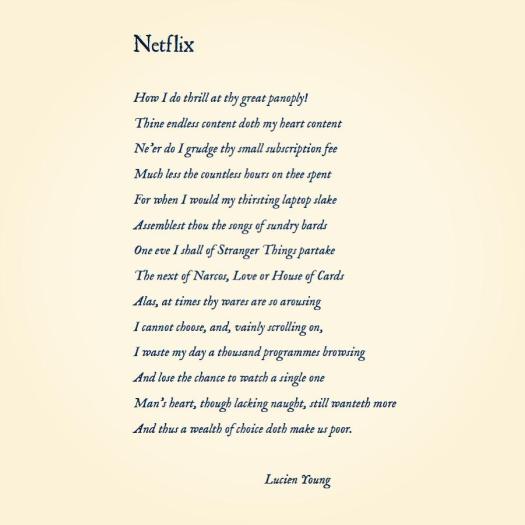
The book also combines my love of Shakespeare with my love of daft pop cultural ephemera. Here’s an example on the theme of Netflix:

sonnet

(Wonderful – and exactly right for today’s society. Shakespeare would have approved!)

What else have you brought along and why? 

I’ve brought along a copy of Shakespeare’s Sonnets — after all, you can’t have a parody without the original.

(Absolutely!)

By the way, did you know that the word ‘parody’ comes from the Greek para meaning ‘alongside’ and oide, meaning ‘song/ode’? So a parody is a song sung in parallel! Pretty cool, right?

(It is indeed. You’re right – you are a literary nerd.)

Cheekily, I’ve also brought another link to my Unbound page here.

Nothing cheeky about it Lucien – no point in telling readers about a brilliant book and then not where they can find it! I really enjoyed hearing about #Sonnets and hope it’s a huge success for you. Thanks so much for staying in and telling me all about it.

Thanks again for having me, and for running a brilliant blog!

(Flattery will get you anywhere!)

#Sonnets

Cover 2

For hundreds of years, the sonnet has captivated poets, including its most famous practitioner, William Shakespeare. Alas, Shakespeare never used his command of iambic pentameter to explore such vital subjects as Snapchat, porn or Austin Powers. Enter comedian and too-much-time-on-his-hands-haver Lucien Young.

While Shakespeare only wrote 154 sonnets, Lucien has written 155, making him one better. While Shakespeare kept his feelings on Spider-Man secret, Lucien has no such qualms. And while the immortal bard is unlikely to write you a personalised verse in exchange for a pledge, Lucien will very much do that…

You can pledge to support #Sonnets here.

About Lucien Young

Lucien

Lucien Young is the author of Alice in Brexitland and Trump’s Christmas Carol, both published by Ebury Press, and has written for TV programmes such as BBC Three’s Siblings and Murder in Successville. He was born in Newcastle in 1988 and read English at the University of Cambridge, where he was a member of Footlights.

You can follow Lucien on Twitter @LucienDYoung and on Instagram he is @luciendyoung.