Giveaway: Linda’s Book Bag is Two Today

book-shelf

I can’t believe that Linda’s Book Bag is only two today. It feels as if I’ve been blogging for ever!

I’ve thoroughly enjoyed blogging over the last two years because I have encountered wonderful books, but even better, fantastic people, be they fellow readers, bloggers, authors or publishers. Some I’ve met in real life and some only virtually but many have become real friends.

thank-you-2

In that first month two years ago I had a mere 18 views of my 8 blog posts. Twelve months later in February I published 36 posts and had 3, 401 views. This month I’ve published 13 posts including this one with another 23 scheduled without any other reviews I might fit in. As I write I have had just under 75,000 views so I think the blog might be growing!

To celebrate my second blog birthday with this, my 771st blog post, and to say a huge thanks to all those who support my blog either by following it here, sharing posts on Facebook or tweeting for me, I’m running a mystery giveaway. It’s a mystery because I haven’t entirely decided what the prize is going to be!

Giveaway

question-mark

To enter the giveaway simply click here. The giveaway is open until UK midnight on Saturday 11th February.

Thank you so much for all your support. I appreciate you all.

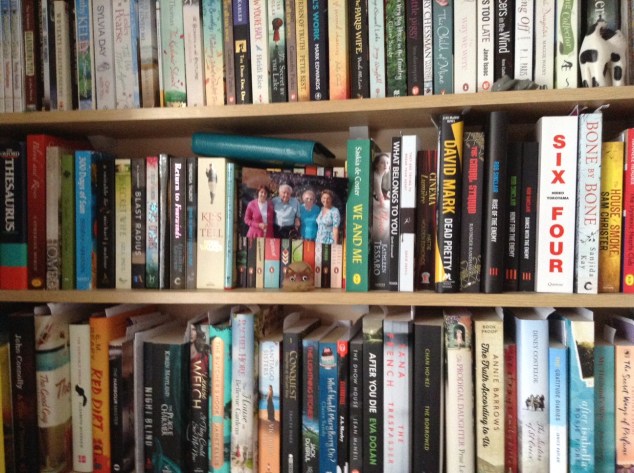
Oh – and all those books above are just a fraction of the ones on my reading pile patiently awaiting a review!

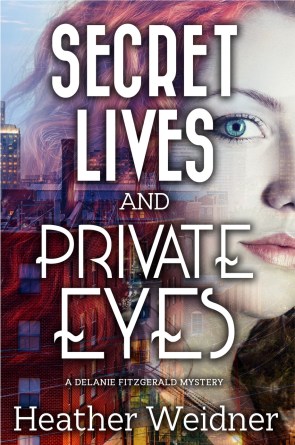
Pet Plots, a Guest Post by Heather Weidner, author of Secret Lives and Private Eyes

secret-lives-private-eyes-cover

Blogging has been wonderful in bringing me into contact with authors I might never have encountered otherwise. Today I’m delighted to welcome writer Heather Weidner, author of Secret Lives and Private Eyes, to Linda’s Book Bag. As an animal lover I was fascinated that Heather often features pets in her writing and luckily she’s agreed to tell me more about that in a great guest post.

Secret Lives and Private Eyes was published in June 2016 by Koelher Books on and is available for purchase in e-book and paperback here.

Secret Lives and Private Eyes

secret-lives-private-eyes-cover

Secret Lives and Private Eyes is a fast-paced mystery that will appeal to readers who like a strong, female private investigator who has a knack for getting herself in and out of humorous situations.

Business has been slow for PI, Delanie Fitzgerald, but her luck seems to change when a tell-all author hires her to find rock star, Johnny Velvet. Could the singer whose life was purportedly cut short in a fiery car crash still be alive?

And as if sifting through dead ends in a cold case isn’t bad enough, Chaz Wellington Smith, III, a loud-mouthed strip club owner, hires Delanie to uncover information on the mayor’s secret life. When the mayor is murdered, Chaz is the key suspect. Now Delanie must clear his name and figure out the connection between the two cases before another murder – probably her own – takes place.

Pet Plots! The Role of Pets in My Mysteries

A Guest Post by Heather Weidner

batman-riley

Thank you so much for letting me visit your blog today. I write mystery novels and short stories. Secret Lives and Private Eyes is the first in the Delanie Fitzgerald mystery series. Delanie is a sassy, redheaded private investigator who zips around Central Virginia in her black Mustang. Her partner at her PI firm, Falcon Investigations, is Duncan Reynolds, and his sidekick is an English bulldog named Margaret. Margaret, the slobber queen, is an integral part of the characters’ lives. The brown and white log with legs adds humor, normalcy, and often comfort to the plot line. Writers can use the pet character to lighten the scene, bring comfort in a tense situation, or even as a working dog for search, rescue, and drug detection efforts. Pet sidekicks have been a part of mysteries since the early days, and now there are subgenres devoted strictly to pets.

riley

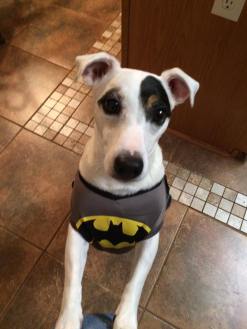
Heather’s ‘undercover’ pet Riley

When I started writing, I knew I wanted animals to have a place in the story. They have always been a part of my life, so there should be pets in my characters’ lives too. Margaret is part of the family. She has a bed at the office, and she rides shot-gun in her favorite guy’s yellow Camaro. Margaret goes just about everywhere that Duncan does, so it fit that she would be included in the main characters’ daily lives. And she is always underfoot if she thinks she’ll score a snack. Margaret even has a little competition and drama when Duncan finds a steady girlfriend.

In this novel, Delanie and Duncan are investigating John Bailey, who they believe to be ‘80s Rockstar Johnny Velvet. A tell-all author hires them to see if the rocker faked his death and is living incognito in rural Virginia on a farm. His farm is packed with animal companions: a donkey, two alpaca (Myrtle and Joe), and five dogs. The leader of that pack is a Jack Russell Terrier. And the names of the dogs provide Delanie with a clue and an a-ha moment that help her solve the case.

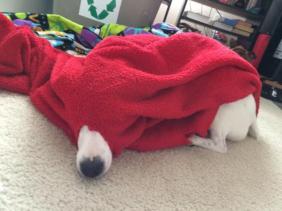
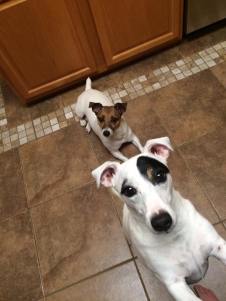
disney-and-riley

Disney and Riley

My husband and I share our home with two (crazy) Jack Russell Terriers. Disney and her brother Riley have two speeds: turbo-charged and sleep. They love chasing each other, running around, tracking squirrels, and playing ball. And they are such good companions and listeners. They often hang out (sleep) in my writing cave when I’m working on projects. And they let me know when we’ve sat still too long. Everything is a game to these two. Life is always fun with Jacks. They keep us on our toes with their antics and constant quests for fun.

They are such an integral part of my life that it’s just natural for them to have a place in my mysteries. Dogs and cats also appear in most of my short stories.

About Heather Weidner

heather-weidner

Heather Weidner’s short stories appear in Virginia is for Mysteries and Virginia is for Mysteries Volume II. Currently, she is President of Sisters in Crime – Central Virginia, and a member of Guppies and Lethal Ladies Write. Secret Lives and Private Eyes is her debut novel.

Originally from Virginia Beach, Heather has been a mystery fan since Scooby Doo and Nancy Drew. She lives in Central Virginia with her husband and a pair of Jack Russell terriers.

Through the years, she has been a technical writer, editor, college professor, software tester, and IT manager.

You can visit Heather’s website and find her on Facebook, Instagram, Pinterest, and Goodreads. You can also follow Heather on Twitter.

Giveaway: The Lost Daughter of Liverpool by Pam Howes

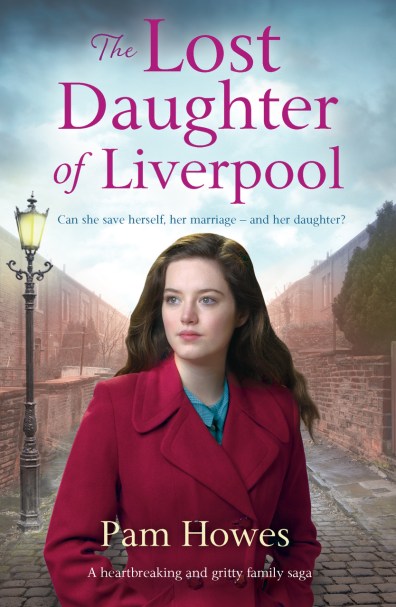
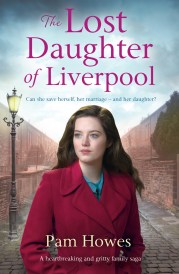
the-lost-daughter-of-liverpool-kindle

As a lover of historical ficction, I’m delighted to be part of the launch celebrations for The Lost Daughter of Liverpool by Pam Howes. The Lost Daughter of Liverpool is the first in The Mersey Trilogy. It was published on 3rd February 2017 by Bookouture and is available for purchase in e-book on Amazon UK and Amazon US.

To celebrate  The Lost Daughter of Liverpool I have a lovely extract for you to read and then an opportunity, open internationally, for you to win an e-copy of this wonderful book.

The Lost Daughter of Liverpool

the-lost-daughter-of-liverpool-kindle

Can she save herself, her marriage – and her daughter?

It’s 1946 and the war is over. In Liverpool, the blackout blinds may be coming down, but one family is about to face devastating misfortune…

Dora Evans is finally marrying the love of her life, Joe Rodgers, and her dreams of opening a dressmaking business look as if they might come true. With twin daughters on the way, Dora has everything she’s ever wanted.

But then tragedy strikes: one of Dora’s babies dies in infancy, and a catastrophic fire changes their lives forever. Dora is consumed with grief, struggling to get through each day and Joe is suddenly distant, finding solace in his colleague, Ivy.

With Ivy watching and scheming, and Dora battling against her own demons, can she keep her family together?

The Lost Daughter of Liverpool is a heartbreaking and gripping story of love, loss and hope. Perfect for fans of Nadine Dorries, Diney Costeloe and Kitty Neale. Discover Pam’s new series, The Mersey Trilogy, today.

An Extract from The Lost Daughter of Liverpool

THE LOST DAUGHTER OF LIVERPOOL

Chapter One

Knowsley, Liverpool, July 1946

Dora Evans breathed a sigh of relief when the dinner-break bell rang out, gloriously loud and clear. Peace descended as the hum from twenty machines ceased, punctuated only by the loud voices of the factory girls as they dithered between eating in the canteen, or sitting outside on the grassy knoll at the back of Palmer’s factory with their pack-ups.

Dora and her friend Joanie Lees brought their dinner from home each day, except for Fridays, when it was their favourite Spam fritters and chips in the canteen. They hurried outside into the bright sunshine and sat down on the wall that skirted Old Mill Lane, just under the now-faded factory sign that boasted Palmer’s Ladies Fashions of Distinction. The decorative black and gold cast-iron railings that had previously graced the top of the sandstone wall had been removed a few years ago to be melted down to help the war effort. Now, wild flowers grew in their place, cascading down to the ground, giving the wall colour and a place for butterflies and bees to frequent.

These days, there were no distinctive fashions made at Palmer’s. At the beginning of the war, the factory had been commissioned to make uniforms for the troops and nurses. But since the war had ended and old Gerald Palmer had passed away, to be succeeded by his son-in-law, George Kane who, according to the loyal workforce, hadn’t a clue about the rag-trade, the company had struggled to make ends meet. The only contracts so far this year were for men’s shirts that were sold in Littlewoods stores and catalogues.

Dora and Joanie had been classmates all through school and were best pals. Joanie was the only girl in her family and with four younger brothers who drove her mad with their brawling and noisy games, had spent most of her childhood playing at Dora’s house, where they’d spend hours making dolly clothes from scraps of material that Dora’s mam had given them. The pair were as close as sisters and shared a special bond and all their secrets.

They’d joined Palmer’s in 1941 when they left school, just after their fifteenth birthdays. Both enjoyed working in the business, though they daydreamed about making pretty dresses and skirts, rather than spending all day stitching collars and cuffs onto shirts. The nearest they’d come to making any dresses at all had been the plain cotton ones that were sent out to the nurses serving abroad. Still, they’d been helping the war effort and it was a decent enough job. They were grateful for the training they’d received, and their supervisor said they were exceptional seamstresses.

‘What you got in your sarnies today?’ Dora asked taking a greaseproof-wrapped package from her bag and smiling at the jam and margarine filling. She had two ginger nuts for afters too.

‘Dripping on toast, again.’ Joanie pulled a face.

‘Here, swap for half of mine, and give me half of yours.’

‘Thanks,’ Joanie said. Dora’s mam’s home-made bread and jam was always delicious.

The pair tucked in, enjoying the welcome warmth of the sun after being cooped up all morning. After they finished their dinner and shared a bottle of lukewarm corporation pop Dora had dug out of her bag, they dropped down onto the patch of grass below the wall to sunbathe. Dora hitched up her faded wrap-over pinny, exposing her bare legs slightly, and Joanie did likewise.

‘Look at my legs! What if Frank can’t get me any stockings for the wedding? We need to spend time on the beach at New Brighton to get some more sun on them,’ Dora said. ‘Might ask Joe if he’ll take me across on the ferry at the weekend.’

Dora was excited about marrying her fiancé, Joe Rodgers. They were teenage sweethearts and had always been inseparable at school, but then the war had forced them apart. After years of anxious days and nights, and love-letters that took months to arrive, Joe returned safely home. He’d immediately proposed, and Dora, who’d dreamed and hoped for that moment the whole time he’d been away, had accepted.

She knew she was lucky that her Joe had come home safe and sound from the war, and apart from being a lot skinnier, he hadn’t changed too much in his years away with the army. Several members of his platoon were never coming home, including young men from their village, who’d left behind heartbroken wives and girlfriends. For some, it wasn’t all Vera Lynn, bunting, and finger sandwiches on VE Day, as Dora’s mam reminded her whenever Dora got too carried away with her fancy plans for the big day.

Giveaway

the-lost-daughter-of-liverpool-kindle

For your chance to win an e-copy of The Lost Daughter of Liverpool, click here. The giveaway is open internationally and closes at UK midnight on Sunday 12th February 2017.

About Pam Howes

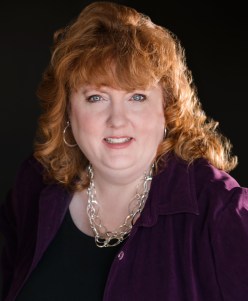
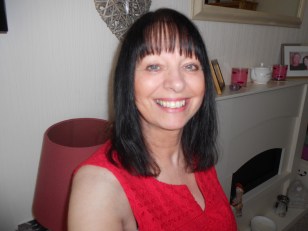
red-dress-profile-pix-003

Pam is a retired interior designer, mum to three daughters, grandma to seven assorted grandchildren and roadie to her musician partner.

The inspiration for Pam’s first novel came from her teenage years, working in a record store, and hanging around with musicians who frequented the business. The first novel evolved into a series about a fictional band The Raiders. She is a fan of sixties music and it’s this love that compelled her to begin writing.

You can find Pam on Twitter, and follow her on Facebook.

There’s more with these other bloggers too:

the-lost-daughter-of-liverpool-blog-tour

An Interview with Ashley Borodin, author of The Jealous Flock

jealnew2light_18goodlow

I’m welcoming Ashley Borodin to Linda’s Book Bag today to tell me about his novel The Jealous Flock and to explain more about his motivation for writing. The Jealous Flock was published by Lulu on 4th January 2017 and is available for purchase in ebook and paperback from your local Amazon site.

The Jealous Flock

jealnew2light_18goodlow

Forced from their collective comfort zone, all three members of Martin’s family come face to face with the realities that underpin their urbane way of life. Each is faced with a paradox that will test their belief in themselves and their image of the tolerant, liberal society they believe they inhabit.

An epic in miniature, The Jealous Flock takes readers from the cloistered air of Professional London through the harsh realities of the Middle East and on to the culture war simmering beneath the surface in Australia.

Through their interwoven narratives each character tries to grapple with change as they question their authenticity and value as individuals amidst The Jealous Flock.

An Interview with Ashley Borodin

Welcome to Linda’s Book Bag. Thank you so much for agreeing to answer some questions on my blog about your writing . Firstly, please could you tell me a little about yourself?

This is the hardest question for me. It’s right up there with “…so, what do you do?”

… I suppose what might give my work and personality, my values, some context for the average reader is this:

I was brought up a Fundamentalist Christian. Proper hardcore UPC, That’s United Pentecostal Church for those who came in late. It was not a happy and loving household. But then would I have anything to write about, anything to say, if it was?

I sometimes wonder if I would have any thoughts of my own if I wasn’t driven inside by my environment and forced to develop a strong sense of identity in order to cope.

So that’s why I dread that question. Because even the shortest of answers is, and I’m struggling to find a something that isn’t cliche here – oh well…. diving straight into the deep end.

(I think some of the best writers are driven by a personal angst Ashley)

Without spoiling the plot, please could you tell us a bit about The Jealous Flock?

It was completed over 3 years ago and I’ll outlay the significance of that. I was seeing some emerging trends in the world and I realised no-one was talking about them. There was a deliberate curtain of ignorance drawn across issues I believed were about to explode and reshape our society.

A few of these issues were:

Terrorists learning how to manipulate the West through proficient use of PR and Social Media. And beneath that the fact that the terrorists were actually a legitimisation for long-standing tribal groups who were already fighting. By ‘legitimisation’ I mean using Jihad as as a cover for local, tribal conflicts and power struggles.

In my mind the logical extension of this was to prey on the goodwill of the Western public to then legitimise the Jihad. Layer upon layer of deceit.

I wrote, 4 years ago, about an English PR consultant travelling to the Middle East to work on rebranding a terrorist/tribal group in order to successfully win over the Western Media, the public and thereby smooth negotiations with governments.

Three years later a UN press conference is held in which some startling claims are made about The White Helmets and blog readers can access part of that here.

Tanssexuals were still barely whispered of 3-4 years ago. Now they are full members of society, so much so that we have a number of outspoken Conservative transsexuals.

I think you know a group has been integrated when they start fighting with the Progressives and the Progressives fight back. That’s when you know we’ve reached parity and everything’s going to be OK.

Men’s rights. MGTOW’s. MRA’s, Cassie Jaye’s The Red Pill all spilled out into the mainstream quite suddenly late last year (2016). They’re still not at the conceptual stage I was writing about in my book but the pragmatic issues are being spoken of, loudly and in public.

When did you first realise you were going to be a writer?

I think I became a writer late last year when I was introduced to that video of Vanessa Beeley addressing the UN. She was talking about my book, my themes, my observations of 4 years ago, or even earlier. I’d been sitting on the book for 3 years, despondent about ever finding an audience or anyone who even cared. And here was someone telling the world. There was a fire, a stirring in my chest, that sense of well-being you get from great food, great conversation, great wine. I wanted to be alive, to be part of this vital moment in time when the truth was being told.

Truth has that effect on me. The way music and love does on others. It makes me feel alive. I suppose I’m speaking of the mystical sensation, the visceral impact of Revelation.

(That must have been a very special moment for you.)

How did you go about researching detail to ensure realistic and authentic settings in The Jealous Flock?

I’d like to answer that with a minor anecdote. Around the time I was finishing my book I kept hearing about some guy called Franzen. So after months of this – with references to a book that sounded eerily similar to mine – I finally succumbed and got a copy from the library.

Thankfully we’re nothing alike.

But what was clear was that we’d used a lot of the same source material. Just reading some of the dialogue indicated that this Franzen had watched the same docos about Lemmy and/or Twisted Sister as I had. We share at least one character and I will say no more.

I think doco’s are a great source of ephemeral, writerly information. Because they are an experience more than an historical record. Ofttimes more propaganda than fact but you get a feel for a topic. You get a firm grasp on the edges of it without ever really learning anything of real depth. So doco’s give you this framework and a set of postcards you can revisit when you need to go to Egypt or you need an American Indian Alcoholic who’s got a tense relationship with her mother.

I filled in the gaps with good journalistic sources (that’s the hardest part these days) and of course, books. I bought a book on the Hashashin and another on Islamic Mystical poetry. The rest is drawn from my poems and direct experience.

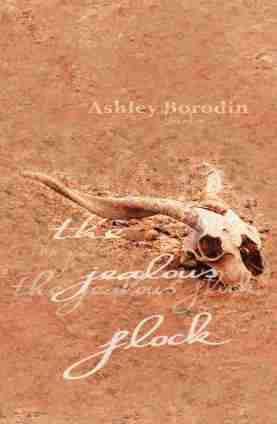
The Jealous Flock cover is quite stark and sinister. How did that image come about and what were you hoping to convey (without spoiling the plot please!)?

Christian Monks, we’re told,  used to have a skull on the desk in front of them: Memento mori (“remember that you have to die”).

I think of a sheep being led to the slaughter. I think of the outcome of being a follower, the danger of being led.

On the other hand, I am playing on the public associations with skulls and death, on horror. With ram skulls somehow associated with the occult and evil. Personally I hate ‘horror’ but with that cover I’m trying to send a message about the underlying horror of being a drone. The certain knowledge that once you’re done there’s a bullet at the end. If your existence  is dependent on the goodwill of others – on your usefulness to them – what happens if those people covet your life. What if they are ‘jealous’ and act as one?

… Memento Mori.

Or I’m just trying to be the Liberal Ayn Rand.

(Interesting concepts. There’s only one certainty in life Ashley – death! Blog readers who want to find out more about Ayn Rand can click here.)

If you could choose to be a character from The Jealous Flock, who would you be and why?

Oooh, well I’m all of them. Cover included. I was a follower once too.

When I wrote it I most related to Randall. That’s basically me. Born old. In fact that guy is closest to my own experience. Some of those passages I wrote on the bus visiting places he visits in the book, living in his house, being harangued by those same hovering birds, kept awake at night.

But my hero is Martin. The man who changed. The good man prepared to do what it takes but in doing so embarks unwittingly on the hero’s journey and is himself transformed into the ideal, into a leader who walks alongside. One who shows us how to be ourselves.

If you had 15 words to persuade a reader that The Jealous Flock should be their next read, what would you say?

A good book parts the existential smog, it lets you breath. Risk it.

Thank you so much for your time in answering my questions.

My pleasure. And thank you for this experience. It helps to remember who you are from time to time.

About Ashley Borodin

author-headshot_7

Ashley Borodin studied Engineering and is a writer and poet interested in culture and social issues. Currently living in Tasmania, Ashely can often be found playing the fret-less bass.

By following Ashley on Twitter you will have access to a poem a day. There is more from Ashley via this blog too.

Autism, a Guest Post by Kate Hughes, author of Home

home

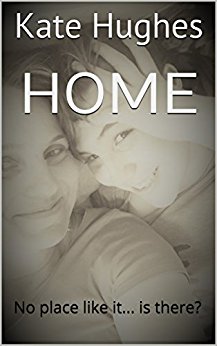
I’ve read some amazing books with autism as a major theme of late and as this is a subject that I know needs greater exposure, I’m delighted to welcome Kate Hughes, author of Home, onto Linda’s Book Bag. Although fiction, Home is based on Kate’s own family. It gives me great pleasure to help Kate spread the word about the effects of autism on all the family.

Home is available for purchase in e-book here.

Home

home

“You need to come and get my daughter. She’s not safe anymore.”

For Sophie, life with her daughter has never been easy. Rosie’s extreme autism has made her unpredictable and often difficult. Like most mothers though, her first instinct has always been to protect her child and keep her close. However, when Rosie’s escalating violence culminates in a terrifying incident at home, Sophie is faced with a choice that no parent ever wants to make. A choice that will inevitably plunge her into a set of unimaginable new circumstances which will test her to the limit.

A true test of a mother’s love.

Could you send your child away?

Autism

A Guest Post by Kate Hughes

Autism.

It’s a word which seems to be on everyone’s lips in recent years. It’s in the news, on the television and in books. People you meet may know someone, or have taught someone, or are related to someone, or know someone who knows someone else…who is autistic. The upshot being, that many of us have a little bit of knowledge of the condition and think we understand it, but the autistic spectrum is in fact huge and no two autistic children are exactly alike.

Autism has played a huge part in my family’s life for many years. Like everyone else, we were only vaguely aware of this condition until my beautiful niece Eva was diagnosed 13 years ago. I’d certainly had some experience in my job as a primary school teacher, however the reality of seeing my sister living day to day with an autistic child is very different to the snapshot you see in an educational setting. It has been a steep learning curve for us all.

I finally decided to write my novel Home after seeing my sister go through the painful process of putting 12 year old Eva into residential care when her extreme behaviour escalated. I felt it was a story that needed to be told since many people are unaware of the meltdowns and violence which can make older autistic children very difficult to manage.

You often hear of children being taken into care but you don’t often hear about parents who have made that decision themselves. Looking in from the outside, all people might see is someone who just couldn’t cope. The reality is very different. I know that my sister’s decision came at the end of a very long road of coping with things that other parents will never have to experience. Most people can’t begin to imagine their own child being violent towards them.

I wanted to give an insight into the terrible set of events which leads a parent to make this decision and the enormous guilt which comes with it. It has a huge effect on the entire family. Suddenly one of their loved ones is no longer part of everyday family life. I hoped it might also comfort readers who may have gone, or be going through, a similar ordeal. Just to realise that you’re not the only one and that others have felt your pain can be extremely reassuring.

It had to be a work of fiction because after all, essentially, I am a storyteller. So although my protagonist, Sophie, experiences many of the same events and feelings as my sister, there are also lots of differences in her character and life story.

Once I’d made the decision, writing Home was a difficult and fairly long process. Apart from the fact that I’m a teacher and mother of three children which means I have a million things to do each day, I needed to make sure the events were accurate and so there was much interrogation of my sister and other family members! I also wanted to make it more than just a miserable memoir, I wanted to create an uplifting story which shows the true power of a mother’s love for a special needs child.

I hope you feel the final book has achieved what I set out to do.

Kate Hughes

About Kate Hughes

author-photo

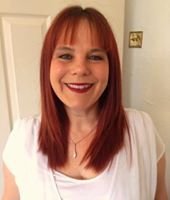
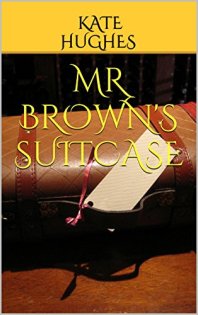
Kate Hughes is a primary school teacher of more than twenty years. Her passion for reading from an early age has finally led her to making her own contribution to the world of books. Her debut novel Mr Brown’s Suitcase was published in 2014. Home is her second novel.

mr-browns-suitcase

Kate lives in Derbyshire with a husband, three feisty daughters and a lively lilac tortoiseshell cat.

You will find Kate on Facebook and can follow her on Twitter.

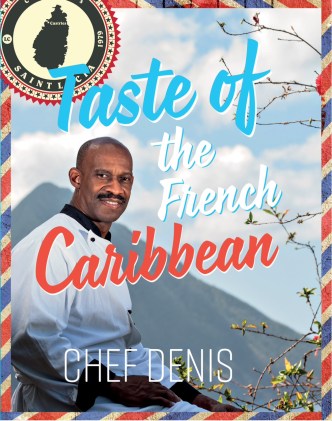
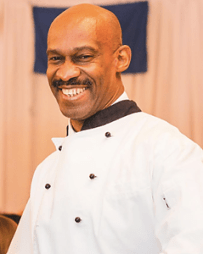
Taste of the French Caribbean by Chef Denis

taste-of-the-french-caribbean-cover

I’m so pleased to be celebrating Taste of the French Caribbean by Chef Denis today. Taste of the French Caribbean was published by Clink Street on 31st January 2017 and is available for purchase here.

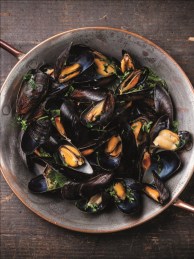
Today I’m sharing a simple recipe from the Taste of the French Caribbean fish setion.

Taste of the French Caribbean

taste-of-the-french-caribbean-cover

Stir up an authentic taste of the Caribbean at home with Chef Denis Rosembert’s first ever cookbook. The St Lucia born restauranteur lovingly curates his favourite dishes — from delicious jerk chicken to spicy mutton curry and sweet golden apple cake — for you to recreate, bringing the unique flavours and exotic aromas of the island — renowned for its seafood and exquisite chocolates — vividly to life in your own kitchen.

At his much-loved restaurant Chez Denis in Norwich, England, Denis Rosembert blends the eclectic cuisines of Africa, Europe and Eastern India that combine to make St Lucian food so rich and so special. His colourful, infectious, easy-to-follow recipes are the ultimate celebration of island life, food and drink and entertaining and will soon have you inviting friends and family round to experience your own taste of the Caribbean.

Mussels with Calvados

 lindas-book-bag-mussels-with-calvados

Ingredients

500g mussels washed and cleaned

4 shallots chopped

2 cloves of garlic chopped

4 sprigs dill chopped

3 sprigs parsley chopped

50ml dry white wine

25ml calvados

50ml double cream

1tsp cornflour

1 tbsp water salt and pepper

SERVES 4

1.Put mussels into a pan with finely chopped shallots , garlic, dill, parsley, and dry white wine.

  1. Place the pan on a moderate heat, cover the pan. When the mussels have opened pour in the cream, bring to the boil cook for 3 minutes.
  2. Mix the corn flour with a tablespoon of cold water.
  3. Stir in the cornflour mixture then the calvados. Cook for 3 minutes salt and pepper to taste.
  4. Ready to serve.

About Chef Denis

denis-rosembert-photo

Denis Rosembert was born on the island of St.Lucia where he started training to be a chef in 1973. After a couple of years he was invited to England to continue his training. Since then Denis has worked in various hotels and restaurants across Britain and America in the role of Commis, Sous and finally Head Chef. In 1989 he moved to Norwich, where after a brief stint working for the Sports Village, he finally realised his dream and opened his own restaurant Chez Denis.

You can visit Chef Denis’s website and follow him on Twitter.

There’s more with these other bloggers too:

taste-of-the-french-caribbean-banner-2-2

Spring Blogger Event with @TeamBATC

books-and-the-city

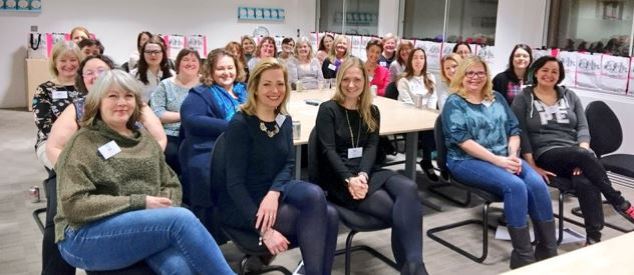
One of the joys of blogging is being invited to events where I can meet the authors I love to read. Yesterday was the Spring Blogger Event run by Books and the City @TeamBATC for Simon and Schuster. Whilst it was lovely to catch up with some of the many blogging friends I’ve made over the past couple of years, it was even more exciting to meet authors for the first time.

With Sara-Jade (our very own book minx @BookMinxSJV ) making sure all went to plan (including sorting out the prosecco later as you’ll see) we were all set for an evening of laughter, book readings and chat.

spring-blogger-event-audience

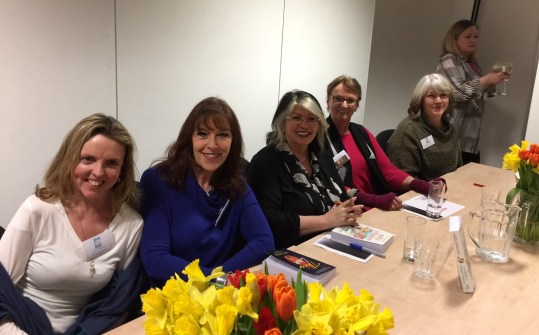
On the panel, introduced by editor Jo, were Kate Furnivall, Milly Johnson, Dani Atkins and Alice Peterson who were later joined by Sarah Vaughan and Juliet Ashton.

spring-blogger-event-authors

(Look who’s carrying the booze in the background!)

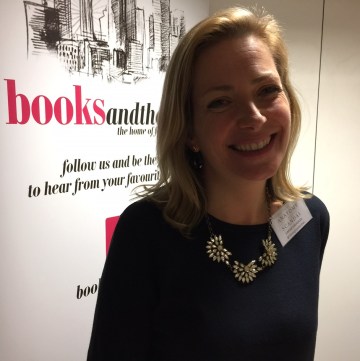
sprng-blogger-event-sarah-vaughan

To begin the evening authors were asked to give three facts about themselves with one being a fabrication. They were then asked about their writing processes and treated us to readings from or introductions to their latest books. I’m not going to tell you which facts are the false one – you can guess for yourselves!

kate-furnival

First was Kate Furnivall (follow Kate on Twitter here).

Facts:

Before her current persona in writing, Kate wrote erotica with a protagonist called Sophie Hard.

Kate was once swept out to sea with her 4 year old child on an inflatable boat and had to be rescued by the RNLI.

Kate has a twin sister who was once abused by a yob so Kate swung her handbag and hit him squarely on the head.

Kate told us how her writing always starts with place before she finds characters turning up who demand to be picked to be in her novels. She doesn’t plot fully but has skeleton points. On the way to the book’s conclusion anything could happen. Kate began writing inspired by her mother’s death so that she could fill in the gaps to her family history for her brother, thereby honouring her mother’s name. As Kate’s husband is also a novelist she had a good insight into publishing and believes that writing is a muscle you have to exercise on a regular basis.

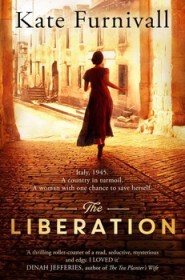
Kate’s next novel will be The Betrayal but her latest, The Liberation is available here.

the-liberation

Next came Milly Johnson (follow Milly on Twitter here).

millie-johnson

Facts:

Milly has kissed Alan Rickman (actually, I’m not sure we heard the others properly after that one as we all went off into a dream world).

Milly once had to pretend to be a ghost fora wealthy American who wanted to give his wife an authentic experience in a traditional hotel.

Milly has slept through two earthquakes whilst others were being evacuated.

Milly told us how she has tried many ways of plotting including record cards and post its but nothing really works. She says it makes it difficult to send a synopsis when she doesn’t actually know what will happen in her book! She described writing as like being in fog with pinprick of light 5 yards ahead. Milly began writing without really knowing what she wanted to write about and ended up aping others’ books until a thunderbolt of inspiration came and she was off! She says it’s best to write little and often. Milly loves to engage with readers and other authors through social media.

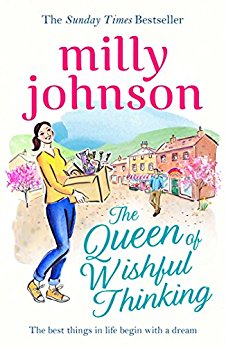
Milly’s The Queen of Wishful Thinking will be published on 9th March and is available for pre-order here.

teh-queen-of-wishful-thinking

We then heard from Dani Atkins. (Follow Dani on Twitter here)

danni-atkins

Facts:

Dani once went missing as a child in Copenhagen and the police had to search for her.

Dani hates roller coasters even though she once spent 5 months at Disney World.

When she moved into an old cottage she saw a ghost cat.

Dani told us that she doesn’t plot her novels fully but likened writing to driving in the dark with no headlights. She has a beginning and an end but has no idea to start with how to get from one to the other. She sees the ends of her books visually like a film playing out and then works towards it. Dani has always written and learnt early on that prospective books need to be sent to agents rather than directly to publishers. She told us to read lots if you want to write. She says we should just do it and that writing 1000 words a day will have a full length novel in three months!

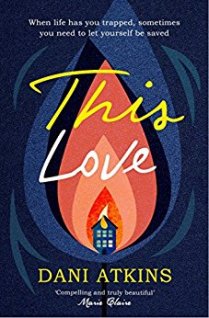
Dani’s This Love will be released on 23rd of March and is available for pre-order here.

this-love

Our final official panel member was Alice Peterson (Follow Alice on Twitter here).

alice-peterson

Facts:

Alice named her dog Mr Darcy after meeting Colin Firth in a lift. (Again, most of the room went off into a dream world)

She once met Bryan Adams who told her all about raw juice and vegetable smoothies.

The tennis player Tim Henman was her first schoolgirl crush.

Alice explained how, when she writes, her characters evolve and begin to speak so that they take over. She can’t plot when she writes, but has a beginning and an end. To get from one to the other is an almost trance like state for Alice. Alice had never really thought of being a writer and was, in fact, going to be a tennis player at national level but got rheumatoid arthritis which changed her life plans. An older friend told her to write things down to overcome her difficulties as she adjusted and she has never looked back. Alice’s advice to aspiring writers is not to worry about writing badly. She says to aim for 1000 words a day and worry about the quality later. Writers need to feel passion for their story.

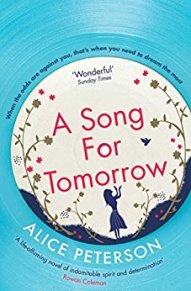
Alice’s A Song for Tomorrow is out on 9th February 2017 and is available for pre-order here.

a-song-for-tomorrow


Following the panel discussions we had readings from all but Kate (as her book is still a work in progress) before an extra treat of two unexpected authors Sarah Vaughan and Juliet Ashton. They both also gave us three facts about themselves with one being untrue.

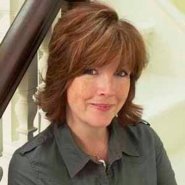
Sarah Vaughan (Follow Sarah on Twitter here).

sarah vaughan

Facts:

She met Colin Firth (see, I said we were obsessed) who offered for Sarah’s little girl to play with his small son. Unfortunately Sara’s daughter went shy and the opportunity passed.

Sarah has trekked to base camp on Everest.

When she needed someone to sign her mortgage deeds at short notice she got former Prime Minister David Cameron to do it.

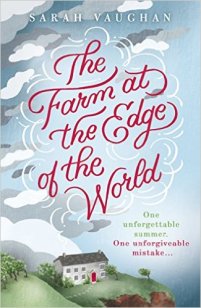
Sarah’s latest book, Anatomy of a Scandal, is so new we don’t have a proper publication date or even a cover yet, but her last book The Farm at the Edge of the World, is available for purchase here. You can read my review of that book here.

Farm at the Edge

Our last, and by no means least, author of the evening was Juliet Ashton (follow Juliet on Twitter here).

juliet-ashton

Facts:

Having taken her driving test five times Juliet passed and immediately drove onto a  floral clock and destroyed it.

A well known celebrity (whom I won’t name) stole Juliet’s fiance.

Juliet has danced with George Michael.

Juliet’s next book, The Woman at Number 24 will be published in April and is available for pre-order here.

img_0668

Once the formal part of the evening was over it was time to grab a glass of prosecco, a cup cake and a fabulous goody bag and meet our wonderful authors.

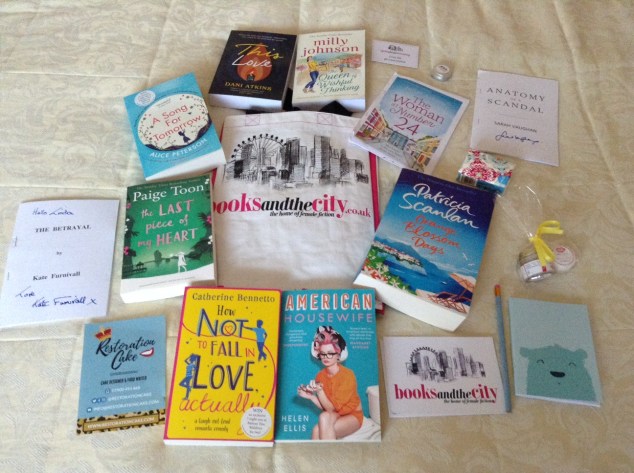
I didn’t get chance to look in my goody bag until this morning but what a goody bag it is!

img_0669

There were books (some of which are not even out yet), a notebook, pencil, cards, lip balms, tissues and of course – the bag!

Click here to buy How Not to Fall in Love Actually.

Click here to pre-order The Last Piece of my Heart.

Click here to buy American Housewife.

Click here to pre-order Orange Blossom Days.

After such an entertaining evening meeting wonderful authors and receiving lovely books and gifts I’d just like to thanks Sara-Jade for the invitation and the whole of TeamBATC for all their hard work. Thanks guys!

An Interview with Megan Miranda, Author of All the Missing Girls

all-the-missing-girls

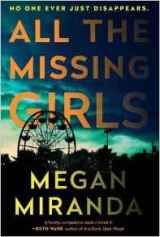
I’m delighted to welcome Megan Miranda, author of All The Missing Girls to Linda’s Book Bag today. All The Missing Girls was published yesterday, 2nd February 2017 by Corvus, an imprint of Atlantic Books, and is available for purchase in e-book and paperback here.

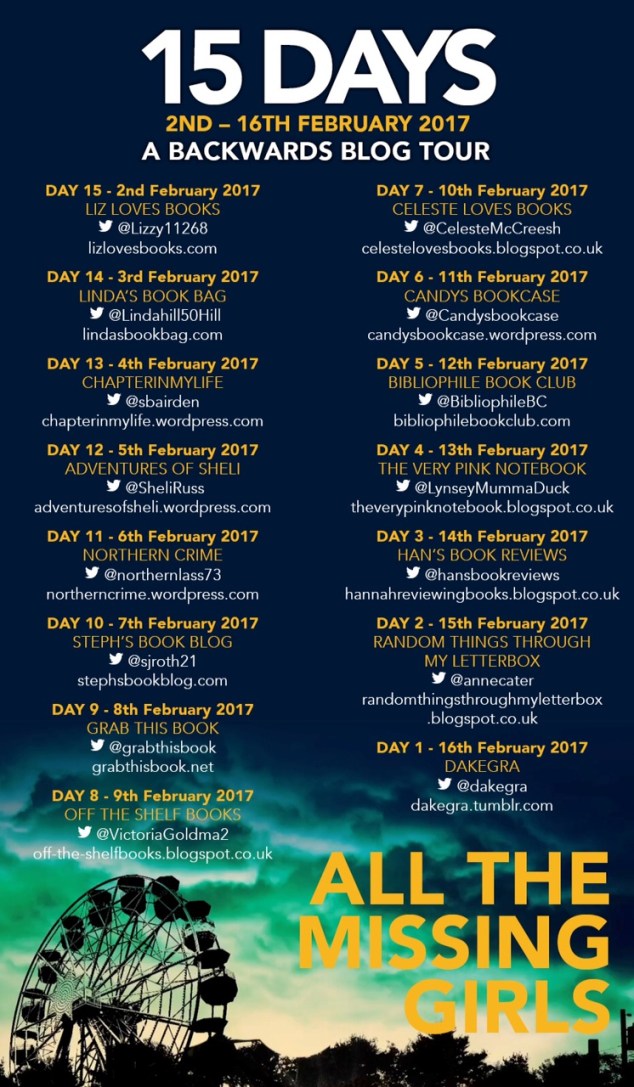
As All The Missing Girls has a structure working backwards, I’m both stop 2 and day 14 in the celebrations!
3-2-17-day-14-lindas-book-bag

To celebrate publication of All The Missing Girls, Megan has kindly agreed to be interviewed.

All the Missing Girls
all-the-missing-girls

It’s been ten years since Nicolette Farrell left her rural hometown after her best friend, Corinne, disappeared without trace. Then a letter from her father arrives – ‘I need to talk to you. That girl. I saw that girl.’ Has her father’s dementia worsened, or has he really seen Corinne?

Returning home, Nicolette must finally face what happened on that terrible night all those years ago. Then, another young woman goes missing, almost to the day of the anniversary of when Corinne vanished. And like ten years ago, the whole town is a suspect.

Told backwards – Day 15 to Day 1 – Nicolette works to unravel the truth, revealing shocking secrets about her friends, her family, and what really happened to Corinne. Like nothing you’ve ever read before, All the Missing Girls is a brilliantly plotted debut thriller that will leave you breathless.

An Interview with Megan Miranda

Welcome to Linda’s Book Bag Megan. Thank you so much for agreeing to answer some questions on my blog about your writing. Firstly, please could you tell me a little about yourself?

Thank you so much for having me! A little about me: I’ve had a few different careers on my way to becoming a writer. First, I worked in biotech; then, as a high school science teacher. I now live in North Carolina with my family, and I love suspense and thrillers—both reading and writing.

Without spoiling the plot, please could you tell us a bit about All The Missing Girls?

Sure! Two young women have gone missing ten years apart, and their cases are linked by the same group of friends in a small North Carolina town. And it’s told backward, from Day 15 to Day 1.

When did you first realise you were going to be a writer?

I had always loved reading and writing, but I didn’t take the steps to try and make writing my career until after I’d worked at a few different careers and had young children at home. My youngest had just turned one when I set myself the goal of finishing my first book.

Which aspects of your writing do you find easiest and most difficult?

I love beginnings. The process of discovering the characters and the setting is the most fun for me, and because of that, it’s the easiest part. Plotting out the story, though, is the most difficult for me. I have to write my way pretty far into a draft before I figure out what’s going to happen.

What are your writing routines and where do you do most of your writing?

I work fairly structured hours, writing when my kids are at school. I do most of my writing in my home office, though if I’m stuck, I will try a change of scenery.

All The Missing Girls is unusual as it is plotted backwards. How did you manage the plotting of the narrative?

Honestly, it was a lot of trial and error. I don’t outline much before I start writing. I find I need to write my way into stories as I discover the characters. But I used a program called Scrivener, which allowed me to write in separate scenes and keep notes and lists for myself as I went. It was a constantly evolving draft, changing every time I’d discover a new element. So it mostly came down to a lot of revising.

There are fascinating quotations at the start of each part. How did those quotations arise?

Time was a theme I was interested in exploring in the story—the way we view the past, how the past defines us, if we can look back in time and see things with a different understanding. Since Nic’s father taught philosophy and would pull on this material in her childhood memories, I wanted to choose quotes from philosophers about time to help define each section.

All The Missing Girls marks a departure from your other Young Adult fiction. Why did you decide to write for a more mature audience this time?

In my young adult books, I had been writing about these big events that significantly affected the main characters in their teen years. Later, I got to thinking about how these events might ultimately shape the people they become. Whether they moved past these events; whether they tried to forget them; whether these events were inescapable. Thinking about this gave rise to the idea for All the Missing Girls. It felt like a natural transition since I was still writing about a big event that happened when the characters were teenagers. But this time I was exploring what happened ten years later, who they all became because of it, and whether the past would ever let them go.

Do you have other interests that give you ideas for writing?

When I started writing, I pulled on my science background to inspire my young adult ideas. Now, I find story ideas everywhere. Sometimes the setting gives rise to a story. Sometimes, it’s a character or a theme.

I know you have a background in Biology. How did this help in writing a psychological thriller?

I think my science background helped me during the revision process. I approached the structure a little like an experiment, stepping back and analysing what was working and what wasn’t with each draft.

There are some interesting themes in All The Missing Girls from dementia to family to truth and love. How aware were you of these themes as you wrote?

There are some themes I set out to explore at the start of a book (for example, I knew I wanted to explore the idea of the different ways people can disappear: literally, figuratively, and whether the other, older versions of ourselves still exist inside). But other themes arise more naturally from the plot as I write. I see themes as ideas to explore, and there are some I circle around on purpose, and some that the story brings to the surface on its own.

Trees and woods play an important role in All The Missing Girls. How far do you think those settings ‘speak’ to our primeval instincts?     

For me, I’m drawn to the woods because it feels like a place where there’s this fine line between legend and reality. Where the memory of someone’s disappearance can take on a life of its own, become a story that can live on rumour just as much as fact. It feels like a place where things are just hidden from view, and where people can hide things in turn.

How did you create the setting of Cooley Ridge?

Cooley Ridge is a fictional town inspired by elements of several different places from my memory. I wrote the first words when I was staying at the edge of the forest in western North Carolina, letting the setting of mountains and woods speak to me. The caverns came from a memory I had from when I was younger, in a different state. We were on a tour of some caverns, and the lights were turned off to show us total darkness. It’s a memory that has stayed with me ever since.

To what extent do you think all small communities have secrets and lies as in Cooley Ridge?

I think there are two sides to a small community like Cooley Ridge: That it can feel inescapable to someone who’s grown up there, with everyone knowing everything about you, seeing you a certain way. But that it can also be the type of place to rally around you in a crisis, and to keep your secrets. I’m not sure if all small communities are like that, but I chose to set the book in a town like this for that reason; that I felt it was the type of place that would keep its own secrets.

The cover of All The Missing Girls has a Ferris wheel that suggests the cyclical nature of events to me and history repeating itself. How did that image come about and what were you hoping to convey (without spoiling the plot please!)?

I originally incorporated a Ferris wheel into the story because, while I love amusement park rides, I’m terrified of Ferris wheels. I remember being on one when I was younger, and the people I was with were rocking the cart back and forth while we were stuck at the top. So it felt like something I could really pull on when I was writing that scene, from their past. Then it became the central moment of the story, that set everything in motion, and the story kept circling back to that image—so I love that the Ferris wheel made it onto the cover.

Your next adult novel The Perfect Stranger will be out soon too. What can we expect in this new book?

It’s another psychological thriller, this time about two women who reconnect years after they were roommates, both in desperate need of a fresh start. They relocate together, but when one goes missing, there’s no evidence she was ever there to begin with.

And finally, when you’re not writing, what do you like to read?

I read pretty widely, but my favourite genre is suspense/thrillers.

Thank you so much, Megan, for your time in answering my questions.

Thanks so much for having me!

About Megan Miranda

megan

Megan Miranda is the author of the national bestseller All the Missing GirlsShe has also written several books for young adults, including Fracture, Hysteria, Vengeance, Soulprint, and The Safest Lies. She grew up in New Jersey, attended Massachusetts Institute of Technology, and lives in North Carolina with her husband and two children. Her next novel for adults, The Perfect Stranger, will be published by Simon & Schuster in April, 2017

You can follow Megan on Twitter, visit her website and find her on Facebook.

There’s more with these other bloggers too:
final-blog-tour-poster

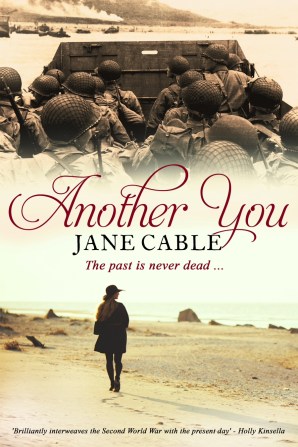
The Past is Never Dead, a Guest Post by Jane Cable, Author of Another You

another-you-cover

I love historical fiction so it gives me great pleasure to welcome Jane Cable, author of Another You, to Linda’s Book Bag today to tell us more about how the past affects  and influences the present.

Another You was published by Endeavor on 13th December 2016 and is available for purchase in e-book and paperback here.

Another You

another-you-cover

Sometimes the hardest person to save is yourself…

Marie Johnson is trapped by her job as a chef in a Dorset pub and by her increasingly poisonous marriage to its landlord. Worn down by his string of affairs she has no self-confidence, no self-respect and the only thing that keeps her going is watching her son, Jude, turn into a talented artist.

But the 60th anniversary of a D-Day exercise triggers chance meetings which prove unlikely catalysts for change.

First there’s Corbin, the American soldier who she runs into as she’s walking on the cliffs. He is charming and has a quaintness about him, calling her an ‘English rose’.

Then there’s George the war veteran, who comes to dine at the pub, and his son Mark. George fascinates Marie with his first-hand accounts of the war, whilst Mark proves helpful in making sense of the pub’s financial situation.

And there’s Paxton. Another American soldier with an uncanny resemblance to Corbin. Young, fit and very attractive, Marie finds him hard to resist. But little does she know Paxton is also battling some inner demons.

As the heat of the summer intensifies, so do the issues in Marie’s life.

Why is Corbin so elusive? Why is the pub struggling to make ends meet? Why has Jude suddenly become so withdrawn and unhappy?

Can she help Paxton open up and begin to deal with his pain?

Or will she be shackled to the pub and her increasingly spiteful husband forever?

But as events unfold, Marie finally realises that she is not trapped, but stuck, and that it is down to her to get her life moving again.

Perfectly blending the complexities of twenty-first century life with the dramatic history of World War Two, Another You is a charming tale that will warm your heart.

The Past is Never Dead

A Guest Post by Jane cable

How my past influences my writing

As a writer I have a fascination with how the past can reach out and touch the present and it is the one common theme which ties my books together. In The Faerie Tree it is Izzie’s and Robin’s own pasts; in The Cheesemaker’s House the influences come from the early eighteenth century and in Another You from the Second World War.

But being asked to write about how my past influences my writing made me really stop and think. It has to – but how?

I always say that I have writing in my blood. My father was a poet; our cousin Roger Hubank a novelist and his uncle, John Hampson, an author and member of the Bloomsbury Group. It’s even rumoured that John Keats is somewhere back in the family tree. So yes, of course I write.

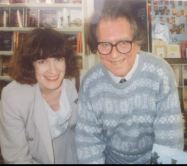
jane-and-dad

Jane and her father at his book launch

But where my own past comes into it is far more subliminal. My novels are in set places I love but not (so far) places I’ve lived. I used to think this was a little strange but I went to a talk given by Kate Mosse just after The Taxidermist’s Daughter was launched and she said it had taken her years to be able to write a book based in the place she called home. Her theory was that you identify so closely with it that it’s not an easy thing to do.

She could be right. The places I hold most dear – in South Wales where I grew up – are yet to feature in my writing and I have no plans to do so. I’ve been living under the South Downs for the last twenty years and there is a story here – the local folklore is just too rich to ignore. But by the time I actually write it we will have moved away.

An interest in certain subject matter does come from my past. My father was always very keen on folklore and his enthusiasm was passed onto me. His love of history too – as a child I was taken to castles and historic houses and of course that seeps into my writing as well.

But the direct inspiration for my books comes from my present. I do tend to start with a place, but all three novels are places that were part of my life when I started to write them. Another You is set in Studland in Dorset but the first time I ever visited the beautiful bay was in 2010. I didn’t know then that it would inspire a story, but I went there fairly often with a friend to walk and swim and it became – and remains – a really special place for me.

OLYMPUS DIGITAL CAMERA

GIs at Studland

So where does my interest in the spirit world come from? That, I think, goes back far deeper. While I have never knowingly seen a ghost – and neither did my parents – they had both had supernatural experiences and my father and I certainly shared the ability to sense a malign presence in a place. We visited Berkeley Castle independently (I was on a school trip as a teenager) but recognised the same palpable sadness in a tiny sewing room with apparently no history to suggest such a thing.

I see myself primarily as a story teller and naturally the things I see, hear and experience in the present and the past influence what ends up on the page. It’s hard to pick out specifics, only the broadest themes. For me, what matters is taking the reader into a world that is both new and strangely familiar to them, one they can easily become lost in and are reluctant to leave. If I can do that, then I’m happy.

About Jane Cable

jane

Jane has been writing for as long as she can remember but it wasn’t until around 2005 that she actually finished a book. Since then, she’s encountered Alan Titchmarsh in his search for a People’s Novelist and, although she didn’t win, being a finalist led to a whole new writing career.

When she’s not writing Jane runs an accountancy business with her husband, but it’s writing that she loves best of all.

You can follow Jane on Twitter, visit her website and find her on Facebook.

There’s more with these other bloggers too:

blog-tour-2

An Interview with Caimh McDonnell author of The Day That Never Comes

the-day-that-never-comes-cover

I’m delighted to welcome back Caimh McDonnell to Linda’s Book Bag to celebrate his latest book The Day That Never Comes. Caimh was previously kind enough to write a guest post on improbable tropes that you can read here. Today I’m lucky to be hosting an interview with Caimh.

The Day That Never Comes is the second in Caimh’s Dublin trilogy after A Man With One Of Those FacesThe Day That Never Comes was published by Mc Fori Ink on 23rd January 2017and is available in e-book and paperback from your local Amazon site.

The Day That Never Comes

the-day-that-never-comes-cover

Remember those people that destroyed the economy and then cruised off on their yachts? Well guess what – someone is killing them.

Dublin is in the middle of a heat wave and tempers are running high. The Celtic Tiger is well and truly dead, activists have taken over the headquarters of a failed bank, the trial of three unscrupulous property developers teeters on the brink of collapse, and in the midst of all this, along comes a mysterious organisation hell-bent on exacting bloody vengeance in the name of the little guy.

Paul Mulchrone doesn’t care about any of this; he has problems of his own. His newly established detective agency is about to be DOA. One of his partners won’t talk to him for very good reasons and the other has seemingly disappeared off the face of the earth for no reason at all. Can he hold it together long enough to figure out what Bunny McGarry’s colourful past has to do with his present absence?

When the law and justice no longer mean the same thing, on which side will you stand?

The Day That Never Comes is the second book in Caimh McDonnell’s Dublin trilogy, which melds fast-paced action with a distinctly Irish acerbic wit.

An Interview with Caimh McDonnell

Welcome back to Linda’s Book Bag Caimh. Thank you so much for agreeing to answer some questions on my blog about your writing. Firstly, please could you tell me a little about yourself?

That’s trickier than it sounds! I’m about to have to go through my annual ordeal of explaining what I do for a living to the taxman so here is the overview. I’m a comedian/novelist/TV writer/Professional rugby fan. I know that last bit definitely doesn’t sound like a job, but I’m lucky enough that the team I support, London Irish, give me a microphone and a stadium PA to work with. I’m also technically a producer on a potential TV panel show. I don’t have a job so much as career ADHD.

Without spoiling the plot, please could you tell us a bit about The Day That Never Comes?

The germ of the idea came about from a conversation with mates in Dublin over a few pints. I just hit on the idea that when you think about, with all the wholesale damage that the Irish economy has taken through some very irresponsible actions by a few individuals, isn’t it surprising that nobody has ever tried to directly get their own back. I guess if my first book, A Man With One of Those Faces was about identity, this one is very much about anger. There’s a lot more going on than that of course, including some fun with an unhinged German Shepherd, but that is the overall theme.

How important is it to you to be seen as an Irish writer?

I’m in an unusual position because I’m writing about my home town of Dublin while living in Manchester. In a way, it has been really great for me. I feel like I’ve reconnected with my roots in an odd way. Certainly, I think I miss living in Ireland more now than I’ve ever done, which I guess is because it now features so prominently in my thoughts. It is also lovely though as I’ve re-engaged with the place in a way I think is quite unique. When you’re actively seeking things out, you fully appreciate how wonderful a place it is. At the same time, being removed from being there day-to-day, allows you to see it with fresh eyes than you wouldn’t have if you were constantly surrounded by it.

(I think we seldom really appreciate what’s closest to us.)

How do you go about researching detail and ensuring your books are realistic?

It took an awful lot of effort but I eventually found an Irish Guard (police officer) via a friend of a friend of a friend who was willing to answer some questions. He has been wonderfully patient, as I’ve hurled some ludicrous queries at him. I also went to a gun range in Miami on my honeymoon as if was going to write a gun in a scene, I  reckoned I should have probably fired one. My wife is a very understanding woman.

Which aspects of your writing do you find easiest and most difficult?

I think the easiest part in a way is the funny bit. I’m increasingly learning to just worry about where the story is going and the ‘funny’ just sort of happens as I’ve been doing it for so long and in so many different forms, that it’ll just sneak in when appropriate.

Most difficult? Describing architecture and interior design stuff. My wife gets a lot of calls like “What do you call them nobbly bits that hold up the thingies in old buildings?”

(I imagine your wife to be a very patient woman!)

You’re known for comedy through your work as a stand up comedian and a writer for various television programmes. How do you balance reader expectations for humour with fast paced action in The Day That Never Comes?

I think, if you balance right the two things can work really well together. As anyone who has read my work will know, I’m a massive fan of crime fiction, but I do find some of it can be a little unrelentingly grim. I think the humour if done right, can make the reader more invested in the characters and that heightens the tension when the dark stuff does happen. I will say, I’ve had very little of crime fans saying there was too much comedy but occasionally, there has been the odd comedy fan shocked by a couple of the violent scenes. Spoiler alert: if anything, there’s more of that in this one. I’m afraid I do rather put my central characters through the mill.

Since you wrote The Day That Never Comes there have been some strange coincidences to your plot where homeless people occupied a government  building in Dublin. How does that make you feel?

It is really weird. Having almost word for word something that you made up happen in real life is a little bit creepy. I stood outside Apollo House, the real building where it had happened and it was a very odd moment. My biggest concern was I was horrified that someone might think that in some way, I was aping reality – which is why I put an explanatory note into the back of the book.

Your three protagonists, Paul, Brigit and Bunny were first introduced to readers in A Man With One Of Those Faces. How have you developed their characters and what can we expect from them in the future?

a-man-with-one-of-those-faces

Without giving much away, Paul and Brigit hit not so much a stumbling block in their relationship, as a ten tonne truck heading the opposite way at high speed. They are both in a bad place, whereas Bunny is no place – he has seemingly disappeared off the face of the planet.

I think the biggest single development from writing books one and two is that DS Bunny McGarry’s backstory has just bloomed and bloomed in my mind. It is very real to me now. There’s so much I’d love to explore. This book just gives the tiniest hint of some of the things that are lying back there. He started life as a primarily comedic character but now, while I’m keen to retain that, there is a wealth of material there that I think will gradually come out over several books.

When you were last on Linda’s Book Bag you wrote about improbable tropes in crime fiction (here). What other bugbears do you have when reading crime fiction and how easy is it to avoid them in your own writing?

I suppose this really harps back to what I said earlier, but sometimes it does feel like a race to find most awful scenario imaginable. Put it this way – I loved the TV show The Shield. Well written, superbly acted. Still, I can remember winding up my ex-flatmate who was a big fan at the time with my map of an episode. Step 1: Awful thing happens. Step 2: Even worse thing happens. Step 3: Further fact revealed that shows that thing the awful thing that happened in Step 1 is actually way worse than initially feared.  Step 4: Third thing happens, that looks like it might be nice. Step 5: The nice thing gets smashed to bits by the even worse thing from Step 2. Step 6: Both things get resolved but in a way that nobody is happy and that will undoubtedly leave to a yet worse thing happening in future. And repeat.

If you hadn’t become an author, what would you have done instead as a creative outlet?

I got surprisingly far in the world of IT by being fairly good at lying. I think my creative outlet was making up excuses for why stuff wasn’t working.

If you could choose to be a character from The Day That Never Comes , who would you be and why?

Brigit – of all the people in it, she is the one who actually has some cop-on!

If The Day That Never Comes became a film, who would you like to play the central characters and why would you choose them? 

Brigit – Amy Huberman is a brilliant comedic actress and I’m surprised she isn’t a bigger star. She would be perfect.

Paul – I’m not really sure. Cillian Murphy would be perfect but he’s probably a bit too old for the character now.

Bunny McGarry – the character honestly wasn’t written with him specifically in mind, but I’ve had some keen readers try to start a petition to get Brendan Gleeson to do it. Several reviews mention it, so much so, it is getting a bit embarrassing!

If you had 15 words to persuade a reader that The Day That Never Comes should be their next read, what would you say?

It is better than sex. At least, it is better than sex with me!

(See my earlier comment about your wife!)

Thank you so much, Caimh, for your time in answering my questions.

About Caimh McDonnell

caimh

Caimh McDonnell is an award-winning stand-up comedian, author and writer of televisual treats.

His writing credits include The Sarah Millican Television Programme, A League of Their Own, Mock the Week and Have I Got News for You. He also works as a children’s TV writer and was BAFTA nominated for the animated series ‘Pet Squad’ which he created. He was also a winner in the BBC’s Northern Laffs sitcom writing competition.

During his time on the British stand-up circuit, Caimh has firmly established himself as the white-haired Irishman whose name nobody can pronounce. He has brought the funny worldwide, doing stand-up tours of the Far East, the Middle East and Near East (Norwich).

You can find out more by following Caimh on Twitter and by visiting his website.

There’s more with these other bloggers too:

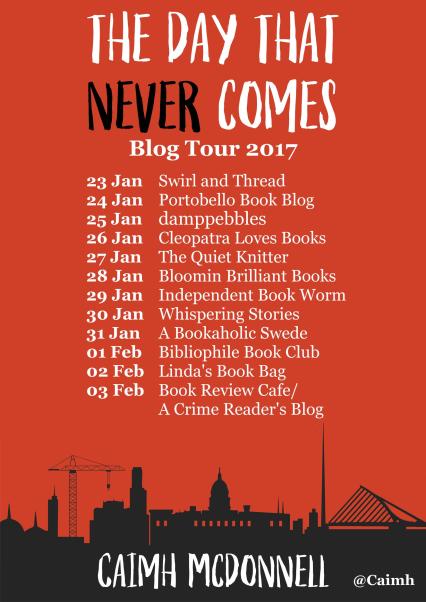
the-day-that-never-comes-blog-tour