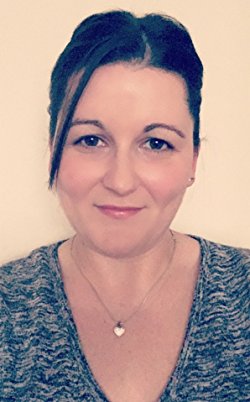
Researching the Men! A Guest Post by Lorraine Wilson, author of Chalet Girls

cover

I’m really pleased to welcome Lorraine Wilson, author of Chalet Girls to Linda’s Book Bag today to celebrate her latest book. I asked Lorraine who she’d envisaged to be the men in Chalet Girls and she took up the task with surprising alacrity. Although skiing has never interested me in the past, I’m thinking of taking it up now!

Chalet Girls was published by by Harper Impulse on 10th February 2017 and is available for purchase in e-book and paperback here. To help celebrate publication, the author is running a wonderful giveaway that you will find further down this post.

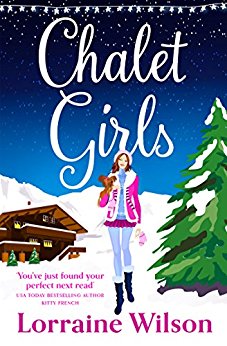
Chalet Girls

cover-chalet

What happens when life in Verbier suddenly goes off-piste?

Lucy’s been bowled over by the sexy extreme skier who’s hurtled into her life. But can she accept Seb’s commitment to his adrenaline-filled career?

Trusting any man is out of the question after what’s happened to Beth. So why is she so drawn to twinkly-eyed Dan when he’s leaving at the end of the season?

Sophie’s madly in love with her gorgeous fiancé, Luc. Only instead of gleefully planning the winter wedding of her dreams, all she wants is to run and hide…

Three Chalet Girls are about to strap on their skis and find out!

Researching the Men!

A Guest Post by

Being asked to research hot men for a guest post is always such a chore! But, being dedicated to my craft, ahem, I applied myself to the task to find three men to hit the slopes with who remind me of my three heroes in Chalet Girls.

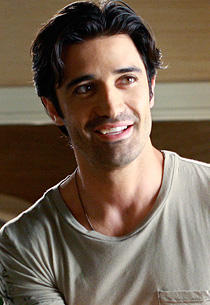
For Luc I think Gilles Marini is a good match. If you need further convincing just google ‘Giles Marini and swimming pool scene’ and I think you’ll be convinced!

giles

For Dan I’ve chosen William Levy. He looks just like Dan does in my mind – a man you could have a fun day skiing with but beneath the banter there’s a confidence that’s undeniably sexy.

william

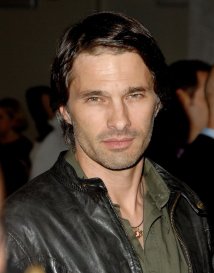
Seb, my extreme skier, is a less conventional hero – he has more experience and is a bit edgier. For him I’ve chosen Olivier Martinez – you get the feeling you’d be in competent hands if he took you off piste…

oliver

For Seb I did take real life inspiration from YouTube videos of pro snowboarder Xavier de le Rue. Watching Xavier being dropped by helicopter onto the ridges of perilous alpine mountaintops gave me the initial inspiration for Seb’s character. You can watch one of Xavier’s jaw dropping mountain descents here.

snow

Giveaway

prize

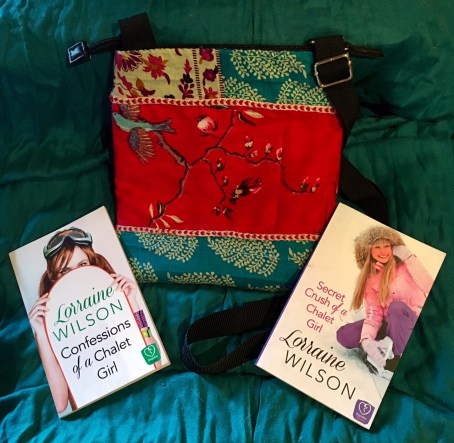
Enter enter to win a unique Indian patchwork handbag and signed paperback copies of Confessions of a Chalet Girl and Secret Crush of a Chalet Girl by clicking here.

About Lorraine Wilson

lorraine-wilson-218x247

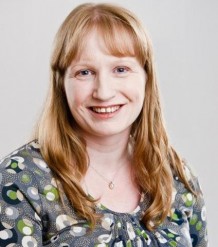
Lorraine lives in Wiltshire with her husband but loves to travel and has lived in four continents. From playing amidst Roman ruins in Africa as a child to riding a Sultan’s racehorse in the Middle East as a teen, Lorraine has many experiences to draw on for the stories she’s been writing ever since she can remember. When she’s not writing you’ll find Lorraine listening to audiobooks while she sews or designs handbags, usually with a rescue terrier or two curled up on her feet.

You can find Lorraine on Facebook, follow her on Twitter and visit her website.

No Safe Home by Tara Lyons

no-safe-home

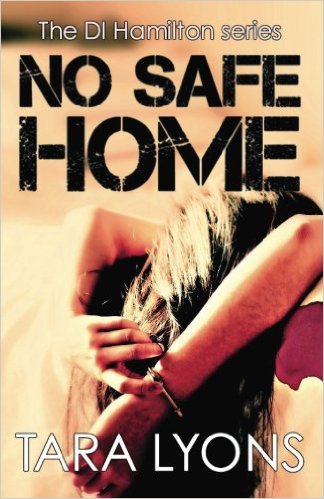
Having met lovely Tara Lyons, author of No Safe Home, on several occasions and had the privilege of a guest post from her on Linda’s Book Bag about the intricacies of the mind that you can read here, imagine my delight when I heard my name was going to have a cameo appearance in No Safe Home! Obviously I couldn’t wait to read it.

No Safe Home was published on 31st January 2017 by Bloodhound and is available for purchase in e-book and paperback here.

No Safe Home

no-safe-home

Detective Inspector Denis Hamilton is haunted when the suspicious death of a teenage girl triggers suppressed memories. With a stalker targeting vulnerable women in Central London, and his team rapidly diminishing, Hamilton must conquer his emotions before another family is destroyed.

In a sleepy town in Hertfordshire, Katy has worked hard to rebuild her life after leaving behind everything she knew. But when her past catches up with her, and her young son’s life is threatened, Katy must admit her true identity if she has any hope of surviving.

A home should be a safe place, shouldn’t it?

But sometimes it is hard to know who you can trust…

My Review of No Safe Home

Katy Royal is attempting to leave her past behind, but little does she realise just how much of it is about to catch up with her.

Now, here’s the thing. I know Tara and she’s lovely. Linda’s Book Bag is mentioned in the acknowledgements of No Safe Home and I was lucky enough to have my name included in a cameo role. So, I was terrified of reading No Safe Home in case I didn’t like it. I didn’t like it – I really liked it.

No Safe Home opens in dramatic style and doesn’t let up. I genuinely felt my pulse increase at times as I read and the short chapters add to that feeling of breathlessness generated. There are frequent mini cliff hangers that meant I couldn’t put aside No Safe Home until I’d just read a little bit more and before I knew it, I’d read it in one sitting. The plot is incredibly well developed so that it isn’t always possible to guess what will happen and again this adds to the enjoyment of the read.

I especially liked the perfect balance between developing the role of DI Denis Hamilton whilst creating the character of Katy Royal. I felt I knew them both well by the end of the book. Both their lives are gradually and skilfully revealed so that it doesn’t matter if you haven’t read the first of the DI Hamilton books, In The Shadows. No Safe Home works as a stand alone story in its own right.

The procedural and medical details are well researched and provide just the right level of detail to enhance the reader’s experience and I found Tara Lyons has a quality of description that enables the reader to envisage a scene vividly. She makes excellent use of the senses in her writing. I also really appreciated the smattering of literary references in the narrative too.

The premise that we are not safe in our own homes is a disturbing one and I found the exploration of this theme and the consequences of society’s use of the online virtual word all made for a riveting read. Indeed, it isn’t just the crime victims in this novel who have No Safe Home – others suffer too, adding layers of interest.

Tara Lyons has also skilfully constructed several possibilities for future DI Hamilton books. The investigating team has evolved and there are a couple of elements in No Safe Home that made me think ‘Oh! I wonder where that might go,’ in the future. Having read No Safe Home, I can’t wait to find out.

I thought No Safe Home was a thrilling read and I thoroughly enjoyed it.

tara-lyons

Tara has always enjoyed writing and having studied English Literature at university went on to work as an Assistant Editor on an in-house magazine. She now concentrates on writing her own novels.

You can find Tara on Facebook, visit her website and follow her on Twitter.

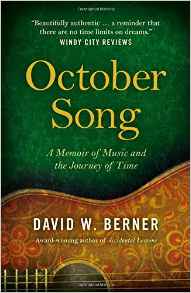
An Interview with David W. Berner, author of October Song

october-song

Sadly I don’t have time to read all the books that come my way, but I thought October Song by David W. Berner looked so interesting that I invited David onto Linda’s Book Bag to tell me more. Thankfully, David agreed to come along.

October Song will be published by Roundfire and John Hunt Books on April 28th 2017 and is available for pre-order here.

October Song

october-song

In the vinyl era, David W. Berner played rock ‘n’ roll in a neighborhood garage band. Decades later at the age of 57 he enters a national songwriting contest and quite unexpectedly is named a finalist. But there’s more. He’s called on to perform the song live at a storied venue for Americana music. Grabbing his old guitar and the love of his life, David hits the road, hoping to live out a musical fantasy he thought had been buried long ago. October Song is a powerful examination of the passage of time, love, the power of music, and the power of dreams.

An Interview with David W. Berner

Welcome to Linda’s Book Bag David. Thank you so much for agreeing to answer some questions on my blog about your writing. Firstly, please could you tell me a little about yourselves?

My background is journalism, but I’m a lot of things, really. My “storytelling” days, I like to say, began when I was paperboy. As a kid, I had a paper route with 110 customers and I like to think I was delivering stories to readers even then. Much of my journalism work is in broadcasting, but I’ve written a great deal for arts magazines, travel websites, and a number of personal essays have been published in literary magazines and websites. I grew up in Pittsburgh and I am a die-hard Steelers fan, but I have lived in the Chicago area for many years and the Midwest has become my adopted home. I play guitar, have a dog named Sam (Samantha), and live in a great little house with my beautiful Leslie—my domestic partner, significant other, confidant. I teach at Columbia College Chicago and regularly work for CBS Radio in Chicago.

Without spoiling the plot, please could you tell us a bit about October Song?

It’s the story of dreams—when do we let them go? In the vinyl era of rock-n-roll, I played guitar in a neighborhood garage band. Decades later at the age of 57 I entered a national songwriting contest and quite unexpectedly was named a finalist. I was then called on to perform the song live at a storied venue for Americana music more 500 miles from home. So I grabbed my old guitar and the love of my life, and hit the road. The book is about that trip, that dream, and, I hope, a powerful examination of the passage of time, love, the power of music, and the power of dreams. I think it’s a relatable story. We all have dreams we must decide to live out or let go.

(That sounds a fantastic experience.)

When did you first realise you were going to be a writer?

I have been a writer of some kind—not always a good one, though—since I was a kid. I wrote a book in 2nd grade entitled The Cyclops. Our teacher helped us produce paper mache books. The story was inspired by the Jacque Cousteau specials on television in the 1960s, the ones about ocean adventures. As a teenager I started writing songs. Nothing special, but they were extensions of what I was feeling. I wrote for the school newspaper a bit in high school. Got into journalism after college and wrote for broadcast and radio. I was certainly not a “born” writer. I really wasn’t very good in the beginning, and I am still growing and working on my craft. I think in some ways I will always be “becoming” a writer. Believing I can still grow keeps me on my toes.

How do you go about researching detail and ensuring your books are realistic?

I write from my heart. Trust my realities and my gut. If I need details for a place for a particular person, I use my journalism skills and simply ask a lot of questions.

Which aspects of your writing do you find easiest and most difficult?

Easy and difficult are probably not the categories I would put them in. It’s more about what I like and what I love. Getting started is probably the hardest. I like it, but don’t love the process of beginning. However, I love, love, love re-drafting. It’s the best part of the work. Going back over a manuscript after allowing it to sit for a time, to percolate, and then to dig back into it and make it the best it can be is most rewarding.

(How interesting. Many authors tell me that the editing stage is the part they enjoy least!)

What are your writing routines and where do you do most of your writing?

I’m a coffee shop writer. But, I am currently building a writer’s shed on my property. It’s in the spirit of Thoreau and Dylan Thomas. It’s 8 x 10 and will be, I hope, a very special space for writing. I have written about the shed a bit in my blog here. But when I finally move my work to the shed, I still plan to have immediate access to coffee.

If you hadn’t become an author, what would you have done instead as a creative outlet?

I believe being an author as an extension of all the things I do—radio journalism, teaching, songwriting. It’s all part of me. My job is a storyteller. I wanted to be an oceanographer when I was young boy. Maybe I would have been that. Still, I am doing now what I always wanted to do, what I was supposed to do, even when I wasn’t sure what that was.

October Song is a memoir. How difficult or cathartic was it to write?

Most of my work is personal. Even my novel, Night Radio, the only fiction I’ve written, has elements of reality in it. And although I have been asked this question a lot, I’m still not sure how to answer it. “Cathartic” might be too strong a word. I can say every book, including October Song has been freeing and has helped me understand what it was I faced, experienced, went through. Like the great essayist and author Joan Didion, I really don’t know what it is I’m thinking or trying to write until I start to write. It’s like pulling away a curtain on something brand new for all to see, including me. In fact, I didn’t set out on the songwriting road trip with intentions of writing a book. I had no idea this was going to be a story to tell. But during part of the weekend, I started taking notes on the experience and the more I wrote the more I saw had I a unique story to share.

Much of your writing seems to consider personal identity. How important a theme is this to you?

Thanks for bringing this up. It’s great insight. And you are right, I have always been thinking about who I am, who we are? I think that’s a lifelong question and one with varied answers as we move thorough life. Our identity changes all the time—father, son, lover, worker, friend, enemy. We are many things and only one at the same time. It’s a fascinating subject to me.

Music is central to much of your writing. What do you listen to as you write?

Music has been the only constant identity I have had in my life. Playing it, recording it, singing it loud with the car windows rolled down. Lyrics, great ones, make me cry, especially Dylan. Beautiful melodies sooth and spark me. But despite this, I don’t always listen to music when I write. Writing Night Radio and October Song—my two most recent books and the most music-based—I listened to the music mentioned in the manuscripts. I didn’t play the songs all the time, but occasionally, yes. Night Radio has a Spotify playlist attributed to it. October Song will too when the book is released. And when all else fails and I’m in the mood for music while writing, there is always Miles Davis.

Creativity is obviously a central part of your life. What advice would you give to those scared to release their own creativity through writing or song?

Whatever you are going through, whatever the subject you are writing about, someone else is going through it or examining it too. Examining your life in fiction or non-fiction is a life worth living, to paraphrase Socrates. If your medium is music, or painting, or dance, it is still the same thing. It’s storytelling and that is part of our human condition. We are storytellers. Tell yours. I understand that being vulnerable isn’t always easy, but the good artists find a way to embrace vulnerability. They let it all out. Let it out. We are all in this together.

To what extent does writing October Song represent fulfilling your own dreams?

If you’re talking about writing a book, another book, then yes, it does. I love telling stories and I have found that creative nonfiction is a good genre for me. So, in that sense, absolutely the book is part of the fulfilling of a larger dream. And the subject and focus of October Song is really all about that question.

You believe that age is just a number. What can we expect next for David W. Berner?

I’m working on a manuscript about the notion or concept of home. What does home mean to us? Arriving, leaving, searching for home—how does that fit into our lives? And what is home? Is it a place, a feeling, an experience? I see the end product as a book of essays, creative nonfiction all related to this subject, stories of all kinds with that theme. As I have said before, I’m writing this to try to figure out exactly what I’m trying to say about the concept of home. It’s shaping itself as it goes along.

October Song has a cover that almost suggests the idea of the grass being greener on the other side to me. How did that image come about and what were you hoping to convey (without spoiling the plot please!)?

That’s a very interesting observation. I hadn’t thought of that. But, to carry that through, I think checking out the grass on the other side is fine, but be aware that it isn’t always greener. What is for certain is that no matter where that grass may be, it still needs to be mowed. You still must cultivate your passions to make them work for you. The grass is not always greener, but new experiences, new challenges, and opportunities to stretch creatively or to open your mind to something new is the medicine of life, isn’t it? So, maybe that “grass is greener” book cover says I lot more than I ever imagined!

If October Song became a film, who would you like to play you and why would you choose them?  

This is a fun question.  I could see an older Ethan Hawke playing me, maybe? The Ethan Hawke of the movie Boyhood, a little grey in the hair, some wrinkle in the forehead. He may be too handsome to play me. Plus, he has hair. I don’t. Leslie, my partner, is also in the book. Anyone who is warm and beautiful would be perfect. When I asked her, she thought maybe Catherine Keener. There appears to be a little hippie in her and that works.

When you’re not writing, what do you like to read?

Mostly creative nonfiction. Love Joan Didion, Annie Dillard, and Hemingway’s nonfiction stories like Death in the Afternoon. But I also read newer writers who are crafting stories in the tradition of these greats. I just re-read Thoreau’s Walden, but I also just finished Patti Smith’s M Train. Loved it.

If you had 15 words to persuade a reader that October Song should be their next read, what would you say?

I would simply ask this question: What dream did you once have that you wish you could still try to realize? I like that it’s a question, allowing the reader to have his or her own interpretation. I like that.

So do I. Many thanks, David, for agreeing to be interviewed.

About David W. Berner

author

David W. Berner is an award-winning journalist, broadcaster, author, and teacher. He has published three books (two memoir, one collection of essays) and will soon publish a work of fiction. David has more than forty years’ experience in broadcast journalism as a reporter, anchor, news director and program director. He regularly contributes to the CBS Radio Network and has contributed to public radio stations around the country, including NPR’s Weekend edition.

David’s first book, Accidental Lesson (Strategic) was awarded the Royal Dragonfly Grand Prize for Literature. In 2011, he was awarded the position of Writer-in-Residence at the Jack Kerouac Project in Orlando, Florida and his memoir – Any Road Will Take You There: A Journey of Fathers and Sons (Dream of Thing Publishing) – is a product of the three-months spent at Kerouac’s former home. The book won the Chicago Writers Association “Book of the Year” award in 2013. In 2015, David was awarded the Writer-in-Residence honor by the Ernest Hemingway Foundation of Oak Park and his collection of essays, There’s A Hamster In The Dashboard (Dream of Things Publishing) was named a 2015 “Best Book” by the Chicago Book Review. He has also performed live literature at 2nd Story, Essay Fiesta, and Sunday Salon around Chicago.

You can follow David on Twitter, find him on Facebook and visit his blog.

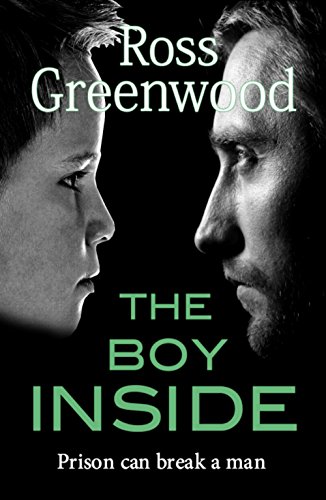
A Year in the Life, a Guest Post by Ross Greenwood, author of The Boy Inside

the-boy-inside

It gives me great pleasure to welcome back Ross Greenwood to Linda’s Book Bag today to celebrate the publication of The Boy Inside. Ross is a local author to me and I had the privilege of interviewing him almost a year ago when his first novel Lazy Blood was published. You can read that interview here.

The Boy Inside was published by Bloodhound Books on 7th February 2017 and is available for purchase in e-book and paperback here. In celebration of The Boy Inside, Ross has agreed to tell me what’s been happening in the year since he was on Linda’s Book Bag.

The Boy Inside

the-boy-inside

How can you make the right decisions if everything you’ve been told is a lie?

With absent parents and broken friends, twenty-one year old Ben is making choices which are ruining his life. In jail, again, he and his cellmate, Jake, take a hostage in a futile gesture against a system they can’t control.

This powerful, beautifully written novel gives a vivid and realistic picture of those we send to jail.

Who would you rely on if you were locked up?

Do we ask the most from the ones who have the least?

A Year In The Life

A Guest Post by Ross Greenwood

It’s been a strange time. Linda asked me to write a piece about a year as a self-published author. Only I’m not one now!

I finished Lazy Blood about eighteen months ago. I knew nothing about the publishing world and hadn’t really planned to publish. Perhaps just get some copies printed off. However, the people I got to proof read, loved it. They said you have to get it out there, and that set the ball rolling.

Those who have self-published a book will know what an up-and-down experience that is, but enjoyable nevertheless. I began to receive some great reviews, from people I didn’t know! That inspired me to write the second book, The Boy Inside. The plan had been to write three stories, all with very different protagonists whose lives were affected by prison.

The almost unanimous feedback I got from readers about the first book was that they loved the insight into what our prisons are really like. I was a prison officer for four years and was surprised at what I found when I worked there.

On completion of The Boy Inside I sent it out to agents and publishers. I ended up with two publishers who were keen and an agent. I never expected to be in a position to have to choose between anyone. I decided to go with Bloodhound books in the end as I knew Betsy from online book clubs and as a successful author herself she was very aware of all the fears authors have. They really seem to understand the business.

It was actually a few weeks later that it sank in that I was going to be a real published author. It can be a lonely existence; writing a book. Then at the end it can be demoralizing when no one is interested. So, I’m grateful for Bloodhound for publishing it and providing such a great cover. However, I’m also grateful to so many people, mostly online, who have been so supportive. Linda is one! You’ve all given your time for free with nothing expected in return. I now try to return that to others.

So, this novel is inspired by a story I often heard when I was at work. A tough upbringing leads to a dissociated existence which inevitably ends with jail. Once you are in the prison system, it’s very hard to break free. What events led Ben and his friends to be criminals? Will they be able to make a future for themselves when they leave?

This story will shock some and surprise many. I hope you enjoy it. This book is real life at its rawest.

My Review of The Boy Inside

With a hostage situation about to implode, Ben’s life in prison is just the beginning of this story.

What a powerful and affecting read The Boy Inside is. Aside from a plot that involves everything from petty theft to murder, there is so much that can be learnt from reading this exceptionally well written story. I have to say something about the book’s clever structure too as it is divided into several sections in much the same way as serial offenders’ lives are divided into stretches in prison.

The characters that appear are all too familiar to society, with drug addicts, criminals and prostitutes peppering the narrative, but what is different to many other crime books is the level of humanity behind the writing. Having worked in the prison service Ross Greenwood knows first hand what places inmates there. Ben may be a boy inside, in prison, but Ross Greenwood also shows us utterly clearly the boy inside, the real person behind the criminal and the path that has led Ben to that prison cell. Having taught youngsters similar to Ben in the past I found I was very moved by the situations Ben and Jake especially found themselves in. The home backgrounds of alcoholism, violence and neglect are sadly only too realistic. I also really liked the way in which Ben’s past is revealed, with his route to criminality, his first experiences of sex, his friendship with Jonty all adding to layers that made him a very real person. It was the naturalness of the direct speech that helped create this impression for me too.

What did surprise me was how much I learnt about what life in prison is like. I had some inkling, having acted as a police lay visitor for a few years to local prison cells, but the level of corruption and lawlessness revealed was so convincing and authentic I felt shocked at times.

An element that really resonated with me was the sense of Peterborough as a setting. Peterborough is my nearest city and I recognised so many of the locations which added to my enjoyment because they are authentically presented.

In a sense, this should be a depressing book, but I found The Boy Inside a sensitive and enlightening read as well as a gripping story. There is hope and characters like the Singhs act as a counterpoint to the negative aspects so that I felt The Boy Inside was a realistic and entertaining narrative. I really enjoyed it.

About Ross Greenwood

Ross

Ross was born in 1973 in Peterborough and lived there until he was twenty, attending The King’s School in the city. He then began a rather nomadic existence, living and working all over the country and various parts of the world.

He found himself returning to Peterborough many times over the years, usually when things had gone wrong. It was on one of these occasions that he met hs partner about a hundred metres from his back door whilst walking a dog. Two children swiftly followed. He’s still a little stunned by the pace of it now.

This book was started a long time ago but parenthood and then four years as a prison officer got in the way. Ironically it was the four a.m. feed which gave him the opportunity to finish the book as unable to get back to sleep, he completed it in the early morning hours.

You find Ross on Facebook page and visit his web site. You can also follow Ross on Twitter.

There’s more with these other bloggers too:

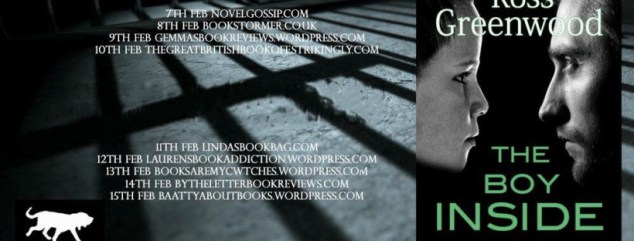
ross-poster

Headline Blogger and Author Event

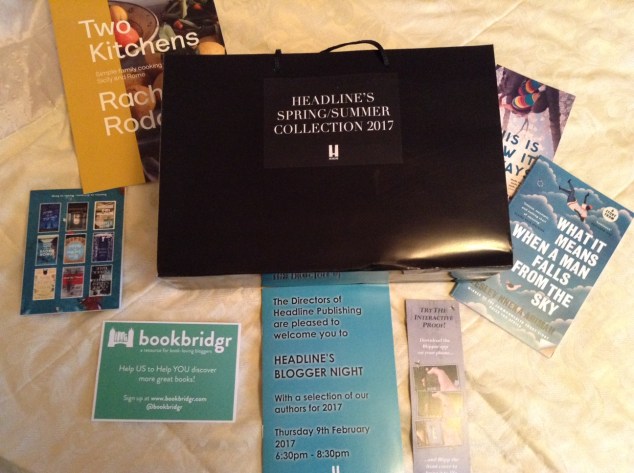
img_0676

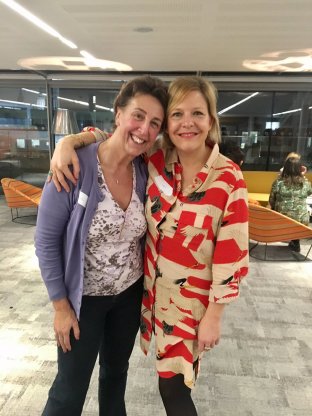
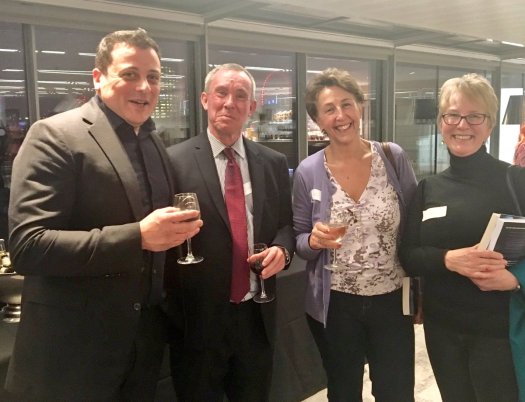
What a super evening I had last night at the Headline Blogger Evening at Carmelite House. I’d like to say thank you to all those involved, and especially the wonderful Georgina Moore whom you should follow on Twitter here.

hodder-09-02-2017-with-georgina

With the fabulous Georgina Moore!

It’s so lovely to meet those wonderful publicists who send we bloggers fantastic books to read. I always relish meeting up with fellow bloggers and this time I met in real life a couple I’ve followed since I started blogging: John from The Last Word blog and Jackie from Never Imitate.

adam-handy-john-tina-and-me

With Adam Handy, John (The Last Word)  and Tina (Trip Fiction)

We had wine and nibbles as well as the opportunity to talk with several authors before walking away with fantastic books. I so enjoyed speaking with Alison Weir and Colette McBeth, both of whom signed books for me and I have to admit to having a bit of a fan girl moment talking with Adele Parks whose latest book The Stranger in My Home was also published in paperback yesterday. Equally brilliant was having the chance to speak at length with  Adam Handy and Felicia Yap.

Authors attending or featured last night were:

Adam Handy and Pendulum

pendulum

You wake. Confused. Disorientated.
A noose is round your neck.
You are bound, standing on a chair.
All you can focus on is the man in the mask tightening the rope.
You are about to die.
John Wallace has no idea why he has been targeted. No idea who his attacker is. No idea how he will prevent the inevitable.
Then the pendulum of fate swings in his favour.
He has one chance to escape, find the truth and halt his destruction.
The momentum is in his favour for now.
But with a killer on his tail, everything can change with one swing of this deadly pendulum…

You have one chance. Run.

Pendulum is available here

Adele Parks and The Stranger in My Home

the-stranger-in-my-home

Alison is lucky and she knows it. She has the life she always craved, including a happy home with Jeff and their brilliant, vivacious teenage daughter, Katherine – the absolute centre of Alison’s world.

Then a knock at the door ends life as they know it.

Fifteen years ago, someone else took Alison’s baby from the hospital. And now Alison is facing the unthinkable.

The daughter she brought home doesn’t belong to her.

When you have everything you dreamed of, there is everything to lose.

The Stranger in My Home is available here.

Alison Weir and Six Tudor Queens: Katherine of Aragon

six-tudor-queens

A Spanish princess. Raised to be modest, obedient and devout. Destined to be an English Queen.

Six weeks from home across treacherous seas, everything is different: the language, the food, the weather. And for her there is no comfort in any of it. At sixteen-years-old, Catalina is alone among strangers.

She misses her mother. She mourns her lost brother.
She cannot trust even those assigned to her protection.

Katherine of Aragon. The first of Henry’s Queens. Her story.

History tells us how she died. This captivating novel shows us how she lived.

Six Tudor Queens: Katherine of Aragon is available here.

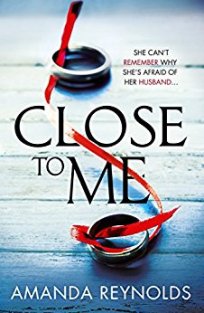
Amanda Reynolds and Close to Me

close-to-me

When Jo Harding falls down the stairs at home, she wakes up in hospital with partial amnesia – she’s lost a whole year of memories.

A lot can happen in a year. Was Jo having an affair? Lying to her family? Starting a new life?

She can’t remember what she did – or what happened the night she fell.

But she’s beginning to realise she might not be as good a wife and mother as she thought.

Close to Me is available for pre-order here.

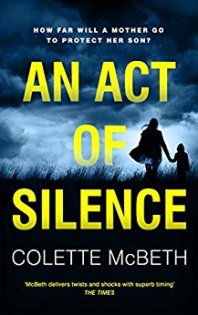
Colette McBeth and An Act of Silence

an-act-of-silence

These are the facts I collect.

My son Gabriel met a woman called Mariela in a bar. She went home with him where they had sex. They next morning she was found in an allotment.

Mariela is dead.

Gabriel has been asked to report to Camden Police station in six hours for questioning

Linda Moscow: loving mother to Gabriel. Linda promised herself years ago that she would never let her son down again. Even if it means going against everything she believes in – she will do anything to protect him. She owes him that much.

Gabriel Miller: the prodigal son. He only ever wanted his mother’s love, but growing up he always seemed to do the wrong thing. If his mother could only see the bad in him – how could he possibly be good?

How far will a mother go to save her son? Linda’s decision might save Gabriel, but it will have a catastrophic impact on the lives of others. What would you do if faced with the same impossible choice?

An Act of Silence is available for pre-order here.

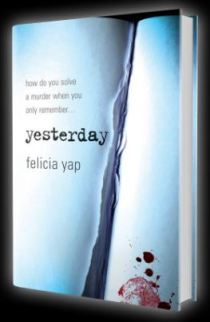
Felicia Yap and Yesterday

yesterday

There are two types of people in the world. Those who can only remember yesterday, and those who can also recall the day before.

You have just one lifeline to the past: your diary. Each night, you write down the things that matter. Each morning, your diary tells you where you were, who you loved and what you did.

Today, the police are at your door. They say that the body of your husband’s mistress has been found in the River Cam. They think your husband killed her two days ago.

Can you trust the police? Can you trust your husband? Can you trust yourself?

Yesterday is available for pre-order here.

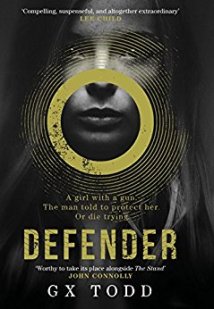
G X Todd and Defender

defender

On the cusp of sleep, have we not all heard a voice call out our name?’

In a world where long drinks are in short supply, a stranger listens to the voice in his head telling him to buy a lemonade from the girl sitting on a dusty road.

The moment locks them together.

Here and now it’s dangerous to listen to your inner voice. Those who do, keep it quiet.

These voices have purpose.

And when Pilgrim meets Lacey, there is a reason. He just doesn’t know it yet.

Defender pulls you on a wild ride to a place where the voices in your head will save or slaughter you.

#HearTheVoices

Defender is available here.

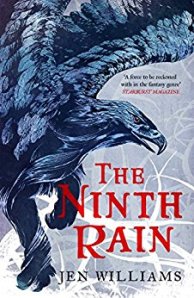
Jen Williams and The Ninth Rain

the-ninth-rain

The great city of Ebora once glittered with gold. Now its streets are stalked by wolves. Tormalin the Oathless has no taste for sitting around waiting to die while the realm of his storied ancestors falls to pieces – talk about a guilt trip. Better to be amongst the living, where there are taverns full of women and wine.

When eccentric explorer, Lady Vincenza ‘Vintage’ de Grazon, offers him employment, he sees an easy way out. Even when they are joined by a fugitive witch with a tendency to set things on fire, the prospect of facing down monsters and retrieving ancient artefacts is preferable to the abomination he left behind.

But not everyone is willing to let the Eboran empire collapse, and the adventurers are quickly drawn into a tangled conspiracy of magic and war. For the Jure’lia are coming, and the Ninth Rain must fall…

The Ninth Rain is available for pre-order here.

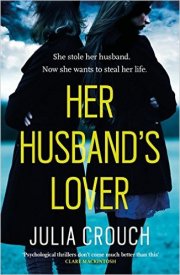
Julia Crouch and Her Husband’s Lover

her-husbands-lover

She stole her husband. Now she wants to take her life.

After the horrors of the past, Louisa Williams is desperate to make a clean start.

Her husband Sam is dead. Her children, too, are gone, victims of the car accident in which he died.

Sam said that she would never get away from him. That he would hound her until she died if she tried to leave. Louisa never thought that he would want to harm their children though.

But then she never thought that he would betray her with a woman like Sophie.
And now Sophie is determined to take all that Louisa has left. She wants to destroy her reputation and to take what she thinks is owed her – the life she would have had if Sam had lived.

Her husband’s lover wants to take her life. The only question is will Louisa let her?

Her Husband’s Lover is available here.

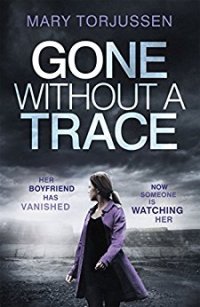
Mary Torjussen and Gone Without A Trace

gone-without-a-trace

No one ever disappears completely…

You leave for work one morning.

Another day in your normal life.

Until you come home to discover that your boyfriend has gone.
His belongings have disappeared.
He hasn’t been at work for weeks.
It’s as if he never existed.

But that’s not possible, is it?

And there is worse still to come.

Because just as you are searching for him someone is also watching you.

Gone Without A Trace is available here.

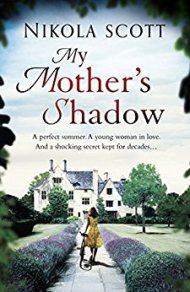
Nikola Scott and My Mother’s Shadow

my-mothers-shadow

It is 1958. Elizabeth has been sent away from her London home to the beautiful Hartland House in Sussex. Over an idyllic summer by the coast, she grows close to the confident young Shaws, who treat her like one of their own. A lovely but innocent girl, Elizabeth is ready to fall in love – but her dreams are dangerously naïve.

Decades later, Elizabeth’s daughter Addie is stunned when a stranger appears on her doorstep, claiming that they are sisters. Addie doesn’t believe it. Until her beloved father admits that everything she’s been told about her early life is a lie.

For Addie and her new sister Phoebe it’s the beginning of an emotional journey back to a time of fallen women and domineering fathers, as they discover the extraordinary truth about how their lives began…

My Mother’s Shadow is available for pre-order here.

I think my spring reading might just be sorted!

Plotting a Unique Structure, a Guest Post by S.D.Robertson, author of If Ever I Fall

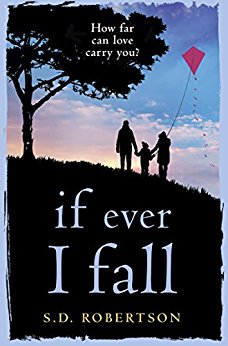
if-ever-i-fall

I’m delighted to welcome back S.D. Robertson, author of If Ever I Fall to Linda’s Book Bag. S.D. Robertson previously wrote about his journey to publication on the blog hereIf Ever I Fall was published yesterday 10th February 2017 by Avon Books, an imprint of Harper Collins, and is available for purchase here.

To celebrate today’s publication of If Ever I Fall, I have a great guest post from S.D. Robertson all about how this cleverly plotted book came about. I’m reviewing If Ever I Fall too.

If Ever I Fall

if-ever-i-fall

Is holding on harder than letting go?

Dan’s life has fallen apart at the seams. He’s lost his house, his job is on the line, and now he’s going to lose his family too. All he’s ever wanted is to keep them together, but is everything beyond repair?

Maria is drowning in grief. She spends her days writing letters that will never be answered. Nights are spent trying to hold terrible memories at bay, to escape the pain that threatens to engulf her.

Jack wakes up confused and alone. He doesn’t know who he is, how he got there, or why he finds himself on a deserted clifftop, but will piecing together the past leave him a broken man?

In the face of real tragedy, can these three people find a way to reconcile their past with a new future? And is love enough to carry them through?

How I Developed My Novel’s Unique Structure

A Guest Post by S.D. Robertson

My new book, If Ever I Fall, has a rather unique structure. There are three interweaving plot strands, which appear one after the other as the story unfolds. I’ll call them parts A, B and C to keep things simple.

Part A is a series of letters written by a grieving woman called Maria to someone called Sam. Part B is about Jack, who awakes with amnesia in a strange derelict mansion, looked after by Miles, who says he’s a doctor. Part C tells the story of Dan, a newspaper editor whose life is in tatters.

What’s most unusual is that part C is written backwards. It starts in 2017, around the same time that part A takes place, but then over the course of the novel it gradually takes the reader back to a key event that happened two years earlier. So, for instance, the first instalment is set in May, the next in April, the one after that in March, and so on.

At the beginning it’s also not clear how the strands relate to one another, or when and where part B takes place. So as you can probably imagine, it wasn’t the easiest thing in the world to write. It involved a lot of detailed notes and timelines, as well as quite a bit of hair pulling and swearing at myself.

If I’m honest, at times during the writing process, I wished I’d not done it that way. For the most part, my debut novel, Time to Say Goodbye, had a far more straightforward linear structure. Occasionally when I was constructing this novel, I did miss that. However, once it was finished, I knew I’d made the correct decision. It was definitely the right way to tell this particular story.

Each of the key characters in the novel is, for different reasons, feeling lost. I wanted my readers to experience a taste of this. But I also knew it was important not to make things too confusing, as writing in a simple and engaging way has always been very important to me as an author.

Essentially, my aim with this novel is for readers to be presented with a puzzle that they become actively engaged in trying to solve before the answers present themselves in the text. I want to draw them into the story, so they feel involved rather than mere observers.

The backwards idea for part C came to me during the very initial stages of developing the concept. I decided to re-watch Christopher Nolan’s fantastic film Memento, which also involves amnesia, and that convinced me to go for it; that a story told in reverse could work.

From there, once I started actually writing the novel, it was a case of thorough planning and keeping on top of things. I had a central diagram of how the three strands were set to unfold in relation to one another and an ever-expanding notebook packed with background information.

Rather than taking on each part separately and bringing them together at the end, I chose to write everything in the same order that it appears in the book. That seemed to be the most sensible way to keep on top of things – and I got there eventually.

I also decided to write each section in a different way to keep them distinct, both for me as author and for readers. So there’s the letter format of part A, while part B is first person present tense, and part C is third person past tense.

After that, the editing process was crucial for ironing out any structural kinks. My editors at Avon were massively helpful when it came to making sure that things didn’t get too confusing and that it was always clear where and when the action was taking place.

So now you know how I developed the unique structure of If Ever I Fall. I do hope you enjoy reading it.

My Review of If Ever I Fall

With Dan and Maria’s lives in free fall and the mysterious Miles looking after amnesiac Jack, the world is not all it seems.

If Ever I Fall was completely different to my expectations. I imagined I was about to read a cosy and emotional women’s fiction narrative that I would thoroughly enjoy. I certainly enjoyed If Ever I Fall and I did find it emotional, but this three stranded story exceeded my expectations, with an almost psychological thriller or mystery element too.

It’s quite hard to say too much about the plot without spoiling the story for other readers, but S.D. Robertson’s skill in weaving the plot strands is masterful. At times there’s a disjointed nature to one of the plot devises that makes it a little confusing. This is not a negative. The flashback, dreamlike, elements serve to provide the same experience for the reader as for the character. I thought this was so well done.

With such a complex plot, it surprised me just how well developed the characters are. My heart went out to them all with the exception of one – but again I don’t really want to say who as I don’t want to spoil the read! Maria’s epistolary sections that explore her fragile state of mind are so moving. S.D. Robertson shows how O.C.D can affect lives to breaking point and the themes of If Ever I Fall are intense and affecting for the reader. Grief, relationships, memory and identity all underpin both character and plot so that there really is something for every reader in this book.

I also really appreciated the title. If Ever I Fall can relate to literal actions in the story but equally to metaphorical ones as characters fall from grace, fall apart in their relationships, fall into depression and mental ill-health and so on. I think the significance of the title only becomes clear after the book is read completely.

If Ever I Fall did not live up to my expectations. It exceeded them and I will be thinking about it for a long time.

About S.D. Robertson

SD Robertson.jpg

Former journalist S.D. Robertson quit his job as a local newspaper editor to pursue a lifelong ambition of becoming an author and to spend more time with his wife and daughter. If Ever I Fall is his second novel. A heart-rending story of family tragedy, it is published on 9 February 2017.

You can follow S.D. Robertson on Twitter, visit his web site and find him on Facebook.

There’s more with these other bloggers too:

If Ever I fall tour poster.png

Absorbing the Atmosphere, a Guest by Clare Chase, author of A Stranger’s House

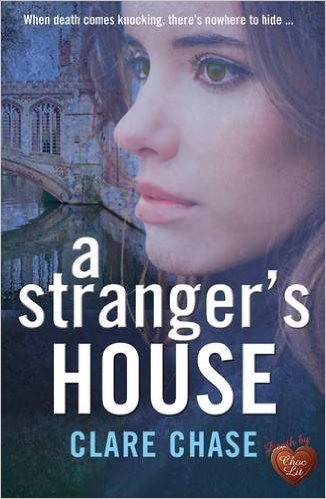
a-strangers-house

I’m delighted to be supporting Choc Lit in celebrating the paperback release of A Stranger’s House by Clare Chase. A Stranger’s House is available for purchase in e-book and paperback by following the publisher links here.

A Stranger’s House

a-strangers-house

What if you were powerless to protect the person you cared about most?

When Ruby finds out that her partner has done the unforgivable, she has no option but to move out of their home. With nowhere else to go, a job house-sitting in Cambridge seems like the perfect solution.

But it’s soon clear the absent owner hurts everyone he gets close to, and Ruby’s faced with the fallout. As violent repercussions unfold, her instinct is to investigate: it’s a matter of self-preservation. And besides, she’s curious…

But Ruby’s new boss, Nate Bastable, has his eye on her and seems determined to put a stop to her sleuthing. Is he simply worried for the welfare of a member of staff, or is there something altogether more complicated and potentially dangerous at play?

Absorbing the Atmosphere

Creating A Sense Of Place In Mystery Fiction

A Guest Post by Clare Chase

Thanks so much for having me on your blog today, Linda. I was delighted when you asked me to write a post on this topic. Soaking up the atmosphere of the setting I’ve chosen is one of my favourite parts of preparing to write a new novel.

My latest paperback, A Stranger’s House, is set in Cambridge. Although it’s my home city it still surprises me and I never tire of its beauty. Here’s what I do to absorb its atmosphere.

Look afresh, even though I know the area well

I’ve lived in Cambridge for over twenty years, but I still find it’s important to revisit the areas I want to write about. There are various practical reasons for doing this. There’s a lot of development in Cambridge, meaning streets change, and I can’t take the layout for granted, even if I saw a particular road six months earlier! And the city varies a lot with the seasons too; seeing a specific place at the right time of year certainly makes a difference. There are the normal changes you’d expect of course, but the population alters too. In term time, students from the city’s two universities amount to a fifth of Cambridge’s residents. The ancient streets in the centre are packed with young people hurtling from one lecture to another on their bikes. But from June to October the undergraduates go off for the vacation, to be replaced by increased numbers of tourists, as well as language students from the continent.

But most importantly of all, I find my descriptions from memory get stale and clichéd. If I go and stand in the setting I want to use, and experience it again afresh, I feel confident that I can convey it vividly.

Video and stills

A Stranger’s House is set in a Victorian villa overlooking Cambridge’s Midsummer Common. The story takes place in late May and June, and I took lots of photographs of the Common around this time: cattle grazing up close to the smart townhouses, cow parsley in the tall grass, students cycling across the paths and college boat crews taking part in the May Bumps. (These are races where rowing boats start in a staggered formation and each has to try to ‘bump’ the craft in front. They actually take place in June! You can always spot a winning team as each member of the crew puts willow leaves in their hair.)

Midsummer Common hosts Strawberry Fair, a free festival, which also features in A Stranger’s House. It’s a very colourful occasion full of everything from alternative bands and stalls, to people on stilts dressed as fairies. Again, I went along and took photos and videos so I could conjure up the atmosphere even if I ended up writing about it in November!

Sound recordings

If I’m in a place full of people – a café, for instance, or a pub – it might seem a bit intrusive to wave my camera in people’s faces. I’m not sure they’d understand if explained they were contributing to my novel’s background colour! So I have been known to use the voice recorder on my phone, not to preserve actual conversations of course, but to get an impression of the background hubbub so I can describe it later – from shouts and laughter to drunken singing or someone dropping a teacup. I’ve also recorded the sounds on the river, such as coaches shouting to the college boat crews, and street performers in town singing opera.

Notebooks

Videos and photos are all very well, but they don’t capture the smell of the river, or the chill morning air on your face. If I’m struck by a particular atmosphere and what’s caused it, I’ll note it on my phone. Things like this occasionally cause delays on my journey into work. My cycle route takes me up the river and it’s hard not to stop if there’s something interesting going on!

Capturing the moment

I can’t always tell when a useful scene will land in my lap. It’s easy to go along to events like the Fair I’ve mentioned, or to see what one of the colleges looks like in the snow, but sometimes something much more mundane can be useful: car headlights in the driving rain and plumes of exhaust as traffic queues on the ring road, for example. I try to tune in to these moments so that they don’t slip by and keep my phone handy, ready to take pictures.

Back at home, I keep my photos, videos and notes together, so that I can refer back to them as I write. There’s nothing like fortifying myself with images of long, hot summer days in Cambridge when the winter weather’s at its height! And later the photos are useful all over again, when I start to promote a new novel. The only thing I have to watch out for is overdoing the research. Sometimes taking a stroll on the commons – just to check once again exactly what they’re really like – can seem more appealing than, say, proofreading!

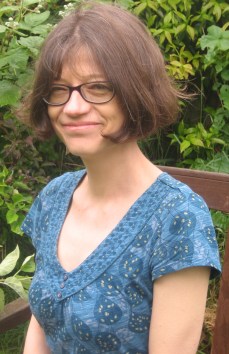
About Clare Chase

clare-wartnaby-1

Clare Chase writes women sleuth mysteries set in London and Cambridge. She fell in love with the capital as a student, living in the rather cushy surroundings of Hampstead in what was then a campus college of London University. (It’s currently being turned into posh flats …)

After graduating in English Literature, she moved to Cambridge and has lived there ever since. She’s fascinated by the city’s contrasts and contradictions, which feed into her writing. She’s worked in diverse settings – from the 800-year-old University to one of the local prisons – and lived everywhere from the house of a Lord to a slug-infested flat. The terrace she now occupies presents a good happy medium.

As well as writing, Clare loves family time, art and architecture, cooking, and of course, reading other people’s books.

She lives with her husband and teenage children, and currently works at the Royal Society of Chemistry.

You can follow Clare on Twitter, visit her website and find her on Facebook.

There’s more with these other bloggers too:

poster

An Interview with Guinevere Glasfurd, author of The Words in My Hand

uk-pbcover-thewordsinmyhand2017

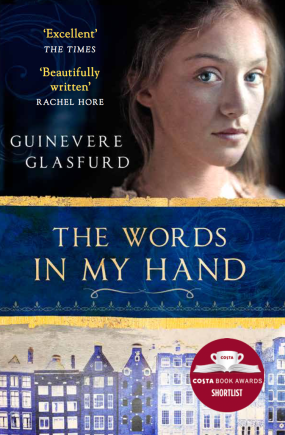
I adored The Words In My Hand by Guinevere Glasfurd and reviewed the book here. As I’m certain The Words In My hand is going to be one of my books of the year 2017, I’m thrilled to be helping to celebrate today’s paperback release with an interview with Guinevere Glasfurd.

The Words In My Hand is published by Two Roads Books, an imprint of John Murray and is available here and from all good booksellers including Waterstones and W H Smith.

The Words In My Hand
uk-pbcover-thewordsinmyhand2017

The Words In My Hand is the re-imagined true story of Helena Jans, a Dutch maid in 17th-century Amsterdam, who works for Mr Sergeant, the English bookseller. When a mysterious and reclusive lodger arrives – the Monsieur – Mr Sergeant insists everything must be just so. It transpires that the Monsieur is René Descartes.

Helena’s life, like that of so many women in history in history, is scarcely recorded. In The Words In My Hand she is a young woman who yearns for knowledge, who wants to write so badly she makes ink from beetroot and writes in secret on her skin – only to be held back by her position in society as a servant, and as a woman.

Weaving together the story of Descartes’ quest for reason with Helena’s struggle for literacy, their worlds overlap as their feelings deepen; yet remain sharply divided. For all Descartes’ learning, Helena has much to teach him about emotion and love.

When reputation is everything and with so much to lose, some truths must remain hidden. Helena and Descartes face a terrible tragedy and ultimately have to decide if their love is possible at all.

An Interview with Guinevere Glasfurd

Photographs kindly provided by the author

Hi Guinevere. Thank you so much for agreeing to answer some questions on my blog about your writing and The Words In My Hand in particular. Firstly, please could you tell me a little about yourself?

Thanks, Linda. It always throws me a little when I’m asked to say something about myself because I’m the least interesting, most ordinary, part of this — I’m a writer; I keep pretty antisocial hours, get inordinately grumpy when the pressure is on, and forget to cook dinner for my loved ones when nearing the end of an edit. I’m from the north of England, but work pitched me south some years ago, and here I’ve stayed. I love the Fens but it does mean I’m not much good at high hills anymore.

Which aspects of your writing do you find easiest and most difficult?

Gosh, that’s tricky. I think finding and revealing the true heart of a book is the most difficult part of writing. Books I’ve given up reading, often fail to do that. They can be well written, but have no real emotional heart, or depth, to them.

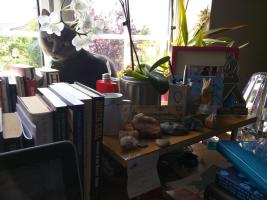
What are your writing routines and where do you do most of your writing?
desk

Part of Guinevere’s Writing Space

There’s a lot of not writing in writing. That sounds like a terrible admission! But it’s true. I’m not sure I have a routine. Each book, I realise, has its own demands. I don’t keep notebooks: the work has to be in my head, even if it is not yet straight in my head. I forget what I forget and remember what needs to be remembered. I lose stuff. It drives me mad. But the book is the book that gets written, which is the right book, the only book I am capable of, in the end.

I know The Words In My Hand has been written with the aid of a grant from Arts Council England. Could you please explain this process and how it has affected your writing career?

I was one of ten new writers taken on to a mentoring programme called Escalator at Writers’ Centre Norwich in 2012; WCN helped me through the process of applying for Arts Council funding. I was awarded a grant from their Grants for the Arts which helped fund two research trips to the Netherlands as well as some buy-out time for writing. I promised them a first draft by October 2013. Looking back, that was a tough deadline to meet, but I managed it, just. It is true to say that I have never worked so hard at anything in my life. Being funded enabled me to take my writing seriously for the first time. It’s been such a learning experience. I very nearly didn’t apply for Escalator, because I didn’t think I was good enough. I think early-career writers, women especially, can find it hard to believe in themselves, to put themselves, their work, forward competitively. If you’re in that position, don’t hesitate, be brave, do it.

Why choose Descartes and Helena as the inspiration for your first novel as opposed to any other historical characters?

I knew at the outset I wanted to write about Descartes in some way. To begin with, I had in mind a novel in three parts which would function like an equation, x + y = z, but really all I had was a structure and not much else. As I read around Descartes, not really knowing what I was looking for or where I was going, I came across a reference, just a sentence, that mentioned his affair with Dutch maid, Helena Jans. That was the initial hook, and I wondered why I’d never heard of this before. That single sentence troubled me. It seemed to me that Helena had been reduced to little more than a footnote in history.

As I researched further, it became clear that the story I wanted to tell was the story that was missing: not Descartes’ but Helena’s. I hadn’t intended it at the outset, but my novel became a way to examine the invisibility of women in history, both then and now.

house

The House Where Helena and Descartes Lived

Although The Words In My Hand is ostensibly Helena’s story, as I read I felt I found out more about Descartes than any of my university studies of him. How far was it your intention to show both characters so fully and how far did that effect arise naturally as you wrote?

Actually, the trick was not to make it feel too Descartes-heavy. There’s lots about Descartes in the book; I had in part to be able to tell his story if I was to tell Helena’s, but the book is not about him as a central character. So much has already been written about him and I did not feel I had anything important to add. It went further than that. I was tired, really deeply tired, of histories that focused on great men and which could reduce a woman to a footnote. I wanted to turn the ‘great man of history’ narrative on its head. That said, the novel was an opportunity to reimagine Descartes, to see him through Helena’s eyes, before he had published, before his ideas had gained acceptance. He is now known as the ‘father of modern philosophy’ but he wasn’t that then, in the 1630s, when he met Helena. I hope the book gives the reader a more nuanced view of Descartes. I hope it also shows how the relationship with Helena might have changed him.

To some extent I felt The Words In My Hand to be a feminist text. Did you begin with that concept from the start?

Yes, I do see this as a feminist work, in as much as it challenges the way in which history has been written about Descartes and how Helena’s significance has been downplayed or overlooked.

Helena is not written as a feminist, that would ahistorical, but I do show her agency: her struggle to become literate and to survive the affair with Descartes and its consequences.

Given that history is so heavily male oriented, how did you research Helena’s story?

In large part, I had to imagine her. Some facts are known about her relationship with Descartes. Although the evidence is scant, it is tantalising. The Leiden section was tricky to write, and covers a period of a couple of years in between two known events that place Helena with Descartes. I hadn’t a clue what Helena might have done at this time. I avoided that section for as long as I could, perhaps in the hope it would go away. (It didn’t). What solved the impasse was simply to ask questions of her character, to think my way round the difficulties she must have faced and to imagine how she might have resolved them.
milk

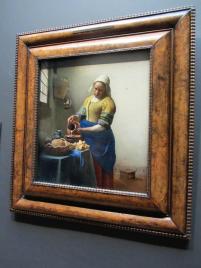
Dutch genre paintings were a key source material. Women became visible in all kinds of ways in these paintings for the first time. Look at Vermeer’s paintings: often they show wealthy women reading and writing letters. He shows maids too, though usually in the background. Vermeer’s maids don’t write, they pour milk. The written word at this time still predominantly belonged to men, and to some wealthy women. It is known that Helena wrote to Descartes, although these letters have been lost. It intrigued me. How did Helena learn to write? Answering this question became key to revealing Helena’s character and creating her backstory.

Literacy, and the opportunities it affords, is a central theme. How far do you think the world has moved on in educating females since Helena’s time?

My Grandmother lived until the age of ninety-nine. She was brought up in Merthyr in the years after the First World War. She was bright, able, and her school recommended her for a scholarship. Her adoptive parents were working class and couldn’t afford this. So my dear Gran left school at twelve and worked in their small shop. Later in life, she went to night school, gained a secretarial qualification and ended up as the main earner in her family.

I had my Grandmother’s story in the back of mind as I wrote the novel. Yes, things have changed in leaps and bounds since, but it all feels horribly close too.

Women continue to face all manner of discrimination, some it very subtle, but deeply entrenched nonetheless. The annual VIDA count analyses how this affects women writers, and has shown, year after year, that publishing favours and rewards the white male voice. Things are changing, but goodness, it is taking time. Find out more about VIDA’s work here.

The Words In My Hand was shortlisted for The Costa First Novel Award. How did that make you feel?

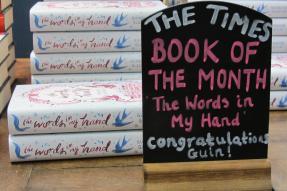
I was astounded. I had no idea my book had been submitted and no idea that it was Costa shortlisting time, so I was completely stunned when my publisher told me. Everyone has been so lovely about it; I think by that time in the year we were all so desperate for some good news. Being shortlisted has been prize enough. It means the book will be more widely read. It’s a huge challenge for new books to find readers, and the Costa prize plays an important part in helping readers to discover books that might otherwise have fallen off their radar.
the-times

(You see, it’s not just me who loves this book!)

If you hadn’t become an author, what would you have done instead as a creative outlet?

I am a potter of sorts, but that’s been something I’ve picked up recently. I build hand-coiled, stoneware pots – mostly jugs and vases – and absolutely love making them. The earliest pots were made this way, and I love the sense of being connected to a skill that goes back thousands of years. I’m addicted to the BBC’s Throw Down series, and can’t wait for the new series to begin.

When you’re not writing, what do you like to read?

I tend to binge read, especially on holiday. I’m reading a lot of shorter novels at the moment. My second novel is shorter. I love the discipline of creating a work which is as much about what is not told as about what is.

I read a lot of non-fiction: art history especially and history too.

I loved the hardback cover of The Words In My Hand. We can’t say too much about it for fear of revealing aspects of plot, but how did that image come about?
words-in-my-hands

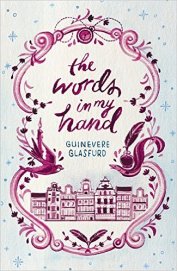
The hardback cover was created by a very talented American artist called Jill de Haan. I feel very fortunate to have a publisher who was willing to commission a cover for my book.

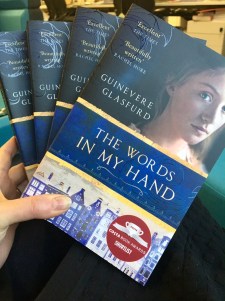
The paperback cover presents the book in a different way. I love the blue, and think the cover has direct emotional appeal when you pick it up.
fullsizerender-1-cover

Thank you so much for your time in answering my questions Guinevere. I loved finding out more about The Words in My Hand.

Thanks for asking me; sorry it took so long to get the answers to you.

About Guinevere Glasfurd
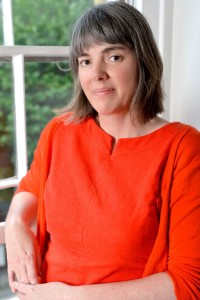
guin

Author Photo – Stefano Masse

Guinevere Glasfurd’s lives on the edge of the Fens near Cambridge. Her short fiction has appeared in Mslexia, the Scotsman and in a collection from The National Galleries of Scotland. The Words In My Hand, her first novel, was written with the support of a grant from Arts Council England. Guinevere Glasfurd manages the Words and Women Twitter feed, a voluntary organisation representing women writers in the East of England. You can found out more on her website. You can follow Guinevere on Twitter.

If you would like to know more about how Guinevere became a writer, click here.

There’s more with these other bloggers too:
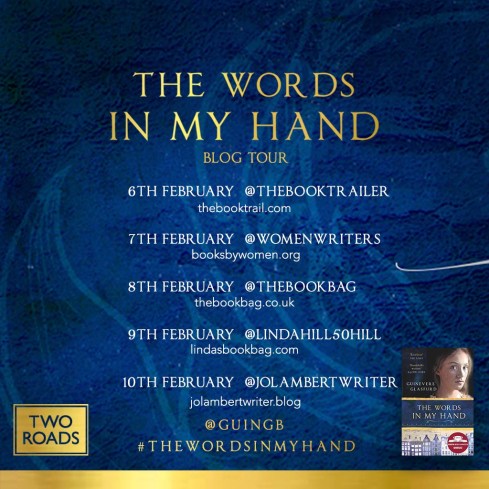
cover-big

Fragile Lives by Stephen Westaby

fragile-lives

My grateful thanks to Caroline Saramowicz at Harper Collins for a copy of Fragile Lives by Stephen Westaby in return for an honest review. Fragile Lives is published in hardback by Harper Collins today, 9th February 2017, and is available for purchase by following the publisher links here.

Fragile Lives

fragile-lives

An incredible memoir from one of the world’s most eminent heart surgeons and some of the most remarkable and poignant cases he’s worked on.

Grim Reaper sits on the heart surgeon’s shoulder. A slip of the hand and life ebbs away.

The balance between life and death is so delicate, and the heart surgeon walks that rope between the two. In the operating room there is no time for doubt. It is flesh, blood, rib-retractors and pumping the vital organ with your bare hand to squeeze the life back into it. An off-day can have dire consequences – this job has a steep learning curve, and the cost is measured in human life. Cardiac surgery is not for the faint of heart.

Professor Stephen Westaby took chances and pushed the boundaries of heart surgery. He saved hundreds of lives over the course of a thirty-five year career and now, in his astounding memoir, Westaby details some of his most remarkable and poignant cases – such as the baby who had suffered multiple heart attacks by six months old, a woman who lived the nightmare of locked-in syndrome, and a man whose life was powered by a battery for eight years.

A powerful, important and incredibly moving book, Fragile Lives offers an exceptional insight into the exhilarating and sometimes tragic world of heart surgery, and how it feels to hold someone’s life in your hands.

My Review of Fragile Lives

With thirty-five years working in heart medicine, Stephen Westaby shares his memories of his life and some of the patients he has encountered.

What an engaging portrait of an incredible man Fragile Lives is. Although it’s non-fiction, it is written with a skill that makes it read almost like fiction. The descriptions and characterisation are precise, engaging and affecting. The passage about Kirsty, for example, left me reeling.

I have to admit to feeling a little squeamish at one or two of the descriptions of operations, but then I can’t watch a needle inserted into skin on television. At times it felt like I was reading a horror book! There’s also quite a lot of technical detail woven into the text so that a reader can learn as well as be entertained, if entertained is the right word, by Fragile Lives. I enjoyed this aspect but feel others might find it distracting. For those who want to be precise in their reading there is a very helpful glossary of technical terms at the end of the book and I think those thinking of entering medicine would love reading this book in advance of their studies.

As heart surgery is not a medical field that always has success, Stephen Westaby explains the impact on the team behind the stories so well and I think Fragile Lives would be an enlightening read for those who prefer a blame and shame culture. Indeed, that is another of Stephen Westaby’s passions about which he writes very forcefully in the final few lines of his acknowledgements.

The quotations that head each chapter are inspired and if read consecutively, in one go, provide their own insight into the world of those involved in the different aspects of heart surgery, be it surgeon or patient. I found many of them very touching as I returned to them after having read the chapter.

I’m not sure that those expecting a biography all about Stephen Westaby will appreciate Fragile Lives because the reader sometimes has to read between, and behind, the lines to extract the man from the case he is presenting, but actually I liked the read more as a result. I’m not keen on biographies usually, but I found Fragile Lives interesting, frequently moving and totally enlightening. Fragile Lives gives incredible insight into a world I hope I never have to inhabit.

About Stephen Westaby

stephen-westaby

Professor Stephen Westaby is a world-famous heart surgeon who is renowned for being the first surgeon in history to fit a patient with a new type of artificial heart. During his 35-year career as a surgeon he worked at several of the UK’s top hospitals and performed over 11,000 heart operations. He won the Ray C. Fish Award for Scientific Achievement (2004). In 2004 Steve Westaby was featured in the BBC documentary Your Life in Their Hands, which is a long-running series on the subject of surgery.

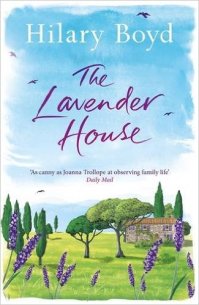
Giveaway: The Lavender House by Hilary Boyd

Lavender House

Having read and thoroughly enjoyed The Lavender House by Hilary Boyd, my review of which you can read here, I’m so pleased to be helping celebrate the paperback edition which will be published by Quercus on 9th February 2017.

The Lavender House is available for purchase from all good book sellers, including here, but there’s also a chance for a lucky UK reader to win a copy of the paperback further down this blog post.

The Lavender House

Lavender House

Nancy de Freitas is the glue that holds her family together. Caught between her ageing, ailing mother Frances, and her struggling daughter Louise, frequent user of Nancy’s babysitting services, it seems Nancy’s fate is to quietly go on shouldering the burden of responsibility for all four generations. Her divorce four years ago put paid to any thoughts of a partner to share her later years with. Now it looks like her family is all she has.

Then she meets Jim. Smoker, drinker, unsuccessful country singer and wearer of cowboy boots, he should be completely unsuited to the very together Nancy. And yet, there is a real spark.

But Nancy’s family don’t trust Jim one bit. They’re convinced he’ll break her heart, maybe run off with her money – he certainly distracts her from her family responsibilities.

Can she be brave enough to follow her heart? Or will she remain glued to her family’s side and walk away from one last chance for love?

Giveaway

Lavender House

UK readers only I’m afraid, click here for your chance to win a paperback copy of The Lavender House by Hilary Boyd. Giveaway closes at UK midnight on Tuesday 14th February.

About Hilary Boyd

hilary

Hilary Boyd trained as a nurse at Great Ormond Street Hospital, then as a marriage guidance counselor. After a degree in English Literature at London University in her thirties, she moved into health journalism, writing a Mind, Body, Spirit column for the Daily Express. She published six non-fiction books on health-related subjects before turning to fiction and writing a string of bestsellers, starting with Thursdays in the Park. Hilary is married to film director/producer Don Boyd.

Follow Hilary on Twitter and find her on Facebook or visit her website.