Ritual 1969 by Jo Mazelis

Ritual 1969

My grateful thanks to Rosie Johns at Seren Books for a copy of Ritual 1969 by Jo Mazelis in return for an honest review. Ritual 1969 is available in paperback from Seren, Amazon, W H Smith, Waterstones and from all good bookshops.

Ritual 1969

Ritual 1969

What are little girls made of? What will they become? Will they run away to the circus or become dressmakers, teachers or servants? From the playground to adulthood the path is beset with misunderstandings, missed dates and hidden traps for the unwary.

This darkly gothic collection of stories explores the unsettling borderland between reality and the supernatural. Ranging from early twentieth-century France to 1960s South Wales and contemporary Europe, Jo Mazelis’ singular vision and poetic language creates characters caught up in events and feelings they do not fully understand or control, giving the book its uncanny focus. Not all is as it seems in a world where first impressions may only conceal disguises and false trails – and there’s no going back.

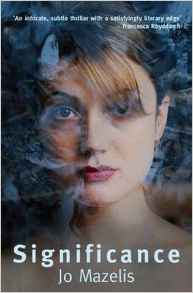
A thrilling third collection from the author of Jerwood Award winning novel Significance.

significance

My Review of Ritual 1969

Goodness what a collection. I’m only just getting in to reading short stories, but had I discovered Jo Mazelis before I’d have been an avid fan. I thought Ritual 1969 was outstanding and am only sorry it has been sitting on my TBR so long.

Ritual 1969 is a sophisticated, intelligent and beautifully written collection of narratives with women at the centre. I found many of the stories quite disturbing in a way. Initially they may seem quite innocuous, but they twist and shift so that there is an underlying malevolence in many that gave me a shudder down my spine. There are references to nightmares and I found a nightmarish quality to much of the writing, especially in A Bird Becomes A Stone.

Several emotions are portrayed in writing that is almost suffocating at times. Fear, loneliness and longing are there, but so too are burgeoning sexuality and sensuality. There’s a real sense of exploring who we are, as opposed to who we want to be or how others perceive us. I thought long and hard about the title – and there are three stories overtly linked to 1969, and came to the conclusion that this is an era of change and development nationally and internationally and Jo Mazelis portrays that flux for the self so effectively. Similarly, many of the behaviours are ritualistic so that characters wish they could behave differently but are constrained by their circumstances and the actions of others. Some, however, manage to break free in an almost supernatural way adding even more interest to the read.

There’s a distinct Welshness to the writing and many of the settings that I recognised from my visits there. Alongside the incisive prose and frequently malign atmosphere there is also real beauty in the descriptions of nature and the appeal to the senses. I found the sense of smell in Prayer 1969, for example, almost unbearable with its ‘unmistakable smells which came from the effluvia of young bodies’.

I also appreciated the way Ritual 1969 embodied so much of our cultural history too and I feel I need to read these stories several times over to appreciate fully all the nuances. There’s reference both overtly and subtly to literature, music, film and theatre so that partly remembered experiences rippled and echoed in my mind like half glimpsed dreams. I loved that effect of the writing.

I’ve read all the collection in Ritual 1969 once. It’s not enough fully to appreciate what a magnificent collection it is. I shall be returning to it for years to come. Wonderful.

About Jo Mazelis

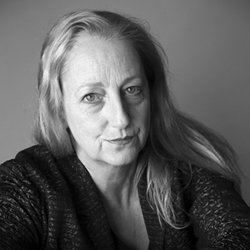
jo 1

Jo Mazelis is the author of short stories, non-fiction and poetry. Her collection of stories, Diving Girls (Parthian, 2002), was short-listed for the Commonwealth ‘Best First Book’ and Wales Book of the Year. Her second book, Circle Games (Parthian, 2005), was long-listed for Wales Book of the Year. Her stories and poetry have been broadcast on BBC Radio 4 and published in various anthologies and magazines, and translated into Danish. Her novel Significance (Seren, 2014) was the 2015 Jerwood Fiction Uncovered Prize-winner.

Born and educated in Swansea Jo returned to her home town in 1991 after working in London for many years. During the 1980s she worked as a graphic designer, photographer and illustrator for the magazines City Limits,Women’s Review, Spare Rib, Undercurrents, Everywoman and New Dance.

You can follow Jo Mazelis on Twitter and visit her website.

Guest Post from Helen Cox, author of Milkshakes & Heartbreaks at the Starlight Diner

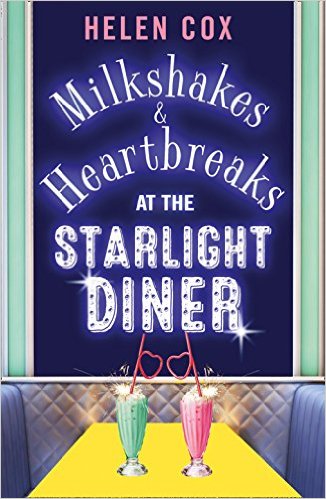
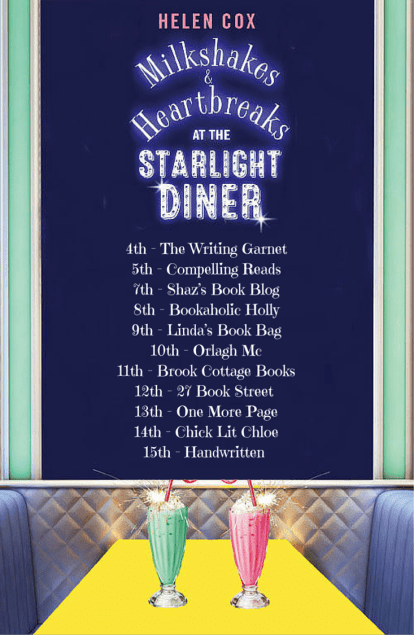
cover

I’m delighted to be part of the launch celebrations for Helen Cox’s lovely Milkshakes and Heartbreaks at the Starlight Diner with a smashing guest blog from Helen all about where to eat in New York, the setting for her novel. Milkshakes and Heartbreaks at the Starlight Diner was published by Avon Books, an imprint of Harper Collins, on 4th July 2016 and is available in e-book here and via the publisher.

Milkshakes and Heartbreaks at the Starlight Diner

cover

Esther Knight is sharp, sarcastic – and hiding something. She waitresses at The Starlight Diner: a retro eatery where Fifties tunes stream out of the jukebox long into the night, and the tastiest milkshakes in New York are served.

Nobody at the diner knows why Esther left London for America – or why she repeatedly resists the charms of their newest regular, actor Jack Faber.

Esther is desperate to start a new life in the land of the free, but despite the warm welcome from the close-knit diner crowd, something from her past is holding her back. Can she ever learn to love and live again?

Milkshakes and Heartbreaks at the Starlight Diner is a witty, romantic, New York-inspired novel.

New York Eating Experiences You Shouldn’t Miss

A Guest Post from Helen Cox

Sometimes being an author is really hard. In order to hone my manuscript for Milkshakes and Heartbreaks at the Starlight Diner, I went out to New York on a shoe-string budget and ate at as many different places as I could afford to.

Based on my travels around New York, here are three eating experiences you should not miss out on.

Ellen’s Stardust Diner on Broadway

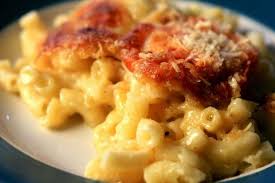
macaroni

If you want the ultimate tourist diner experience there’s really only one place to go and that’s Ellen’s Stardust Diner on Broadway. It is in the area of town I usually try to avoid, i.e. right near Times Square but once you’re inside, it is well worth enduring ten minutes or so of the honking taxis, suffocating exhaust fumes and a tidal wave of people who have no real clue where they’re going.

Inside, there is an extensive all-American menu on offer, everything from macaroni cheese to hearty soups. The diner is decorated in true fifties style but what really gives this restaurant its edge is the entertainment.

Whilst you’re enjoying your food, the waiting staff will belt out the most popular Broadway hits and, if they’re in the mood, will also likely throw in the odd Disney tune – most likely from Frozen. If you’re looking for a quiet, romantic meal somewhere this is not the place but if you’re after a dinner and a show in one sitting, this place will rock your world.

Tapas Restaurant and Bar on Staten Island

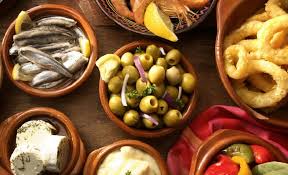
tapas

You may be shocked to learn that I have had some eating experiences in New York that don’t revolve around diner culture. One of the best was at the Tapas Restaurant and Bar on Staten Island. A quick (and free) hop on the Staten Island Ferry will get you within walking distance of this eatery which serves a range of tapas dishes to an impressive quality and the place has a delicious cocktail menu to boot.

Just one small word of warning. I know it’s called ‘Tapas Restaurant and Bar’ and the word ‘tapas’ definitely appears on the menu but this is not tapas as we Brits understand it. There is nothing small about the plates that arrive and you should order with some degree of modesty. Otherwise you could find yourself four nights into your honeymoon in New York City, moaning and clutching your stomach in such a way that all your new husband can do is shake his head at you. I’m not saying this happened to me. I’m just saying, it’s a possibility if you don’t order smart.

Nathan’s Hotdogs

hotdog

Nathan’s Hotdogs are available all over New York City but if we’re talking about eating ‘experiences’ there really is no substitute for going to the original Nathan’s Hotdog restaurant on Coney Island. During my twenties, when I was just that little bit wilder, I thought nothing of buying a hot dog from one of the street vendors in Manhattan. Now I’m in my sober thirties I’ve come to consider my own mortality a little bit more and I’m not quite so brave. If you’re going to eat a hotdog in New York City, it simply has to be a Nathan’s Hot Dog, and there’s no better place to enjoy one than the Coney Island boardwalk.

About Helen Cox

helen

Helen Cox is a book-devouring, photo-taking, film-obsessed novelist. If forced to choose one, Helen’s Mastermind specialism would be Grease 2. To this day, she still adheres to the Pink Lady pledge and when somebody asks her if she is a god she says ‘yes.’

After completing her MA in creative writing at the University of York St. John Helen found work writing for a range of magazines, websites and blogs as well as writing news and features for TV and radio. She has written three non-fiction books and founded independent film publication: New Empress Magazine. She currently lives in York and writes novels.

You can find Helen on Facebook, follow her on Twitter and visit her website. You’ll also find more from and about Helen with these other bloggers:

Blog tour

Guest Post by Faith Hogan, author of My Husband’s Wives

better cover

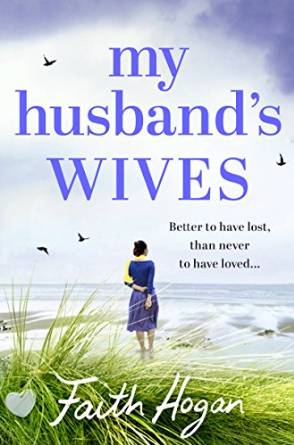
I’m delighted to have Faith Hogan, author of My Husband’s Wives on Linda’s Book Bag today as part of her summer blog hop. My Husband’s Wives was published by Aria, an imprint of Head of Zeus on 1st of May 2016 and is available for purchase here.

I have a super guest post from Faith today all about creating character.

My Husband’s Wives

better cover

Better to have loved and lost, than never loved.

Paul Starr, Irelands leading cardiologist dies in a car crash with a pregnant young women by his side.

United in their grief and the love of one man, four women are thrown together in an attempt to come to terms with life after Paul. They soon realise they never really knew him at all.

The love they shared for Paul in his life and which incensed a feeling of mistrust and dislike for each other, in his death turns into the very thing that bonds them and their children to each other forever.

As they begin to form unlikely friendships, Paul’s death proves to be the catalyst that enables them to become the people they always wanted to be.

Creating Character

A Guest Post by Faith Hogan

I have a confession to make…

I have murdered more characters than I’ve published. The truth is that although you hear writers talking about their characters as though they are members of their close family, characters are there to serve a purpose. They are there to move your novel forward, to entertain your reader and ultimately draw us in so tightly that we can’t not go on their journey.

Agents and editors are entirely heartless when it comes to characters. We’ve all been there. I’ve been one of those people who wrote half a draft from the perspective of a character with no purpose in the story. Bang Bang, as they say – one shot!!

It is not all bad news, however! Unlike in real life, characters cut, can be raised from the dead. Who knows? There may be room in your next story for that character you became so fond of.

I have to admit, that as I’m creating characters I’m often surprised. If they are good enough, they will lead the way of the story. In My Husband’s Wives, Annalise was probably my favourite character to write – not because she is any nicer than the other women, but rather because she spoke the most clearly. Her voice, doubtless picked up over the years from overheard conversations and people I only half-knew, had a distinct tone and accent. She saw exactly where she was going from the start of the novel to the finish and that makes writing her so much easier.

I know there are writers who work up entire c.v.’s for their characters, and before I begin a story, I’ll have a good idea of where people are coming from. Stories are a lot like life, though. We are shaped as much by the people surrounding us, as we are by the hand of cards we receive at birth. So too, it is with characters. Most stories and characters develop as you write them. Who they are, how they react and what they want is very often formed by how they hit off other characters. This flexibility is crucial to having robust and original people in your story.

Most of my planning is done sitting on a comfortable armchair. Generally, I try to remain distraction free so, it’s au revoir WiFi! Unfortunately, I have somewhat of a bent towards charts and graphs and list making. I know only too well now that if I engage in any of these in the initial thinking stage it’s just another form of procrastination. The truth is, I could spend the whole day happily making up graphs and charts – unfortunately, that does not get the actual word count moving upwards.

The best advice for creating characters – listen to your gut!

Is there anything else?

Oh, yes get a very comfortable chair, turn off your broadband and start writing – the beauty of it is you never know where you might end up!

About Faith Hogan

photo for aria 2

Faith Hogan was born in Ireland where she lives in the west with her husband, children, a very fat cat called Norris and a selection of (until recently!) idle writerly mugs and cups. She gained an Honours Degree in English Literature and Psychology from Dublin City University and a Postgraduate Degree from University College, Galway.  She has worked as a fashion model, an event’s organiser and in the intellectual disability and mental health sector.

She was a winner in the 2014 Irish Writers Centre Novel Fair – an international competition for emerging writers.

Her debut novel, My Husband’s Wives, is a contemporary women’s fiction novel set in Dublin. She is currently working on her next novel.

You can follow Faith on Twitter and find her on Facebook. You’ll find her website here.

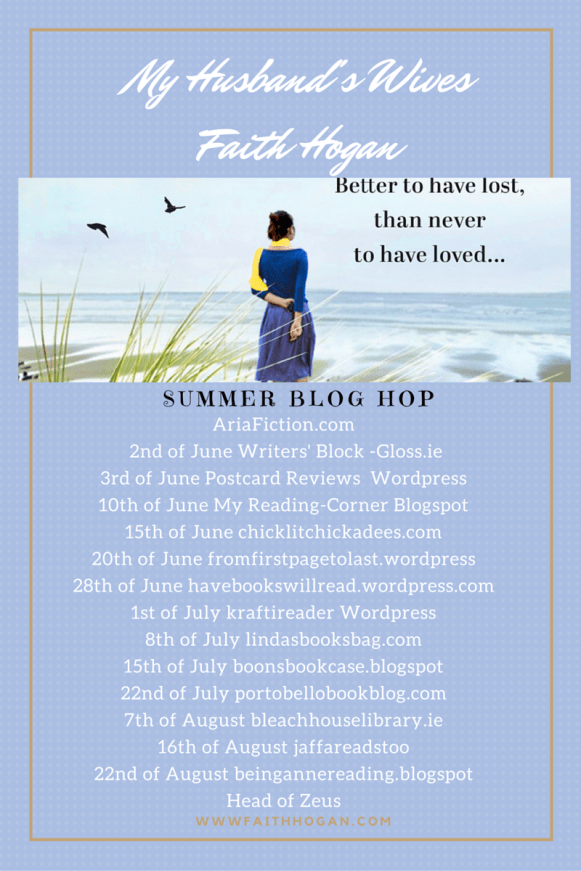
There’s more about Faith and her lovely novel My Husband’s Wives with these other bloggers:

MyHusbandsWives blog hop poster


An Interview with Shelley Day, author of The Confession of Stella Moon

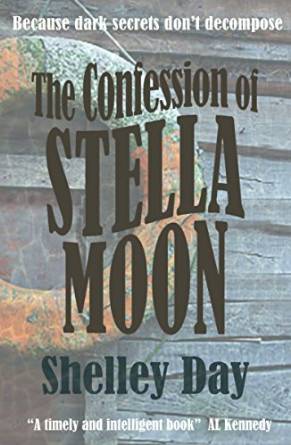
stella moon

Today I’m back with another of the authors from Book Connectors on Facebook, Shelley Day whose debut novel The Confession of Stella Moon was published on 1st July 2016 by Contrabrand. The Confession of Stella Moon is available for purchase here in e-book and paperback.

To celebrate publication, Shelley kindly agreed to be interviewed for Linda’s Book Bag.

The Confession of Stella Moon
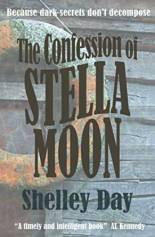
stella moon

1977: A killer is released from prison and returns ‘home’ – a decaying, deserted boarding house choked with weeds and foreboding. Memories of strange rituals, gruesome secrets and shame hang heavy in the air, exerting a brooding power over young Stella Moon. She is eager to restart her life, but first she must confront the ghosts of her macabre family history and her own shocking crime. Guilt, paranoia and manipulation have woven a tangled web. All is ambiguous. What truth and what lies are behind the chilling confession of Stella Moon?

An Interview with Shelley Day

Hi Shelley. Thank you so much for agreeing to answer some questions on my blog about your writing and your debut novel The Confession of Stella Moon.

Firstly, please could you tell me a little about yourself?

I wonder what sort of things your readers might want to know about me!? That I’m 63, and just publishing my first novel? That I’ve had two careers before now – litigation lawyer and academic psychologist –  which both feed into my fictional work? That I’m glad I was made redundant in 2007 –  it gave me the spur to get serious about my fiction? That I live half in my native Northumberland, and half in Scotland (where my partner of 35 years lives)? That I’ve got the same best friend I’ve had since I was 11? That I’m a coffee addict? That my favourite artist is Louise Bourgeois? My role model Patti Smith …?

When did you first realise you were going to be a writer?

There wasn’t a time that I realised I was ‘going to be a writer;’ I always just was. Writing’s something I’ve always done, right from being a little kid, it’s part of who I am. I chose jobs where I had to write stuff. I started my novel without realising I was starting to write a novel. Writing’s just something I’ve always done. It’s strange though, because the identity-label ‘writer’ is something different altogether. It’s elusive, a claim you can’t easily make; you don’t ever really feel you’re entitled to it! Even after I was writing full-time (freelance, and fiction) I avoided calling myself ‘a writer.’ You’d meet people and they’d ask, ‘and what do you do?’ and I’d get all hedgy and mumble into my drink. You don’t want to say you’re a writer in those settings because it can make people wary: ‘Oh, a writer?’ they say, sounding incredulous, ‘Should I have heard of you?’ I did some modules of a Creative Writing MA at Newcastle Uni when I was first learning my craft. I tried, then, to see myself ‘as a writer,’ to claim space for myself ‘as a writer.’ But I never really succeeded. I’m just me, a person who writes.

If you hadn’t become an author, what would you have done instead as a creative outlet?

As I say, writing has always been such an integral part of my life, I can’t imagine coping with the world in any other way. I have often wished I could draw and paint, but I have no talent whatever in those departments. And one of my biggest regrets is that I never got good at playing a musical instrument, and never got good at singing. I love music, especially oratorio. And I wish I’d learned to play the organ.

Do you have other interests that give you ideas for writing?

That’s a hard one, because I don’t know where ideas come from! My longer fictional pieces begin with a character; they are someone I ‘know’ instinctively and in great depth, though they’re purely fictional and not even tangentially based on anyone I know. They arrive, with their baggage, and their name tags, like Paddington, and I write their story. In my shorter fiction, I begin with an image or a phrase that comes for no apparent reason. I often get good ideas on long drives – it’s the monotony and solitude of motorway driving that makes a space in your head where ideas can sneak through and make themselves known. I like reading and walking and the sea, and the hills, and Norway, and Galloway, and hanging out with my pals and my family, and Edinburgh, and New York, and Paris, and poetry and film and visiting galleries … I guess all those things work away below the surface making ideas happen.

How do you go about researching detail and ensuring your books are realistic?

When I used to write nothing but academic books, they were jam-packed full of research, down to the tiniest detail. I used to love that aspect of that kind of writing. But with my fiction, making things up predominates. I do read a lot around whatever I am interested in for the moment, not formal Research-research, just following my nose, going with wherever that takes me, getting the feel of a place or a situation or whatever it is. I may go to places. Or look at particular paintings or sculptures, they may help me get a better feel of what I am working towards. I can do that alongside writing, because you can’t write all the time. When I have a draft, I will see where the gaps are, where maybe I need some more focussed research. In The Confession of Stella Moon, for example, one of the characters is a taxidermist, and I delved into that and became very fascinated with it. Another character is a Spiritualist and I found out loads about that too. I found out far more about those things than I could ever actually use in the novel, but it was fun, and finding it all out gave me a strong feel for the subjects and a deeper understanding of the characters. My backgrounds in both law and psychology also give me a wealth of material on which to draw.

Which aspects of your writing do you find easiest and most difficult?

I can’t honestly say that I find any of it very easy. You write under some kind of compulsion, and it is neither easy nor enjoyable for the most part. The nice thing is ‘having written.’ When you’ve got a decent few words for your morning’s work, that’s a good feeling, and there’s nothing quite like it. Having written a few OK sentences, that’s what makes you feel good about yourself and keeps you going. But that feeling never lasts. It’s always superceded by the same old restless longing, gnawing self-doubt, and plain resistance ever to put pen to the page again! It’s a queer business, writing! But, having said that, the actual writing bit is, in fact, the easiest bit. It’s what comes after that tears your soul in bits. The road to publication is long, bumpy, and arid. You feel so alone, so completely alone. That’s the worst thing. You’re floundering alone in the dark, going round in circles, every despairing cliché in the book applies to you on the road to publication. I’m shortly launching my debut novel. I sincerely hope I’ll be able to put all this behind me and just enjoy and celebrate next week! But I’m wary! I was reading a blog post earlier on today by Jessie Burton who had such huge success with her debut novel The Miniaturist. Basically she found ‘success’ even harder to bear than ‘failure’ and it took a psychological toll on her … It’s difficult to explain why the creative process can involve such a lot of anxiety, but it does, as many writers will testify!

(So many of the writers I know will understand exactly what you’re saying there Shelley.)

What are your writing routines and where do you do most of your writing?

I’m very envious of writers who establish routines for themselves and stick to them because I’ve tried and I just can’t do it. My former careers have involved me adhering very closely to the strict timetables of others, so perhaps it’s a backlash, now that I’m self-employed, the random side of my character has surfaced and I enjoy the freedom too much to give it up to any silly old routine! I’m lucky in that I can write almost anywhere. If I am going to write, it doesn’t matter where I am. The hardest place to work is at home. I get easily distracted when I’m at home. Even though I have a lovely wood writing studio outside taking up more than half my tiny garden. That’s better than trying to work in the house. All my books are out there, and boxes of papers, and I have things on the wall that I like looking at. But best of all, I think, are cafes and libraries. My favourite place on earth to work is the Cambridge University Library. It has a good tea room. There’s also the Lit&Phil in Newcastle. Edinburgh Central Library, up in the Reference Room, is good too. Wherever I travel, I will make my way to the public library. Oslo has a lovely space called the Literaturhuset, with a great café. The Baltic gallery in Gateshead has a fab café, and a small library that’s always quiet …

When you’re not writing, what do you like to read?

My favourite book at the moment is Patti Smith’s M Train. I’ve read it three times already. It’s brilliant, the prose so simple and direct, you feel you’re hanging out with her there in Greenwich Village … But basically I’ll read most things, though I don’t usually go for SciFi or Romance! I have lots of friends who are writers, and so I am always reading widely across a range of styles and genres. I attend a lot of literature events and so will usually buy a book, probably something I wouldn’t have looked for (or found) in a trad book store! I read a lot of poetry, partly because my partner’s a poet. I like the classics. I go to those again and again. Siri Hustvedt, Muriel Spark, Elizabeth Bowen, Gertrude Stein, Virginia Woolf, all favourites. And the Scandi Noir stuff. I like browsing in libraries and in bookshops, especially indie bookshops, and finding new things. Or I will get something I read about, or that someone recommends. I’m very eclectic as you’ll see if you look at my Goodreads page! I’ll write a quick review about most things I’ve enjoyed.

You’ve had a lot of previous success with your short stories. How does it feel to be publishing a debut novel?

Well, it’s very exciting! And it’s also a ton of hard work! As with every stage of the writing and publication process, this one brings new highs, and also new dreads! As each new thing slots into place and you’re thinking YAY! Forward! Then suddenly your fiction-writer’s ‘what-if?’ brain clicks in and you start imagining all sorts of Doom and Gloom and Disaster scenarios … What if no-one likes your book? Or Worse! What if no-one notices it? What if no-one turns up at your launch …? (Recently I read a blog post about this very thing by a writer in America to whom this Nightmare had actually happened!!!!). So yeah. There are two sides, you flip from one to the other, willy-nilly; it’s impossible to stay on one side or the other, which is probably a good thing!

(I’m sure we’ll all love The Confession of Stella Moon, Shelley!)

How different or similar have you found the process of writing a novel as opposed to shorter fiction?

These are two very different processes that demand completely different skills. I wouldn’t say one was easier than the other, except insofar as you can obviously finish a short story far more quickly than you can a novel. In a short story, you’re generally exploring a limited situation with some small shift at the heart of it. The character has to be formed and firm; the writing’s much more focussed; the plot’s less crucial; you have to pin down emotions and ambivalences very accurately using specifics and sensory detail … The short story is a much more concentrated form, and is possibly harder to get exactly right than with longer fiction. A novel is the more forgiving form. You can’t afford to be vague and flappy or flabby etc, but you have greater scope to explore the nuances of character and place and the dimensions of situations. The most difficult thing I found with a novel is the structure. Not only do you have to get the tone and the tense and the POV and the characters and the dialogue etc all as good as they can be, but the whole lot has to fit into a structure that will carry the characters and the plot and the passage of time … That’s complicated! When my novel was in it’s fifth draft or thereabouts, I went to a masterclass with script-writer Alexandra Sokoloff and learned about the principles of Script and how they work on screen and how they can be made to work to make the structure of a novel as tight and as compelling as it can be. Interestingly, as I set to ‘superimpose’ the 3-Act-8-Squence structure on The Confession of Stella Moon I found, to my utter amazement, that the desired structure was already largely there! It had come out instinctively in the way I’d written the book! This is because I’ve grown up absorbing the narrative structures of my culture and now they’re deeply embedded within! Which may be a heartening thought, or an alarming one, depending on which way you look at it!

The tag line on your cover for The Confessions of Stella Moon ‘Because dark secrets don’t decompose’ contrasts brilliantly with the suggested decomposition of the image. How did that image come about and what were you hoping to convey (without spoiling the plot please!)?

That rather brilliant tag-line was thought up by my publisher! I thought it was great, how it captured something about the essence of the novel. I can tell you there’s a Family Secret at the heart of the story. A dark secret. Such secrets – having, in their time, been buried alive, so to speak – have a curious power; they don’t decompose, but hover like Phantoms across generations, blighting lives. Can’t say any more than that. Sorry!

There’s a theme of ambiguity running through The Confessions of Stella Moon. How far did that arise naturally as you wrote and how far was it a conscious device?

The ‘ambiguity’ theme was not consciously intended or deliberately imposed. It came of its own accord and I can only guess it’s there because I see ambiguity at the heart of everything! I don’t think in black and white, or make a strict line between ‘fact’ and ‘fiction’; to me ‘the real’ is varying shades of grey, its status inherently ambiguous. This harks back to my psychologist days of questioning everything, seeing layers in everything; realising how ubiquitous and important ‘stories’ are, how deeply they’re embedded – in our experiences, our memories, in the whole way we see the world; all that relies on narrative structures, and makes for ambiguity.

If you could choose to be a character from The Confessions of Stella Moon, who would you be and why?

I’d choose to be Stella, because she’s feisty and determined and a fighter. Ok, life’s tough sometimes, but Stella Moon is not easily defeated!

If The Confessions of Stella Moon became a film, who would you like to play Stella?  

Tilda Swinton! Or Juliette Binoche! Except, of course, they’re both now in their 50s, so obviously too old for the part as Stella is 25 when the novel opens.

If you had 15 words to persuade a reader that The Confessions of Stella Moon should be their next read, what would you say?

You’ll care about Stella. You know her. She’s a bit like you.

Thank you so much for your time in answering my questions Shelley. Readers can follow Shelley on Twitter and find out more about her on her website.

Giveaway – Blood Wedding by Pierre Lemaitre

blood wedding

I’m delighted to be spotlighting Blood Wedding by Pierre Lemaitre, translated by Frank Wynne, published today 7th July 2016 in hardback by MacLehose Press, an imprint of Quercus. Blood Wedding is available on Amazon, Foyles, the Book Depository and from all good bookshops.

Thanks to the publishers, I have a hardback copy of the book to give away to a UK reader at the bottom of this blog post.

Blood Wedding

blood wedding

Sophie is haunted by the things she can’t remember – and visions from the past she will never forget.

One morning, she wakes to find that the little boy in her care is dead. She has no memory of what happened. And whatever the truth, her side of the story is no match for the evidence piled against her.

Her only hiding place is in a new identity. A new life, with a man she has met online.

But Sophie is not the only one keeping secrets . . .

Win a copy of Blood Wedding

Click here before midnight on Thursday 14th July to enter to win a hardback copy of Blood Wedding by Pierre Lemaitre (UK only I’m afraid).

Interview with E M Reapy, author of Red Dirt

red dirt

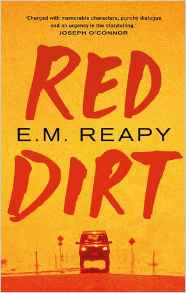
It gives me great pleasure to welcome E M Reapy onto Linda’s Book Bag today in an interview all about her writing and her debut novel Red Dirt. Red Dirt was published in e-book and hardback by Head of Zeus on 2nd June 2016 and will be available in paperback from 3rd November 2016. Red Dirt is available for purchase here and directly from the publisher.

Red Dirt

red dirt

Three young Irish people have come to Australia, running from the economic ruins of their home country and their own unhappy lives. In this promised land, stunned by the heat and the vast arid space of the interior, they each try to escape their past in a chaotic world of backpacker hostels, huge fruit farms and squalid factories, surrounded by new friends who are even more damaged and dangerous than they are themselves. Endless supplies of cheap drink and drugs loosen what little sense of responsibility they have, and a spiral of self-destructive behaviour forces each of them to face up to the reality of their lives.

This is a story of the consequences of impulsive choices and of the places where they lead. A vulnerable young man is left alone by his friends in a remote wilderness; a desperate girl puts herself into the hands of violent sex traffickers; a once-privileged favourite son lets a drunken quarrel escalate to murder. An utterly compelling, readable novel that hooks from the first page and immerses us in an all-too topical nightmare.

An Interview with E M Reapy

Hello Elizabeth and welcome to Linda’s Book Bag. Thank you so much for agreeing to answer some questions on my blog about your writing.

Firstly, please could you tell me a little about yourself?

I’m from the West of Ireland and love reading, writing, travelling, music, nature, keeping healthy. I love people too.

When did you first realise you were going to be a writer?

I don’t recall but similarly I don’t recall ever not knowing I was going to be a writer either. It was always the plan since I was a little kid. I guess doing the MA in Creative Writing in Queen’s  University, Belfast, in 2008, helped me gain the confidence and techniques to take the leap and try become a professional.

How did it feel when you realised your debut Red Dirt was to be published by Head of Zeus?

It was great, exciting, affirming; just wonderful.

If you hadn’t become an author, what would you have done instead as a creative outlet?

I was dissuaded from doing Film and TV in university because of how unstable the job prospects could be (instead I ended up on a teaching route). I think I’d have written scripts. I like writing them now, there’s a great honing of craft that can be done when trying out different forms and genres. I may have done some sort of music journalism or tried to get good at an instrument in order to songwrite. Or have tried to become a photo journalist for National Geographic. Or maybe have become an art therapist, with a focus on writing for therapy. All roads would lead back to writing for me, I think.

There’s a real strength of Irish writers at the moment. Why do you think this is so?

The literary tradition is strong in Ireland and because of that there are good opportunities for writers. I think too, there’s a vibrant arts community which fosters talent and helps new writers in terms of feedback, direction, advancement. The indie presses and journals here are quality and provide spaces for work to reach an audience. When Irish writers succeed internationally, attention is given to new Irish writing and writers. It’s all a virtuous circle, I suppose.

Red Dirt is set in Australia. How did you go about researching the setting to ensure Red Dirt was authentic and realistic?

I travelled and worked in Australia for about 11 months between two trips in 2011/2012 and experienced some of the settings directly. I hadn’t been to all the places mentioned in the book though so I researched by using the internet and talking to people who’d been to give me a sense of what details I needed to include.

You’ve run quite a few workshops about writing with young people. How far did this influence your own writing?

I don’t know to be honest. I suppose I listen to how people talk, I tend to concentrate more on the way they speak than the words they’re saying. Young people can have an interesting way of phrasing things. I may have been picking up some of that when I was working with them. I’m not sure.

Which aspects of your writing do you find easiest and most difficult?

I love brainstorming the ideas for stories. Then I like to explore them, follow them, see where and why and to whom they lead. Getting into the flow state with writing is thrilling, when imagination takes over and time no longer exists. Technically, I’d find editing trickier than writing but because I had to do so much of it with Red Dirt, I learned to enjoy the process. The most difficult thing for me is probably the responsibility that comes with writing. If it gets done or doesn’t get done, that’s entirely up to you. At times I find that overwhelming but I try to channel it into motivation if I can.

What are your writing routines and where do you do most of your writing?

Currently, I wake around half 6 and do morning pages. Then I get tea, coffee, a green smoothie. I’ll write ideas, drafts of stories, edit etc. until around midday. I’ll eat properly then and catch up on emails. For the afternoon and evening, I read and study writing. I do most of my writing on a laptop at a desk in my grandmother’s house.

When you’re not writing, what do you like to read?

I love to read short story collections, contemporary novels, poetry, modern classics, literary journals. I like non-fiction books on creativity, spirituality, writing and productivity. I also enjoy National Geographic.

Do you have other interests that give you ideas for writing?

I like meditation and aspects of green living. I’m trying to be more environmentally conscious and have gotten really into health and fitness of late. I enjoy swimming and going to the gym, hiking, trying new classes and sports. I’m also teaching myself Spanish, hoping to take a big trip around Spain soon. I volunteer at a creative writing class for kids and will be training as an adult literacy tutor in Autumn. Some of these things may be reflected in my newer work, especially the environmental stuff.

The cover of Red Dirt epitomises the red soil and heat of Australia to me.  How did that image come about and what were you hoping to convey (without spoiling the plot please!)?

The cover is hot, in a temperature sense. I like the tone of it with the single vehicle, it suggests loneliness and also it’s quite ominous.  It captures the road-trip elements of the book.

If you could choose to be a character from Red Dirt, who would you be and why?

Probably Dorothy, she’s kind and non-judgemental. Or Henk, maybe. He’s got big heart even though he’s a little mad. He’d survive anything.

If Red Dirt became a film, who would you like to play Murph, Hopper and Fiona?

This is such a fun question, I enjoyed thinking about which young Irish actors I’d see in these roles. Rickie O’Neill would be great as Murph. Evanna Lynch could be Fiona. Barry Keoghan as Hopper.

If you had 15 words to persuade a reader that Red Dirt should be their next read, what would you say?

Red Dirt is (hopefully) high-energy, funny, poignant and engaging; it should be your next read!

Thank you so much Elizabeth for your time in answering my questions.

About E M Reapy

EM

E.M. Reapy has an MA in Creative Writing from Queen’s University, Belfast. She was listed for the PEN International: New Voices Award and was featured in THE LONG GAZE BACK: AN ANTHOLOGY OF IRISH WOMEN WRITERS.

You can follow E M Reapy on Twitter and visit her website.
Cover Reveal – The Velvet Cloak of Moonlight by Christina Courtenay

9781781893203

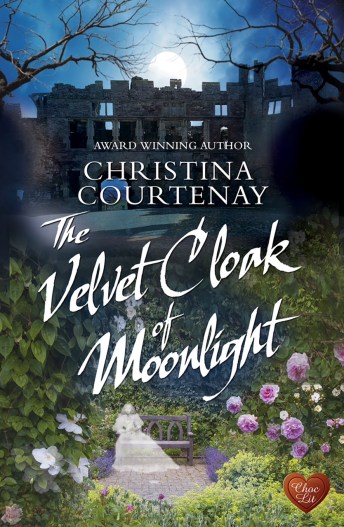
It gives me great pleasure to be part of today’s Choc Lit cover reveal for Christina Courtenay’s latest novel The Velvet Cloak of Moonlight. The Velvet Cloak of Moonlight is published by Choc Lit and is now available to pre-order on Amazon UKAmazon US and Amazon CA. The paperback of The Velvet Cloak of Moonlight will be out on 7th October 2016.

The Velvet Cloak of Moonlight

9781781893203

“As the velvet cloak of moonlight settled over the ruined towers of Raglan Castle, the shadows beneath them stirred …”

When newly widowed Tess visits Raglan Castle, an extraordinary hallucination transports her to a past that existed long before her own – to seventeenth-century Wales and to a castle on the brink of a siege.

Even when Tess leaves Raglan to return to Merrick Court, her husband’s home, the strangeness continues as her life becomes increasingly intertwined with her dreams and visions. And when the new owner of the estate arrives – New Zealander Josh Owens – the parallels become even more obvious. It’s time to confront the past head-on.

But perhaps the voices from the past aren’t just trying to tell their own story, maybe they’re also giving a warning …

About Christina Courtenay

JC

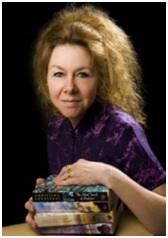
Christina lives in Hereford and is married with two children. Although born in England she has a Swedish mother and was brought up in Sweden. In her teens, the family moved to Japan where she had the opportunity to travel extensively in the Far East.

Christina’s debut Trade Winds was short listed for the 2011 Romantic Novelists’ Association’s Pure Passion Award for Best Historical Fiction. The Scarlet Kimono won the 2011 Big Red Reads Best Historical Fiction Award. Highland Storms (in 2012) and The Gilded Fan (in 2014) won the Best Historical Romantic Novel of the year award and The Silent Touch of Shadows won the 2012 Best Historical Read Award from the Festival of Romance. The Velvet Cloak of Moonlight is Christina’s eleventh full-length novel with Choc Lit.

You can follow Christina on Twitter  and visit her website.
An Interview with Carol Cooper, author of Hampstead Fever

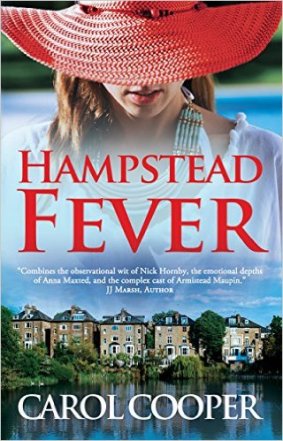
Hampstead Fever

It gives me great pleasure to be interviewing award winning writer, Carol Cooper, today. Carol’s  latest novel Hampstead Fever is just published by Hardwick Press in e-book and paperback. Hampstead Fever is available for purchase on Amazon.

Hampstead Fever

Hampstead Fever

A heatwave brings emotions to boiling point…

It is high summer in London and trouble is brewing.

Chef Dan should be blissfully happy. He has the woman of his dreams and a job in a trendy Hampstead bistro. But his over-anxious partner, engrossed in their baby, has no time for him.

Stressed doctor Geoff finds solace in the arms of a mercurial actress. Journalist Harriet’s long-term relationship with Sanjay hits the buffers, leaving each of them with serious questions to answer. Meanwhile single mother of four Karen lacks the appetite for a suitable relationship.

Passion and panic rise in the heatwave. Who can spot the danger signs?

An Interview with Carol Cooper

Hi Carol. Thank you so much for agreeing to answer some questions on my blog about your writing and your latest book Hampstead Fever.

What are your writing routines and where do you do most of your writing?

I try to write every day, but that doesn’t always happen.  Although I was bashing at my mother’s typewriter when I was three, I still like to write my first draft with paper and pencil. It’s usually on the sofa, with the cat sitting at my feet, but it could be almost anywhere. That’s the beauty of writing. It is completely portable. When I’ve got a good few pages, I then go to my laptop and transfer it into Word.

When you’re not writing, what do you like to read?

I like contemporary novelists like Maggie O’Farrell, Tony Parsons, Kate Atkinson, Nick Hornby, Alaa El-Aswany, and Jane Davis (if you don’t know her books, you’ve been missing out). Of the more romantic writers, I enjoy books by Jojo Moyes and Sue Moorcroft. Detective and crime fiction also gives me great pleasure, especially if it’s by PD James, Ruth Rendell, Harlan Coben, or JJ Marsh. I don’t read much non-fiction, except for work.

Hampstead Fever is your thirteenth book and you were initially known for non-fiction. How easy or difficult was it to make the transition to fiction?

It was a challenge. While I’ve always had a fertile imagination, fiction demands a different way of writing. A page loaded with facts, for instance, is considered a good thing in non-fiction, but in a novel it could send readers into a coma. There are also different rules for full-length fiction, and there’s the little matter of a plot…

To what extent do you think your background in medial journalism has impacted on the relationships you write about in Hampstead Fever?

I’ve relied a lot on my experience of journalism to create the character of Harriet who’s a struggling freelance feature writer. She’s living hand to mouth at the moment, and no wonder. So much more is written in-house these days, and old publications are closing down. New titles that sprout up may have no budget, so they expect writers to work for nothing – or, as they put it, for ‘exposure’. There aren’t many other professionals who are expected to work for no reward at all, so I don’t know how they have the nerve to ask journalists to do so. These days I turn down such requests, unless it’s for charity. But you might be surprised how often I get asked to write a few paragraphs or give a medical opinion to a newspaper, magazine, or radio programme for no fee at all.

How did you go about balancing the humour in Hampstead Fever?

I think it’s just the way I write. Some readers of this blog may remember the iconic British magazine Punch which launched in 1841. Until it folded in 2002, it was a by-word for wit. My first piece for Punch in 1988 was on “The 10 Most Disgusting Diseases in the World (and how to catch them)”. I think it taught me how to handle deadly serious topics with a light touch.

Hampstead Fever has been described as ‘steamy’. What drew you to writing this type of book?

If a book is going to follow characters around, I reckon the story shouldn’t stop at the bedroom door. Besides, sex can say so much about a relationship: the love, the trust, the conflicts, and the balance of power. It can also contain pathos and humour. So that’s why it’s there in my novels. But Hampstead Fever isn’t primarily about sex in the same way as erotic novels are. There’s plenty of other action too.

Jacaranda

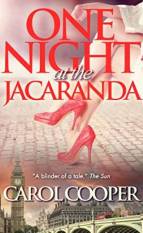
In both Hampstead Fever and your novel One Night at the Jacaranda, your plots are fast paced. How conscious are you of writing in this way and what techniques would you advise other writers to use to maintain pace in their writing?

Well, nobody wants readers to get bored. One way to keep up the pace is to keep scenes short. I do a lot of cross-cutting from one character’s point of view in one scene to another’s viewpoint in the next. This may be the result of years of practising medicine, where I see patient after patient in quick succession. If I want to slow the pace down, I may stay longer with one character and prolong the scene, or have a flashback (I’m quite fond of flashbacks). To speed things up, I write ultra-short scenes with very short sentences. For a really masterly tutorial in pacing, I’d recommend reading Dick Francis novels.

You are also very well known for your radio and television appearances. How much of the stories you’ve covered in those genres has made its way into your fictional writing?

I’m not sure the stories I’m covered have been that useful in my fiction, but my broadcast experience has made their way into my novel. Being in the spotlight isn’t as glamorous as people imagine, and I think that comes out in Hampstead Fever, when Dan is interviewed on radio, and Geoff makes a TV programme.

The face of the woman on the cover of Hampstead Fever is partly obscured. How did that image come about and what were you hoping to convey (without spoiling the plot please!)?

And to think that woman’s face was nearly a pair of shoes! I wanted something red, but neither my cover designer nor I could find the right kind of shoes.  Book covers are so important. I learned that lesson with an early edition of my first novel, One Night at the Jacaranda, which looked frankly amateurish. The image on the cover of Hampstead Fever is meant to convey a woman who could be thirty-something, hot weather, and a sense of promise or intrigue. We don’t need to see her face.

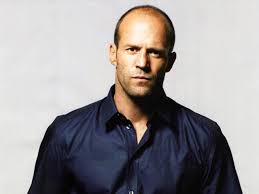
If Hampstead Fever became a film, who would you like to play Dan and Geoff? 

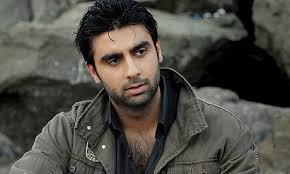
Aaam

It’s easy to pick an actor to play Sanjay. That’s Armaan Kirmani (more about him here). As my character Harriet notes in chapter two, there is a physical resemblance. The role of Dan should go to Jason Statham.

jason

I’m in quandary over the choice of actor for Geoff. In many ways, he is the character I am closest to, yet I have no idea as to who should play him.

If you had 15 words to persuade a reader that Hampstead Fever should be their next read, what would you say?

It’s a witty look at London life, peopled with compelling characters.

Thanks so much, Carol, for taking the time to answer my questions.

About Carol Cooper

MSP_8587-Edit-2 crop

You can follow Carol on Twitter or follow her blog and visit her website.

The Relevance of Poetry, a Guest Post from Dane Cobain

Lighthouses

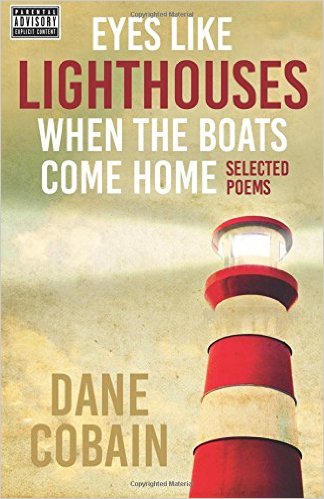
I love poetry. I read it. I write it. But I have hardly ever featured it on Linda’s Book Bag, so it gives me enormous pleasure to welcome author and poet Dane Cobain today. Dane’s latest book, Eyes Like Lighthouses: When the Boats Come Home is a collection of poems and is available for purchase here.

Excitingly, Dane agreed to write a guest post for the blog all about the relevance of poetry, but he also offered to write a poem exclusively for Linda’s Book Bag if I gave him five words to work from. Instantly, five words popped into my head: starlight, eclectic, desire, windmill, narrative. This is what Dane wrote and I think it’s rather wonderful, especially as Erika Eigen’s song Lighthouse Keeper was featured in the film sound track to A Clockwork Orange:

For Erika Eigen

All my life

I’ve been a lighthouse,

and the night

is a sight

that frightens me;


I stand alone

on the sandy shore,

sure to shore up my defences

with eclectic collections

of electric fences,

meant to break down barriers

like a windmill grinding flour

into powder.


I desire silence;

I lust after naphtha

to keep my lamp lit

because sailors seek starlight

to know where north is,

but the stars don’t show the shoreline

where the rocks break waves

like trainers on a pavement.


This is my cross-eyed

night-time narrative;

I saw dead men’s reflections

when I looked into

the mirror.


I am the last

of a dying breed;

the lights are going out

and they won’t be lit again

in our lifetimes;

they made me retrain

to be a solar panel.

Eyes Like Lighthouses When the Boats Come Home

Lighthouses

Eyes Like Lighthouses When the Boats Come Home is Dane Cobain’s first book of poetry, distilled from the sweat of a thousand memorised performances in this reality and others. It’s not for the faint-hearted.

“I’ve never seen anyone do a stream of consciousness piece as talented as that. Very impressed.” – Mark Allsard-Will, author of Saskatch-A-Man and co-founder of Cuckoo’s Nest Press

“Dane’s poetry is a multi-layered spiral of the macabre, quirky humour and disjointed imagery. Not only does he make you think, he captures the small forgotten moments of everyday life.” – Nikki Dudley, co-editor of Streetcake Magazine

“…[Dane] combines concrete detail with socioeconomic concerns.” – Lorna Wood, associate editor of Gemini Magazine.

Why Poetry is Still Relevant

A Guest Post by Dane Cobain

Okay, okay, I get it. I read poetry at school, you’re thinking. It’s that stuff that rhymes and talks about flowers and love and stuff.

And you’d be right. But poetry is much more than something that’s reserved for students and academics, and whilst the great poets of the past (like Walt Whitman, John Milton, and the Williams – Shakespeare, Blake and Wordsworth) have a lot to offer, it often seems like they’re no longer relevant to the busy lives that we lead.

If you’re lucky, then you’ve probably come across some of the more recent work, starting with the beat poets of the 50s – Allen Ginsberg being a fine example – and continuing through Charles Bukowski and into characters like John Hegley, who came to define what we think of today as the performance poet.

These days, contemporary poetry is almost a subcategory of hip-hop, and there’s certainly something poetic about the way that rappers string a sentence together. When you take a look at a rapper doing an acapella track, it can sound like a poet if you close your eyes, as long as they’re not talking about guns, drugs and women.

Kate Tempest is a contemporary poet making waves in the UK, where I come from; she’s done sell-out shows at big stadiums, performed with a backing band, and is, in many ways, the voice of a generation. Jay Hulme is a talented poet I know who speaks up for the LGBT community; then there are the countless poets I’ve come across who use poetic styles and language to talk about the world that we live in.

Poetry isn’t just something that you read on a page anymore. It doesn’t have to rhyme, and it doesn’t have to make sense, but it does have to create a feeling or to make the reader think about the world around them. If you’re not reading contemporary poets then you’re missing a trick – whilst you have to wade through it to find the really good stuff, like you do with any genre, it’s still worthwhile.

It lets you experience an entirely new type of literature, and watching performance poets on YouTube is another great way to add a visual element to your intake. Being a reader is like eating, and it’s important to have a healthy diet of different genres.

And, in the same way that a short story can encapsulate the same range of emotion or the same sense of belonging and characterisation as a novel or a novella, so can a poem. In fact, collections of contemporary poetry can help you to see the real world around you in a whole new light, by surprising you with a quick flash of insight.

So go out and read some contemporary poetry – it’s much, much more difficult for people to make a living as a poet than as a novelist, and so your friendly contemporary poets need your help. And if you need a place to start, you can always kick off your new interest with Eyes Like Lighthouses When the Boats Come Home, my poetry collection.

About Dane Cobain

dane

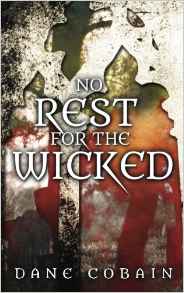
Dane Cobain (High Wycombe, Buckinghamshire, UK) is an independent poet, musician and storyteller with a passion for language and learning. When he’s not in front of a screen writing stories and poetry, he can be found working on his book review blog or developing his website. His debut novella, No Rest for the Wicked, was released by Booktrope in the Summer of 2015.
No rest for the wicked.jpg

Visit Dane’s website (where you’ll find a competition currently running to win an Amazon voucher and a signed book bundle) and follow Dane on Twitter. You’ll find all Dane’s books for purchase here.

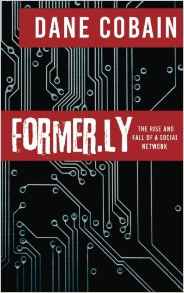
formerly

Publication Day Interview with Conrad Williams, author of Sonata of the Dead

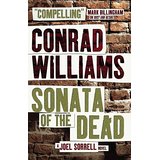
sonata of the dead

It’s publication day today, 5th July 2016, for Conrad Williams’ Sonata of the Dead and I’m delighted to have a publication day interview with Conrad. Sonata of the Dead is published in e-book and paperback by Titan and is available for purchase on Amazon, Waterstones and directly from the publisher as well as from all good book shops.

Sonata of the Dead

sonata of the dead

Searching for a lost daughter who doesn’t want to be found. Even as he recovers from his near fatal encounter with an unhinged killer, PI Joel Sorrell cannot forget his search for Sarah. He receives a tip that photographs of her have been found at a crime scene, where a young man whom Sarah knew when they were children has been horribly dismembered. Finding a link between the victim and an underground writers group, Joel follows the thread, but every lead ends in another body. Someone is targeting the group, and it is only a matter of time before Joel’s daughter is run to ground.

An Interview with Conrad Williams

Hi Conrad. Thank you so much for agreeing to answer some questions on my blog about your writing and Sonata of the Dead in particular.

Firstly, please could you tell me a little about yourself?

I’m a writer living in the north-west of England. I’ve been in love with words all my life and wanted to be a novelist for as long as I can remember. I worked for a while as a freelance journalist, which is how I met my wife. We have three sons. When I’m not writing, I’m trying to play guitar, taking photographs, lusting over stationery and watching good TV.

When did you first realise you were going to be a writer?

I was seven years old, in a class at school. We were told to write a story and I had so much fun I didn’t want to stop.

What are your writing routines and where do you do most of your writing?

I prefer to work in the mornings. I usually write straight on to the screen, but a lot of the time I’ll take a nice fountain pen and a notebook and some headphones and go and work in a café while listening to soundtracks. I’ll write between 1000 – 4000 words a day if things are going well.

If you hadn’t become an author, what would you have done instead as a creative outlet?

I imagine, had the dark stuff in my head not been released through the safety valve of writing, that I’d probably be a serial killer. No… I always harboured dreams of being a marine biologist. So I probably would have poured all my efforts into that.

(Crikey – just as well you’re a writer then!)

Which aspects of your writing do you find easiest and most difficult?

Easiest: Coming up with titles, character names… unimportant stuff like that. Hardest: getting started. I’m like a crocked engine on a cold morning sometimes. Coffee helps. Deadlines too. I’m a terrible procrastinator.

(Procrastination seems to be a pre-requisite for many writers.)

You’re quite prolific and seem very driven. How far is writing an obsession and how far is it just a job?

It’s all I’ve ever wanted to do. It’s never been a job, and I hope it never feels like one. It’s something I do that I get paid for. I see the money as a bonus. I was writing before I realised people might pay you for your stuff. And as a writer, you never switch off. I’m always thinking of sentences and plots and characters, often when I really ought to be concentrating on something else. The downside of writing, especially the kind of stuff that I’m involved in, is that you can’t not look at bad things. Tragedies and disaster are material. Graham Greene once said that there’s a splinter of ice in the heart of every writer and I think that’s right. That’s essential. I’ll empathise and sympathise, and it’s heartfelt, but there’s always a part of me nagging at the back of my head saying: use that, use that.

How do you go about researching detail and ensuring your books are realistic?

There’s no secret to research. It’s all there if you know where to look for it. I think the trick is to hold back on the details. It’s very tempting to load your writing with any facts you’ve learned but it’s a form of authorial intrusion. You’re saying to the reader: Look at all the work I did.

Sonata of the Dead is the second in your PI Joel Sorrell series. What made you move away from the horror genre for this set of books?

You know, I’m not altogether sure I did move away. In many respects, this series is darker than some of the horror fiction I write. The characters are bleaker, their actions more unpleasant… I’ve argued before that there’s little difference between the genres. Crime is horror.

What similarities and differences do you find in writing crime and horror genres?

Having said the above, the main difference is that crime writing is rooted in reality (unless you’re writing a supernatural crime novel of course…). Everything that happens is underpinned by real emotions, motives and comes with its own type of internal logic. In a supernatural novel, you have a certain latitude to introduce left field elements, but in a crime novel you have to play by the rules.

Having written novels, novellas and short stories, what three elements do you think they all have to have in common to be successful?

You have to, hopefully, have a good story. That’s key. You’re not going to get away with it for too long if you’re relying solely on pretty writing. Then engaging characters and kick-ass writing skills.

How did you develop Joel as a character for this series? Had he been brewing in your head for a while or did you make a conscious decision to create him? Did you write a full character profile or has he developed organically?

I submitted a short story for an anthology called Future Cops (part of the publisher Robinson’s Mammoth series) back at the turn of the century. I wanted to write about a smart-arse PI. It was set in the future, so I gave him a futuristic name – Rad Hallah – and had him working the Needles, these skyscrapers in a busy city. He was one part Rick Deckard, one part JJ Gittes and one part Vyvyan Basterd (from The Young Ones). At the same time I was reading Derek Raymond’s Factory novels and I knew I wanted to do something similar. Very dark, very bleak, profane… A couple of years later when I came to write the first novel, I kept the character of Rad Hallah but changed his name.

When you’re writing, how far does the psychological aspect of your narratives affect you personally?

Not often, but it’s noticeable when I’m writing about children in peril, or random violence, or the decay of relationships. These are all things that scare me witless. To some extent I drive them out of my system by writing, but they’re themes that keep cropping up in my work, so I guess my purging skills aren’t the best.

You’ve won prestigious  prizes for your writing. How far does that enhance your writing experience and how far does it add extra pressure?

No pressure. I think that comes from within. Awards are always a nice thing, but it’s important not to make too big a fuss of them. I like to look at them on my bookcase and they are like a pat on the back, a signal that you’re kind of doing the right thing. But it’s fleeting. It’s for work done. The WIP is paramount, not the bauble you might or might not get for it. And there are plenty of amazing writers knocking around that have never won an award.

You’re writing is very cinematic. How do you achieve that effect?

Thank you… but I don’t know. I’m visual, I guess. I like description. I like setting the scene. I enjoy trying to turn location into a kind of character. I wish the people who make decisions in the movies read my stuff and came to the same conclusion as you…

Without any plot spoilers please, what can we expect next for PI Joel Sorrell?

Hell is Empty, which is out in November, finishes this sequence of novels in which he’s searching for his daughter. It’s my ‘Daughter’ trilogy. Or rather, my ‘Missing Girl’ trilogy (which ticks a box in the commercial column). Actually I’ve always thought of the trilogy as the ‘Derelict’ books because they each feature a shattered building. Joel finds himself sent on what he suspects is a wild goose chase and he has to find a path to his quarry while being targeted at every turn.

Do you have other interests that give you ideas for writing?

I’m currently a purple belt in karate, so I’m looking for ways to bring that into my fiction (Joel Sorrell has been using a few moves, although he’s not as into it as I am). I also play guitar and managed to transfer the frustration of trying to learn into a recent short story called The Devil’s Interval.

When you’re not writing, what do you like to read?

I prefer to read non fiction when I’ve got a novel on the go. I especially like books about exploration, especially in cold places, or involving mountains. If I do read any fiction, it’s got to be something totally different from whatever I’m working on. So at the moment I’m reading The Hitchhiker’s Guide to the Galaxy. If anything, it’s taught me that there isn’t enough whimsy in my life.

How did the cover image for Sonata of the Dead come about and what were you hoping to convey (without spoiling the plot please!)?

I didn’t really have much say in the cover, but I like the way they’ve done the title and the gritty urban suggestion of it. There’s definitely impact in all three.

If you could choose to be a character from Sonata of the Dead, who would you be and why?

There’s a female character, a writer, who is known as Odessa (the writers in the group are known by their code names). I think she’s pretty sassy.

If Sonata of the Dead became a film, who would you like to play Joel Sorrell?  

I’ve always had Paddy Considine in mind whenever I write about Joel Sorrell. There’s something vulnerable about him, but something steely too.

If you had 15 words to persuade a reader that Sonata of the Dead should be their next read, what would you say?

Sex, vodka, car chases, vertigo, bloody typewriters, tattoos, vodka, graphology, cats, nightmares, gags, thrills, vodka.

Thank you so much, Conrad, for your time in answering my questions.

You can find more about Conrad Williams on his website and follow him on Twitter.