The Forgotten Summer by Carol Drinkwater

the-forgotten-summer

My very grateful thanks to Gaby Young at Penguin Random House for an advanced reader copy of Carol Drinkwater’s The Forgotten Summer in exchange for an honest review. The Forgotten Summer was published by Michael Joseph, an imprint of Penguin Books, on 11th February 2016 in hardback and e-book. It will be released in paperback on September 8th 2016. The Forgotten Summer is available to purchase on Amazon UK and from all good bookshops.

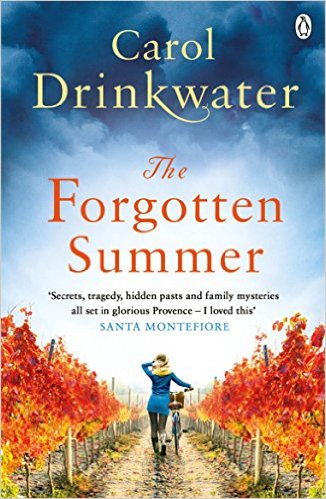
The Forgotten Summer
the-forgotten-summer

Secrets ripen and fester over a long sweltering summer in France . . .

The annual grape harvest at the Cambon family’s magnificent vineyard is always a cause for celebration. But not this year. When an accident destroys the crop, leaving the estate facing ruin, Clarisse Cambon knows exactly who to blame – her daughter-in-law Jane.

It’s just the latest incident in a decades-long feud whose origin both women have concealed from Luc, who struggles to keep his wife and mother on speaking terms. But is Luc the saint he appears to be? When tragedy strikes, Jane is thrown into doubt. What secrets has her husband been keeping?

Forced to take charge of the ailing vineyard, Jane uncovers further proof that Luc may not be the man she fell in love with twenty years ago. And, worse still, she knows that her old enemy Clarisse is the only one who knows the truth . . .

My Review of The Forgotten Summer

Jane and her mother-in-law Clarisse Cambon do not get on, so that when Clarisse finds excuse to blame Jane for a poor grape harvest on the family estate in France, Jane’s husband Luc is unable to reconcile them. However, their lives are not going to remain separate for long as fate has a nasty habit of intervening.

I feel I owe Carol Drinkwater an apology. I picked up The Forgotten Summer believing I was about to read merely a fluffy, lightweight, love story. I did indeed get a love story, but one of great depth and resonance and of more than one kind of love. The Forgotten Summer is literary, well researched and hugely satisfying to read. It explores not just love, but searing grief, hatred, deceit, joy and despair providing a richness of experience for the reader.

The characters are human, three dimensional creations who are flawed and realistic so that at times I wanted to shake them in frustration and at others I wanted to hold them and comfort them. I thought about them when I wasn’t reading the book. I’m also left wanting to know more about them in the future and would love a sequel.

The plotting is tantalising and entertaining as Carol Drinkwater uncoveres suggestions and details that kept me wanting to read on. Just occasionally I would have liked a little less of the viticultural detail but there’s no denying these elements are impeccably well researched and presented.

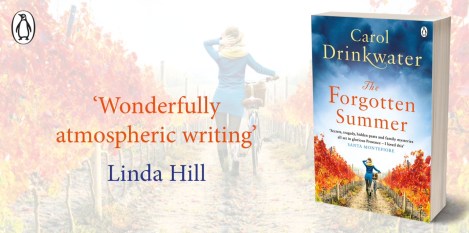
The Forgotten Summer is wonderfully atmospheric writing. It’s the small details that really bring the narrative alive. Carol Drinkwater plays to all the reader senses, immersing readers in the sounds of jazz, with Nina Simone singing in the background for example, or evoking the taste of oozing Brie on fresh crusty loaves. I could so easily see the blossoms, olives and grapes and smell the lavender. Anyone who knows France would recognise instantly the scenes presented so beautifully.

I thought The Forgotten Summer was a wonderful read and am ashamed of my prejudice that has kept me away from Carol Drinkwater’s writing in the past. It is mature, engaging, emotional and atmospheric. I shall be seeking out her other fiction immediately.
carol-drinkwater-quote-from-penguin

About Carol Drinkwater

Anglo-Irish actress Carol Drinkwater is perhaps still most familiar to audiences for her award-winning portrayal of Helen Herriot in the BBC series All Creatures Great and Small. A popular and acclaimed author and film-maker as well, Carol has published nineteen books for both the adult and young adult markets. She is currently at work on her twentieth title.

When she purchased a rundown property overlooking the Bay of Cannes in France, she discovered on the grounds sixty-eight, 400-year-old olive trees. Once the land was reclaimed and the olives pressed, Carol along with her French husband, Michel, became the producers of top-quality olive oil. Her series of memoirs, love stories, recounting her experiences on her farm (The Olive Farm, The Olive Season, The Olive Harvest and Return to the Olive Farm) have become international bestsellers. Carol’s fascination with the olive tree extended to a seventeenth-month, solo Mediterranean journey in search of the tree’s mythical secrets. The resulting travel books, The Olive Route and The Olive Tree, have inspired a five-part documentary films series entitled The Olive Route.

Carol has also been invited to work with UNESCO to help fund an Olive Heritage Trail around the Mediterranean with the dual goals of creating peace in the region and honouring the ancient heritage of the olive tree.
You can follow Carol on Twitter and visit her web site.

Hester and Harriet by Hilary Spiers

Hester and Harriet

Today it’s my great pleasure to be hosting a guest author who lives just a few miles away from my home, Hilary Spiers. Hilary’s debut novel Hester and Harriet is published by Allen and Unwin in paperback today, 3rd March 2016. Hester and Harriet is available here in the UK and in ebook here in the US.

Equally exciting, is the super guest post from Hilary who is also a playwright as well as a novelist and today she tells us just how different, yet equally tricky those skills are.

About Hester and Harriet

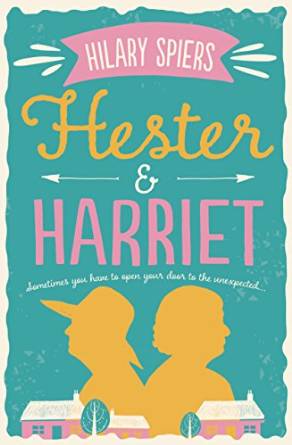
Hester and Harriet two widowed sisters in their 60s, are reluctantly driving to visit relatives when they come across a young woman hiding with her baby in a bus shelter. Seeing the perfect excuse for returning to their own warm hearth, the sisters insist on bringing Daria and Milo home with them.

But the arrival of a sinister stranger looking for a girl with a baby, followed quickly by their cousins’ churlish fifteen-year-old son, Ben, who also appears to be seeking sanctuary, Hester and Harriet’s carefully crafted peace and quiet quickly begins to fall apart. And, perhaps, it’s exactly what they need…

A Guest Post from Hilary Spiers

WRITER’S BLOCK: a play by Hilary Spiers

Hilary sits in front of her computer. From time to time she taps at the keys with one finger. She glances at the screen, reads what she has written, and deletes the lot in frustration. This happens several times.  A noise from upstairs. She shoves her chair back and hurries for the door

HILARY                  Is it lunchtime yet?

WRITER’S BLOCK A novel by Hilary Spiers

Hilary has never learned to type. But she can type. Not admittedly the way people are meant to type, with both hands, eight fingers and two thumbs. No, she types – as she has for more years than she is prepared to reveal – with the middle finger of her right hand, surprisingly fast and accurately.

But today, the fact she cannot type properly, nor as quickly as many others who use a keyboard for their living, is irrelevant. Because today there is nothing to type. Today, the words that sprang so readily to mind as she drifted off to sleep last night, those precise, telling, perfect words, are flat and lifeless on the page. For the fourth time in as many minutes, she presses the Delete key, on this occasion with a savagery that her keyboard does not deserve. The blank screen sneers back at her.

She glances at her coffee cup: empty. She looks at the screen again: empty. Upstairs, a floorboard creaks: her husband getting to his feet. Perhaps glancing at his watch, calculating how long it has been since breakfast. Picturing the left-over chicken breast in the fridge, the butter, the mayonnaise, the still-warm loaf peppered with seeds on the bread board … It’s not a very big piece of chicken. Will it stretch to two sandwiches? Is there more than a scraping of mayo in the jar? Surely he’ll be just as happy with cheese and pickle …

Leaping to her feet, she hurries for the study door. His shadow falls across the hall as he rounds the newel post at the top of the stairs. If she’s quick, she can make it to the fridge ahead of him. With studied casualness she calls up, as if surprised to see him, ‘Is it lunchtime yet?’

*********

I write both novels and plays, two very different disciplines that nonetheless overlap. The first – and obvious – difference between plays and novels is length. A play might only run to a quarter or even a fifth of a novel’s word count but don’t let that fool you into thinking playwriting is an easier option: as with short stories, you keep paring and paring to ensure that every spoken word counts. There can be no longeurs in a play or the audience loses interest – fast.  In line with the famous maxim ‘Show, don’t tell’, one endeavours to let information emerge organically as the plot unfolds; lengthy exposition (indeed pretty much any exposition) serves only to annoy them (‘For God’s sake, we know all this!’ or ‘Is this relevant?’ or ‘Just get on with it!’ ).

A novel on the other hand offers the luxury of space and time to expand characters, to paint them exactly as you see them, not leaving your creations to the mercies of an actor or director to place their own (sometimes inexplicable) interpretations on a line or character.  A novelist is casting director and scene-painter, dictating precisely the look, shape, age of the characters (indeed, how many characters appear, a make-or-break decision in the cash-strapped theatre) and creating the backdrop for the story, unconstrained by space or money or the practicalities of whisking characters from, say, a coffee shop to a prison cell in the blink of an eye. (That’s not to say you can’t write a play with multiple settings: you just have to be aware what you are asking of a set designer. And whether the company concerned can afford to realise your ambitions.)

What’s lovely about the theatre is that – once a play finally makes it on to the stage – feedback is immediate. You hear and see what works and what doesn’t in the moment. That line you and the cast found so funny in rehearsal? Deathly silence. That moment of intense pathos in Act 2? How can anyone be laughing?! And audiences will differ from night to night (and even pre and post-interval, which admittedly may have something to do with a glass of wine or two). In contrast, a novel demands patience. Your baby is launched into the choppy, unpredictable seas of publication and you have to sit and wait, stomach churning, for readers to react. For reviewers to review. For ratings to be given. Some readers are kind enough to take the time to contact you directly to give feedback, to say what they liked (or disliked) about your characters, your plot, your style.  And even to ask when the next book is appearing …

And then there’s the loneliness issue. It’s a truism that writing is a solitary business. When a play is in development or rehearsal, you’re working alongside other people: the director, the actors, the rest of the company. Characters are unpicked, suggestions made to tighten or shorten or lengthen a scene and your script becomes a living entity, evolving and hopefully improving as it develops and changes. I love that part of the process. That’s not say I don’t love novel writing. I’ve enjoyed every minute I’ve spent (and am still spending) with Hester and Harriet. They make me laugh, they often surprise me. They make me re-consider my prejudices. But all this is done in isolation. Of course, I have my writing buddies, my stalwart friends reading and re-reading drafts, and then in time my editors, but every revision means only one thing: the brewing of yet more coffee, the return to my study, the shutting of the door and the application of my hard-working middle finger to the keyboard. The wonderful thing is, I have both these opportunities and I wouldn’t have it any other way.

About the author

Hilary Spiers has had a varied career – including law, speech therapy, teaching, youth work and the NHS. She has also been involved with the theatre as an actor, director and playwright, and her dramatic work has been performed in a number of theatres including Hampstead Theatre and Riverside Studios. Hilary has won several national short story competitions and had work broadcast on the radio.  She lives in Stamford, Lincolnshire and is available for interview.

You can find out more about Hilary Spiers on her web site. Hilary will be signing copies of Hester and Harriet at Walkers Bookshop in Stamford Lincolnshire on Saturday 5th March between 11AM and 1PM.


Fall of Poppies

FallofPoppies_cover (1)

As every time I look up from my desk I can see a photograph of my Grandfather alongside his First World War medals, I’m delighted to be celebrating Fall of Poppies, a collection of short stories all about love and the Great War. Fall of Poppies was published by William Morrow on 1st March 2016.

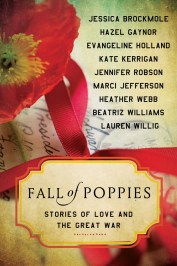
Fall of Poppies: Stories of Love and the Great War

Contributions in Fall of Poppies are by  Hazel Gaynor, Beatriz Williams, Jennifer Robson, Jessica Brockmole, Kate Kerrigan, Evangeline Holland, Lauren Willig and Marci Jefferson. Fall of Poppies is edited by Heather Webb

Top voices in historical fiction deliver an intensely moving collection of short stories about loss, longing, and hope in the aftermath of World War I – featuring bestselling authors such as Hazel Gaynor, Jennifer Robson, Beatriz Williams, and Lauren Willig and edited by Heather Webb.

 A squadron commander searches for meaning in the tattered photo of a girl he’s never met…

A Belgian rebel hides from the world, only to find herself nursing the enemy…

A young airman marries a stranger to save her honor—and prays to survive long enough to love her…The peace treaty signed on November 11, 1918, may herald the end of the Great War but for its survivors, the smoke is only beginning to clear. Picking up the pieces of shattered lives will take courage, resilience, and trust.

Within crumbled city walls and scarred souls, war’s echoes linger. But when the fighting ceases, renewal begins…and hope takes root in a fall of poppies.

An Extract from Fall of Poppies

From “Something Worth Landing For” by Jessica Brockmole

I first met her, crying, outside of the medical department at Romorantin.

She’d been there, hunched on the bench in the hall, when I arrived for my appointment and was still there when I stepped from the doctor’s office. She wore the same bland coveralls and white armband as the other women who worked in the Assembly Building and I might have walked straight past. I always managed to make a fool of myself in front of women— on one memorable evening with an untied shoe and a bowl of chowder—  and was sure today would be no different. After all, I’d just been standing stark naked in front of another man and was still a little red in the face.

But she chose that exact moment to blow her nose, with such an unladylike trumpet that I couldn’t help but turn and stare.

I’d never heard such an unabashed sound from a woman. She didn’t even seem to care that she sounded like an elephant. She just kept her head down and her face buried in an excessively crumpled handkerchief.

She looked as healthy as a horse to be sitting outside the medical department. Not as scrawny as the other French girls around here. She had dark hair parted on the side and pinned up in waves, but her neck was flushed pink. I wondered what kind of bug she’d caught to leave her so stuffy.

“Hello. Are you waiting for the doc?” I asked. The army doc wasn’t much— despite the file in his hand, he’d insisted on calling me “Weaselly” instead of the “Wesley” on my paperwork—  but he could probably give her some silver salts or, at the very least, a replacement handkerchief.

She lifted her head and blinked red, wet eyes. I could have smacked myself. I was a dope. She wasn’t sick. She was miserable and sobbing and I had no idea what to do.

If I’d had a sister or a girlfriend or a mother with a heart made out of something softer than granite, I might have known how to handle a teary woman. I’d never gotten as far as breaking a girl’s heart.

Regardless, a clean handkerchief would be a start, and I dug in my pockets until I found a slightly wrinkled one. I held it out, but between two fingers, like feeding a squirrel.

She looked surprised at my offer, though I wasn’t sure why. A nice- looking girl like that, surely she was used to kindness. She stared at me, then the square of cotton, then me again, considering.

I thought to add a few words of eloquence to my offer. “Go on,” I said instead. “I have dozens.” It wasn’t Shakespeare, but it must have been enough.

She swallowed and took it with a watery “Merci.”

That probably wasn’t enough. Chaplains and grandmothers always had a reassuring word or two. I wondered if I should take a cue from the padre and go with a pious Trust in Godor an old-fashioned There, there. I realized, belatedly, that I knew how to say neither in French.

She saved me from having to make a decision. “I am fine, really,” she said in quite excellent English. Tears welled up fresh in her blue eyes, but she nodded, almost too vigorously.

“Yes, never better.” She crushed the handkerchief to her eyes.

I didn’t believe her.  People who were fine didn’t cry uncontrollably in the hallway. “Bad diagnosis?” She looked healthy enough, with those pink cheeks and bright eyes, but I was no expert. Maybe she had just found out she had a week to live.

She blew her nose again, thunderously. “Bad, good, maybe both.”

This was mystifying, but I suppose that was the way of women.

Reprinted Courtesy of HarperCollins Publishers

FallofPoppies_banner

Follow more about Fall of Poppies here and on Goodreads.

Buy Links:  Amazon | B & N | Google Play | iTunes | Kobo

UK Pre-order: Amazon UK


About the Fall of Poppies Authors

Jessica Brockmole is the author of the internationally bestselling Letters from Skye, an epistolary love story spanning an ocean and two wars. Named one of Publisher’s Weekly’s Best Books of 2013, Letters From Skye has been published in seventeen countries.

Website  | Facebook | Twitter | GoodReads

Hazel Gaynor is the New York Times and USA Today bestselling author of The Girl Who Came Home and A Memory of Violets. She writes regularly for the national press, magazines and websites in Ireland and the UK.

Website | Facebook | Twitter | GoodReads

Evangeline Holland is the founder and editor of Edwardian Promenade, the number one blog for lovers of World War I, the Gilded Age, and Belle Époque France with nearly forty thousand unique viewers a month. In addition, she blogs at Modern Belles of History. Her fiction includes An Ideal Duchess and its sequel, crafted in the tradition of Edith Warton.

Website | Twitter | GoodReads

Marci Jefferson is the author of Girl on the Golden Coin: A Novel of Frances Stuart, which Publisher’s Weekly called “intoxicating.” Her second novel, The Enchantress of Paris, will release in Spring 2015 from Thomas Dunne Books.

Website | Facebook | Twitter | GoodReads

Kate Kerrigan is the New York Times bestselling author of The Ellis Island trilogy. In addition she has written for the Irish Tatler, a Dublin-based newspaper, as well as The Irish Mail and a RTE radio show, Sunday Miscellany.

Website | Facebook | Twitter | GoodReads

Jennifer Robson is the USA Today and international bestselling author of Somewhere in France and After the War is Over. She holds a doctorate in Modern History from the University of Oxford, where she was a Commonwealth Scholar and SSHRC Doctoral Fellow. Jennifer lives in Toronto with her husband and young children.

Website | Facebook | Twitter | GoodReads

Heather Webb is an author, freelance editor, and blogger at award-winning writing sites WriterUnboxed.com and RomanceUniversity.org. Heather is a member of the Historical Novel Society and the Women’s Fiction Writers Association, and she may also be found teaching craft-based courses at a local college

Website | Facebook | Twitter | GoodReads

Beatriz Williams is the New York TimesUSA Today, and international bestselling author of The Secret Life of Violet Grant and A Hundred Summers. A graduate of Stanford University with an MBA from Columbia, Beatriz spent several years in New York and London hiding her early attempts at fiction, first on company laptops as a corporate and communications strategy consultant, and then as an at-home producer of small persons. She now lives with her husband and four children near the Connecticut shore, where she divides her time between writing and laundry. William Morrow will publish her forthcoming hardcover, A Certain Age, in the summer of 2016.

Website | Facebook | Twitter | GoodReads

Lauren Willig is the New York Times bestselling author of eleven works of historical fiction. Her books have been translated into over a dozen languages, awarded the RITA, Booksellers Best and Golden Leaf awards, and chosen for the American Library Association’s annual list of the best genre fiction. She lives in New York City, where she now writes full time.

Website | Facebook | Twitter | GoodReads

US readers can enter to win one of three print copies of Fall of Poppies by clicking here.

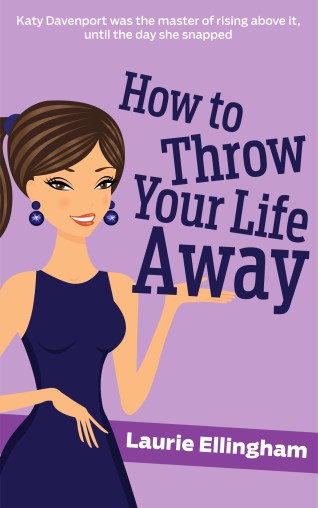
How To Throw Your Life Away Cover Reveal

Cover final

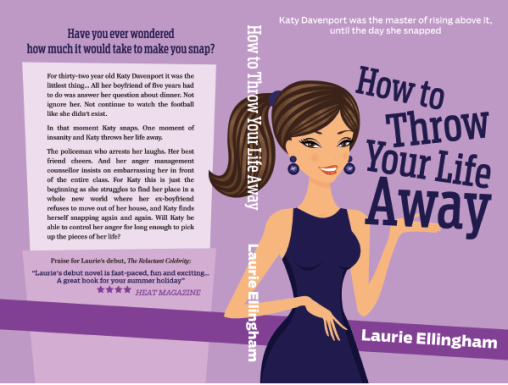
I am absolutely thrilled to bring you a Linda’s Book Bag exclusive today – the brand new cover for Laurie Ellingham’s latest novel How to Throw Your Life Away. How to Throw Your Life Away will be out on 14th April – just in time for a wonderful summer read. There will be a smashing celebratory series of events with other lovely bloggers and you must pop back here on April 16th to be in with a chance of winning a copy of How to Throw Your Life Away.

How to Throw Your Life Away

Katy Davenport was the master of rising above it – until the day she snapped!

For thirty-two year old Katy Davenport it was the littlest thing… All her boyfriend had to do was answer her question about dinner. Not ignore her. Not continue to watch football like she didn’t exist.

In that moment Katy snaps. One moment of insanity and Katy throws her life away…

Cover jacket

I was lucky enough to meet Laurie in person last year when she had just released her novel The Reluctant Celebrity. We got on so well that it is my absolute pleasure to be featuring her again on the blog.

The Reluctant Celebrity

The Reluctant Celebrity

Some people crave fame, others can’t escape it.

When property developer and loner, Jules Stewart, comes face-to-face with her former self grinning back from the front page of Britain’s most popular tabloid, escape is not an option.

With a new house determined to remain derelict, a nosy village determined to befriend her, and a gorgeous pub owner determined to undress her, life for Jules is difficult enough. But add a famous ex-boyfriend set to ruin her life (for the second time), a newspaper eager to expose her, and everyone she has ever known desperate for their own fifteen minutes of fame…

———

Laurie was kind enough to write a guest post for Linda’s Book Bag when I was just starting out as a blogger and you can read it here.

I loved The Reluctant Celebrity and you can read my review here.

You can buy The Reluctant Celebrity from Austin MacauleyAmazon UKAmazon USWaterstones and from all good bookshops.

About Laurie Ellingham

Laurie

When Laurie is not running around after her two young children, her husband, their cockerpoo Rodney, or just plain running, she loves nothing more than disappearing into the fictional world of her characters, preferably with a large coffee and a slab of chocolate cake to hand.

In the past five years Laurie has moved from East London to Chelmsford and she’s finally settled in a small village in the heart of the beautiful Dedham Vales on the Suffolk/Essex border.

When she’s in the thick of a character crisis she can often be seen walking around the village with her jumper on inside out and back to front, chatting (and occasionally laughing) away to herself.

Laurie has a First Class honors degree in Psychology and a background in Public relations, both of which help her in everything she does.

You can follow Laurie on Twitter and find out all about her on her website. You’ll also find Laurie on Facebook.

What She Never Told Me by Kate McQuaile

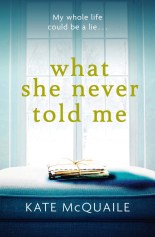
What She Never Told Me front cover

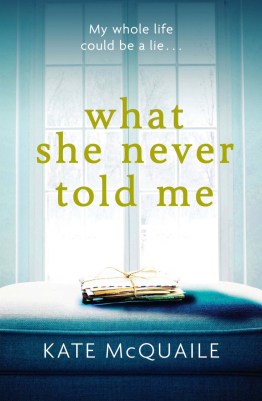
It is my very great pleasure to be part of the launch celebrations for Kate McQuaile’s novel What She Never Told Me which is published by Quercus on 3rd March 2016. What She Never Told Me is available for purchase in e-book and paperback from Amazon UK, Amazon US and from Quercus as well as from all good book stores.

I have a super guest post from Kate describing how fact and fiction can be uneasy bedfellows too.

What She Never Told Me

What She Never Told Me front cover

I talked to my mother the night she died, losing myself in memories of when we were happiest together. But I held one memory back, and it surfaces now, unbidden. I see a green postbox and a small hand stretching up to its oblong mouth. I am never sure whether that small hand is mine. But if not mine, whose?

Louise Redmond left Ireland for London before she was twenty. Now, more than two decades later, her heart already breaking from a failing marriage, she is summoned home. Her mother is on her deathbed, and it is Louise’s last chance to learn the whereabouts of a father she never knew.

Stubborn to the end, Marjorie refuses to fill in the pieces of her daughter’s fragmented past. Then Louise unexpectedly finds a lead. A man called David Prescott . . . but is he really the father she’s been trying to find? And who is the mysterious little girl who appears so often in her dreams? As each new piece of the puzzle leads to another question, Louise begins to suspect that the memories she most treasures could be a delicate web of lies.

Making Things Up

A Guest Post by Kate McQuaile

I’ve spent my whole journalistic life working with facts. I check and double-check everything. As I was told many years ago when I was learning how to be a journalist, you don’t write Oxford Circus W1 until you’ve checked the A-Z. And, as one of my American colleagues says, ‘if your mother tells you she loves you, check it out.’

Now, after years of being bound to facts, I’m allowed to make things up. If I want to, I can rewrite history. If I decide that I’m going to make life easier or harder for a character in my novel, I can do that, too.

But it’s not as simple as that, as I’ve found during the writing of What She Never Told Me. Characters have their own reality, their own way of thinking and doing things and it’s not easy to steer them in a different direction once they start to come to life. So maybe I’m not really getting to make things up at all once the book starts to develop.

And, despite the freedom from rigid dependence on facts that writing a novel can give, I’m finding it hard to alter the habits of a lifetime. I find myself spending hours checking everything that I might refer to, from the colours of regional buses in Ireland in the 1960s and 1970s to the daily tide tables and the weather. Is anyone really going to care whether there really was a major storm on a particular date? Maybe not. But I’m still going to check.

I can’t help feel slightly guilty about having taken a little bit of licence with some of the buildings that get a mention in my first novel, which is set in a real town. I have my protagonist, Louise, looking directly from one side of the river towards some apartments on the other side. In reality, the apartments I mention don’t exist on the other side of the river, but I wanted them to exist and so I put them there.

For the second book, I’ve gone down the route of inventing a place where the main part of the story takes place, so everything about it will come from my imagination.

But I have taken a bit of licence with the weather — I’ve frozen the Regent’s Canal in London during a winter that was, as far as I remember, on the mild side.

And, in the meantime, the characters are doing their own thing. I started the second book with a pretty clear idea of how it would begin and how it would end. And that idea hasn’t changed. But the characters are developing lives of their own and telling their own stories. They’ve already given me a few surprises.

Kate

Follow Kate on Twitter

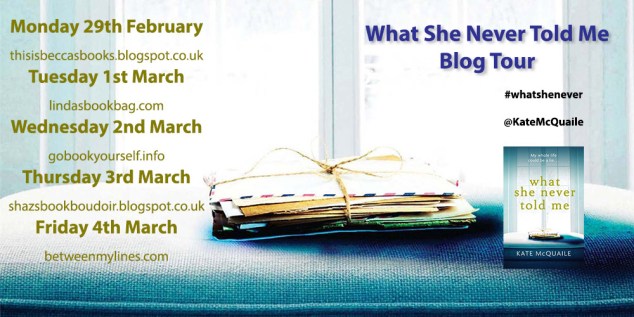
Find out more about Kate McQuaile and What She Never Told Me with these bloggers:

What She Never Blog Tour Poster